Earth & Planetary Sciences
-

A slow-motion section of the San Andreas Fault may not be so harmless after all
A study of rocks drilled from nearly 2 miles under the surface suggests that the central section of the San Andreas fault has hosted many major earthquakes, including some that could have been fairly recent.
-

A surprising heat source is melting the Greenland Ice Sheet from the bottom up
Researchers have observed extremely high rates of melting at the bottom of the Greenland Ice Sheet, caused by huge quantities of meltwater descending from the surface to the base.
-
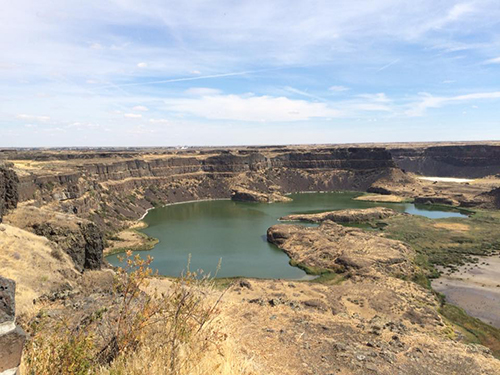
Tilting of Earth’s crust governed the flow of ancient megafloods
Study provides a new perspective on Washington state’s Channeled Scablands, carved by the Missoula megafloods at the end of the last ice age.
-
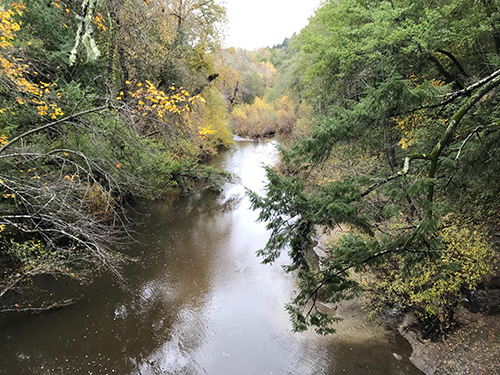
San Lorenzo River was transformed by early logging in the Santa Cruz Mountains
The San Lorenzo River cut a deep channel and abandoned its floodplain in the Felton area around the time of intensive clearcutting in the surrounding mountains, according to a study by UCSC researchers.
-
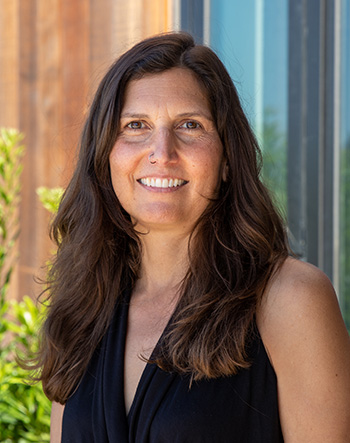
Two UCSC professors elected 2021 AAAS Fellows
Biologist Suzanne Alonzo and Earth scientist James Zachos have been awarded the distinction of AAAS Fellow by the American Association for the Advancement of Science.
-

Optimizing coastal wetland restoration for carbon capture and storage
UCSC leads a large collaborative effort to develop guidelines for maximizing the effectiveness of coastal wetlands as a climate mitigation solution with multiple benefits.
-
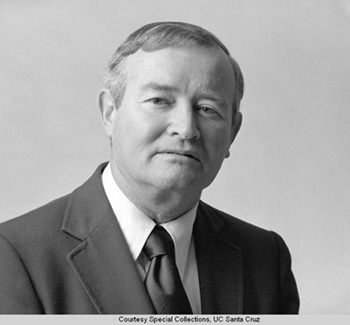
In Memoriam: Robert E. Garrison (1932–2021)
Robert E. (Bob) Garrison, professor emeritus of ocean sciences, passed away on Friday, November 26, 2021, at his home in Santa Cruz.
-

Researchers recover ancient mammoth tusk during deep-sea expedition
A team of researchers from UC Santa Cruz, Monterey Bay Aquarium Research Institute, and University of Michigan are studying the tusk retrieved from deep waters off the California coast.
-

AAUW awards fellowships to three scholars at UC Santa Cruz
The American Association of University Women (AAUW) has awarded 2021-22 American Fellowships to three scholars at UC Santa Cruz who will pursue academic work and lead innovative community projects to empower women and girls.
-
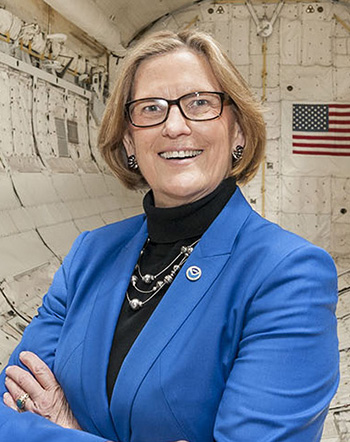
Alumna Kathryn Sullivan appointed to President’s Council of Advisors on Science and Technology
President Biden has announced 30 of the most distinguished leaders in science and technology as members of his President’s Council of Advisors on Science and Technology (PCAST), including UCSC alumna Kathryn Sullivan.
-

Experts weigh in on the future of drought management
UC Santa Cruz experts share insights on how technological innovations and long-term policy vision could help protect water supply.
-

Haziness of exoplanet atmospheres depends on properties of aerosol particles
A laboratory study of haze particles produced under different conditions helps explain why some exoplanets may be obscured by hazy atmospheres.