Earth & Planetary Sciences
-
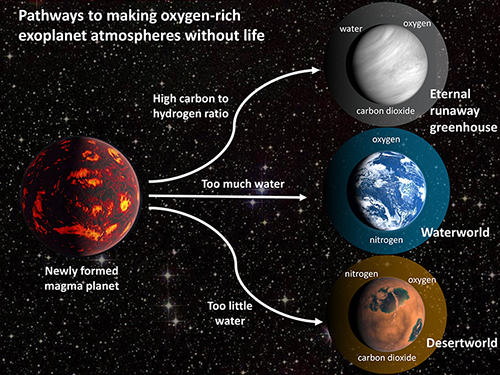
Study warns of ‘oxygen false positives’ in search for signs of life on other planets
Oxygen in the atmosphere may not be an entirely reliable ‘biosignature,’ but there are ways to distinguish false positives from signs of life.
-

NASA selects two UCSC scientists to join Korea Pathfinder Lunar Orbiter mission
Ian Garrick-Bethell and Mikhail Kreslavsky are among the nine participating scientists who will join the KPLO science team.
-

Celestial heights and oceanic depths
Two of UC Santa Cruz’s most prominent trailblazers in science, astronomer Sandra Faber and alumna and former astronaut Kathryn Sullivan, spoke of risks, discoveries, and sexism in candid “fireside chat” during a Science and Engineering Library floor-naming event.
-

Meteoric success
Planetary scientist Myriam Telus, a NASA Planetary Science Early Career Award winner, reflects on her journey to UC Santa Cruz to study meteorites: Discovering her passion, seeking out mentors, and finding inspiration in the courage of civil rights movement leaders.
-

Two UCSC geophysicists honored by Royal Astronomical Society
Thorne Lay and Emily Brodsky, both professors of Earth and planetary sciences, are receiving the Gold Medal for Geophysics and the Price Medal, respectively.
-
Geologist David Rubin elected fellow of the American Geophysical Union
David Rubin, a researcher in the Department of Earth and Planetary Sciences, has been elected a fellow of the American Geophysical Union.
-
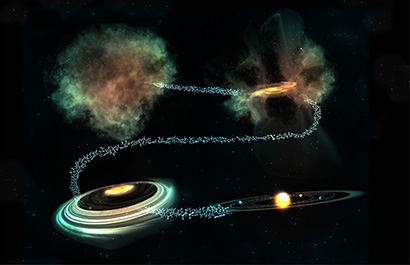
UC Santa Cruz leads interdisciplinary consortium for astrobiology research
With funding from NASA, the UCSC-led team will lay the foundation for detecting the signatures of life in the atmospheres of other planets.
-
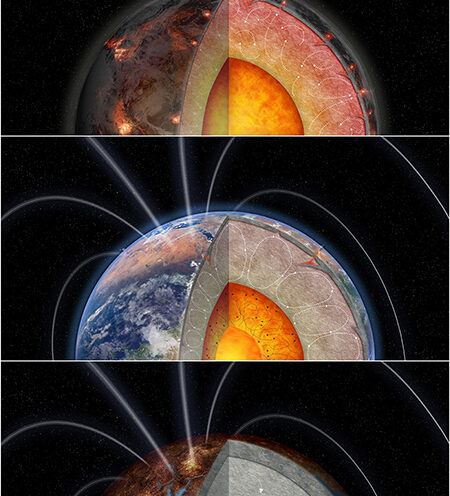
Radioactive elements may be crucial to the habitability of rocky planets
Earth-size planets can have varying amounts of radioactive elements, which generate internal heat that drives a planet’s geological activity and magnetism.
-

Wildfire brings destruction and opportunity to researcher’s field site
Hydrologist Margaret Zimmer has received NSF funding to study the impact of wildfire on the site where she has been studying how water moves through the landscape.
-
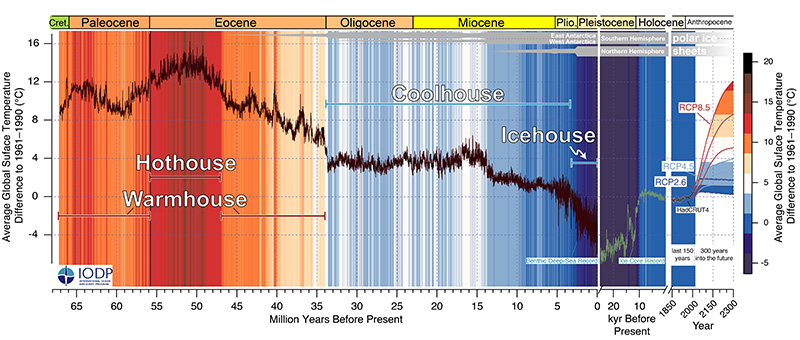
High-fidelity record of Earth’s climate history puts current changes in context
A continuous record of the past 66 million years shows natural climate variability due to changes in Earth’s orbit around the sun is much smaller than projected future warming due to greenhouse gas emissions.
-
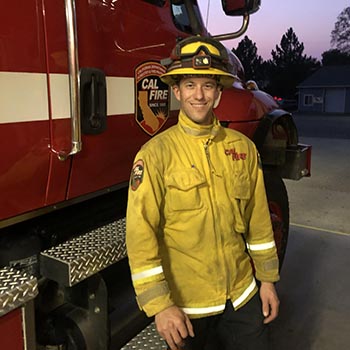
In the line of fire
Alumnus Adam Lowdermilk had built a career as a musician, but the tragic 2018 Camp Fire prompted a change of heart and a leap into firefighting.
-
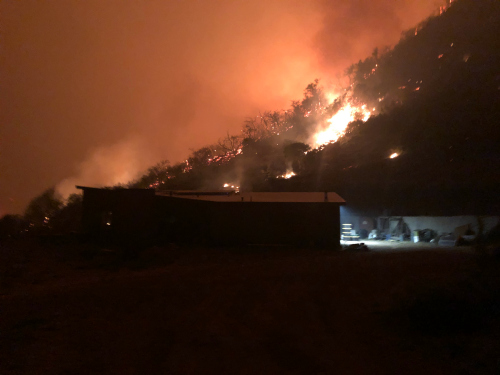
Research buildings saved as wildfire sweeps across Big Creek Natural Reserve
Fire preparedness and hard work by fast-moving fire crews and UC Santa Cruz staff is being credited for saving research and residential buildings at the Landels-Hill Big Creek Natural Reserve on the Big Sur coast.