Earth & Planetary Sciences
-

AAUW awards fellowships to three scholars at UC Santa Cruz
The American Association of University Women (AAUW) has awarded 2021-22 American Fellowships to three scholars at UC Santa Cruz who will pursue academic work and lead innovative community projects to empower women and girls.
-
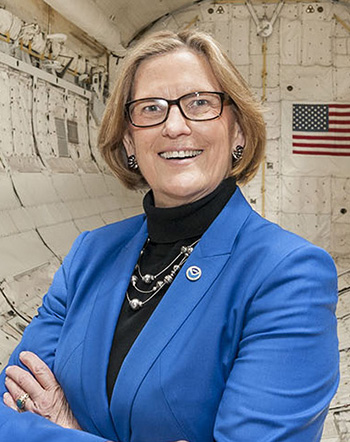
Alumna Kathryn Sullivan appointed to President’s Council of Advisors on Science and Technology
President Biden has announced 30 of the most distinguished leaders in science and technology as members of his President’s Council of Advisors on Science and Technology (PCAST), including UCSC alumna Kathryn Sullivan.
-

Experts weigh in on the future of drought management
UC Santa Cruz experts share insights on how technological innovations and long-term policy vision could help protect water supply.
-

Haziness of exoplanet atmospheres depends on properties of aerosol particles
A laboratory study of haze particles produced under different conditions helps explain why some exoplanets may be obscured by hazy atmospheres.
-
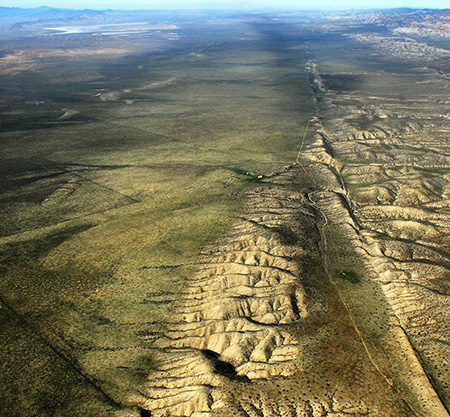
Model reveals interactions between rivers and fault lines
Researchers created a model that uses the movement at fault lines to understand river flow and vice versa.
-

Martian south polar cap composition focus of new study
A team of scientists have determined that Mars’ south polar ice sheet may be made of clays, metal-bearing minerals, or saline ice.
-
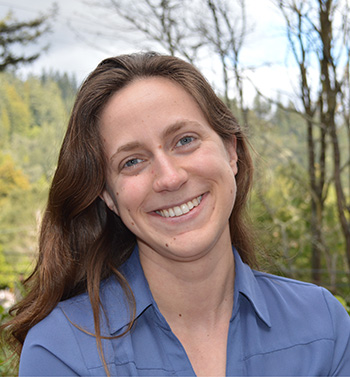
Hydrologist Margaret Zimmer wins NSF CAREER Award
Margaret Zimmer, assistant professor of Earth and planetary sciences, has received an award from the National Science Foundation to support her research on the role of Earth’s subsurface in regulating the water cycle.
-
Legendary oceanography professor has made sea changes in students’ lives
Devoted professor and beloved mentor Gary Griggs has no plans to step down—or even slow down—after 53 years of teaching, advising, and advocating for the environment.
-
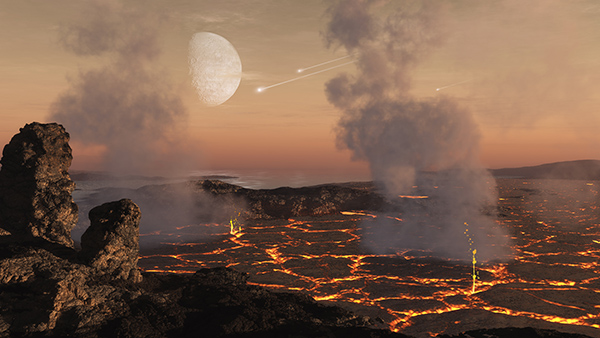
Baked meteorites yield clues to planetary atmospheres
The gases released from meteorite samples heated in a high-temperature furnace can tell scientists about the initial composition of the atmospheres of rocky exoplanets.
-
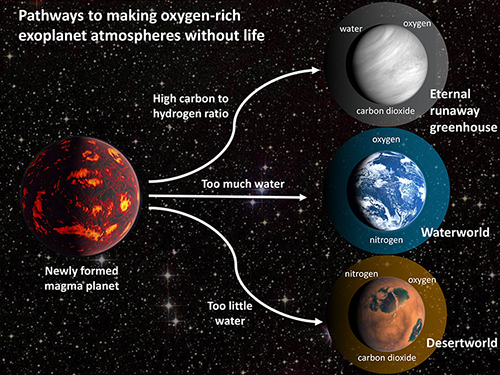
Study warns of ‘oxygen false positives’ in search for signs of life on other planets
Oxygen in the atmosphere may not be an entirely reliable ‘biosignature,’ but there are ways to distinguish false positives from signs of life.
-

NASA selects two UCSC scientists to join Korea Pathfinder Lunar Orbiter mission
Ian Garrick-Bethell and Mikhail Kreslavsky are among the nine participating scientists who will join the KPLO science team.
-

Celestial heights and oceanic depths
Two of UC Santa Cruz’s most prominent trailblazers in science, astronomer Sandra Faber and alumna and former astronaut Kathryn Sullivan, spoke of risks, discoveries, and sexism in candid “fireside chat” during a Science and Engineering Library floor-naming event.