Climate & Sustainability
Extinction is not inevitable: Genomics symposium explores using DNA to save life on Earth
Conservation genomics is a bold new tool for protecting life on earth, but it will take all of us to slow the extinction crisis.
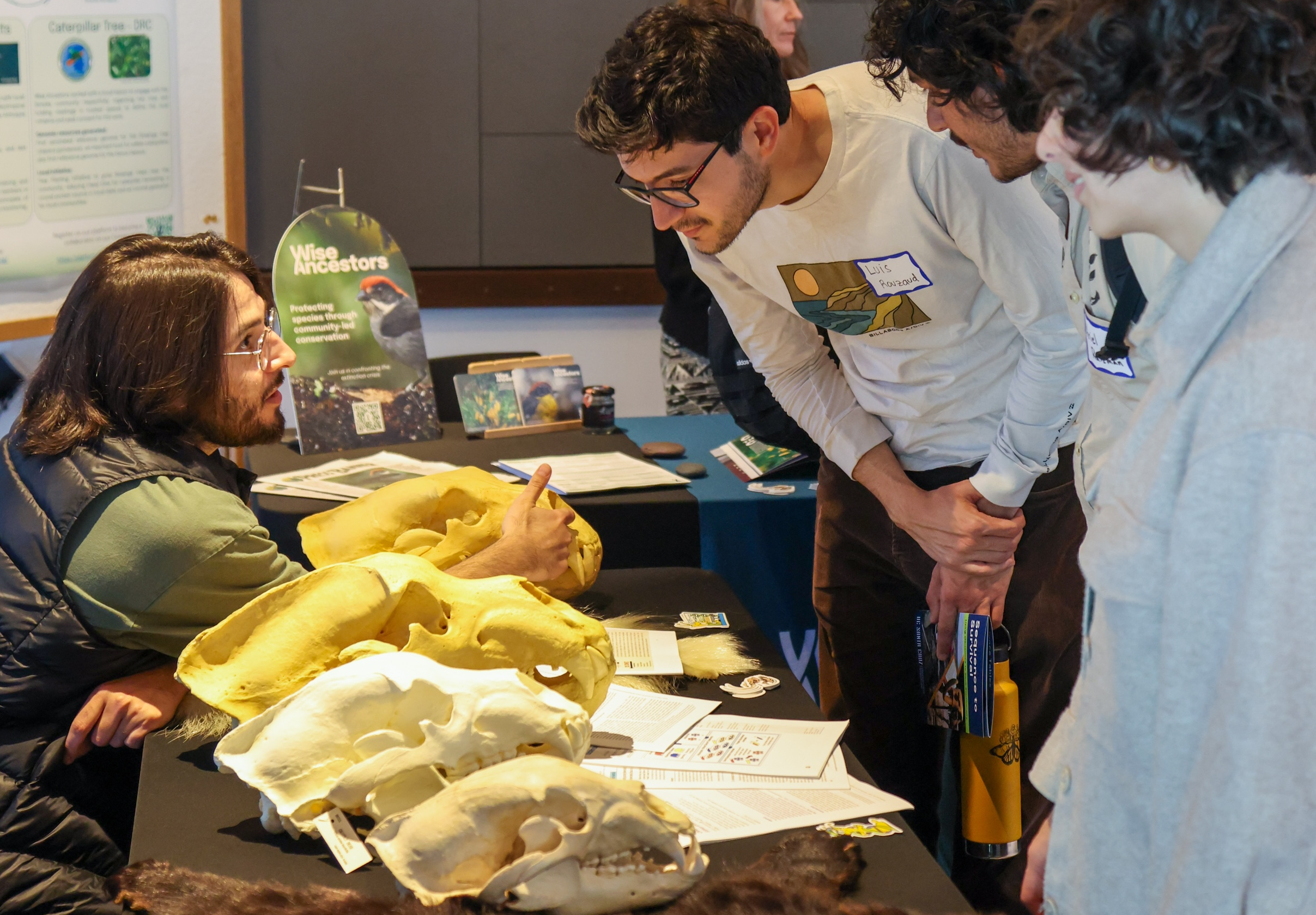
A member of Joanna Kelley's lab talks with symposium participants about a project to sequence the genomes of North American brown bears. Photos by Carolyn Lagattuta.
California is losing its living heritage. The golden bear on our state flag has been gone for over a century. Chinook salmon that once filled the Klamath River have declined to a fraction of their historic numbers. Kelp forests that once stretched along hundreds of miles of coastline have collapsed in vast stretches, taking with them the ecosystems that depend on them. This is the extinction crisis, and it is happening here, in our backyard.
How do scientists communicate the urgency of this crisis without scaring away the very people they need to engage? Beth Shapiro, CSO of Colossal Biosciences and Director of Conservation Genomics at the UC Santa Cruz Genomics Institute, had a clear answer when asked this question at a May 1 symposium.
“Offer solutions,” she said. While the scale of the problem can make people want to look away, if you can offer solutions, “people become energized.”
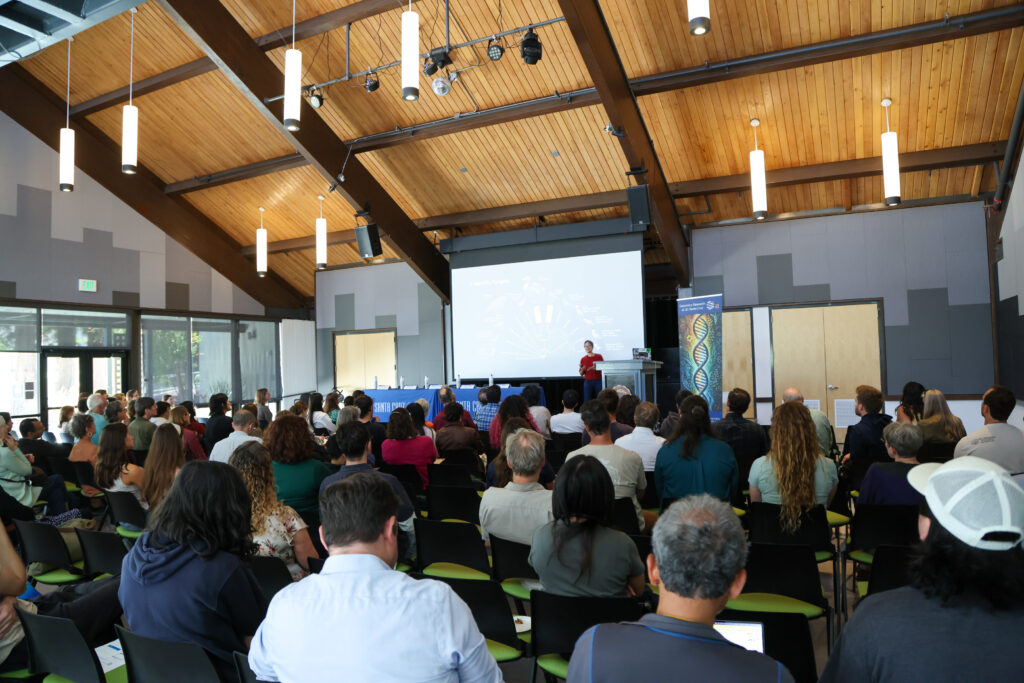
The event, organized by the UC Santa Cruz Genomics Institute, was titled Sequence to Survival: Using Genomics to Save Biodiversity. It brought together community members, students, and scientists for an afternoon of hopeful conversation about what a strong investment in new technologies and partnerships can do for the planet.
As Genomics Institute Scientific Director David Haussler noted in his opening remarks, we are at a remarkable moment in which, for the first time in history, we have tools powerful enough to understand and protect life on Earth at the level of its genetic code. UC Santa Cruz has been a genomics powerhouse since the first human genome was assembled here, and now they are turning those tools toward the natural world.
Using the science of de-extinction to protect endangered species
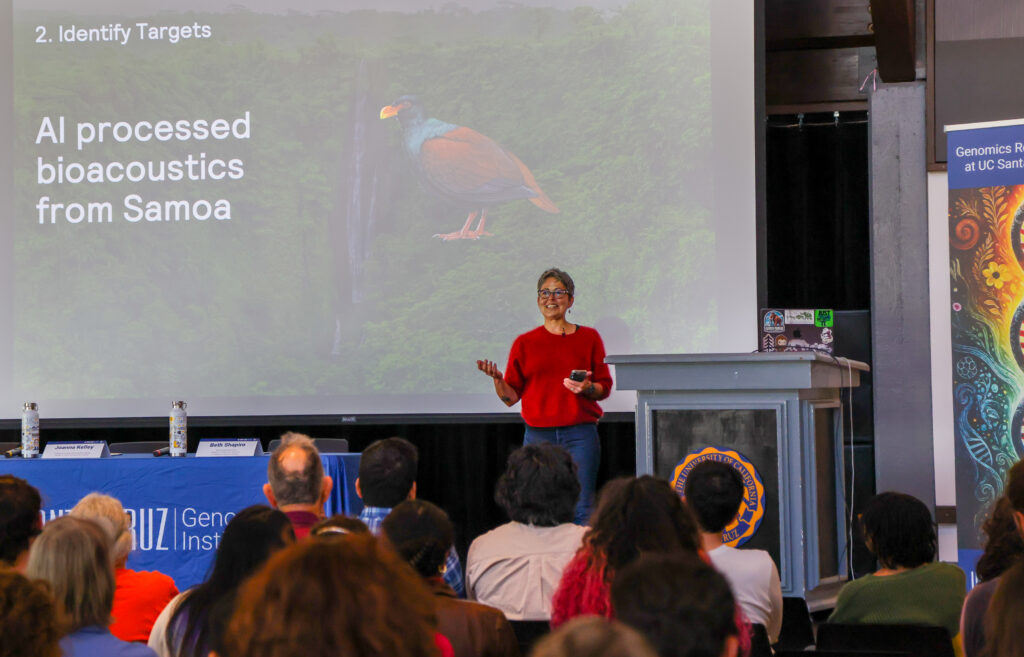
Beth Shapiro has spent her career as a Professor of Ecology and Evolutionary Biology at UC Santa Cruz studying DNA from extinct species and building tools to keep living ones from sharing their fate. She did not mince words in communicating the urgency of the current extinction crisis, comparing it to a car racing toward a cliff. There is risk in trying to steer a different course, she explained, but there is a far greater risk in doing nothing.
She walked the audience through how to de-extinct a species, combining ancient DNA, CRISPR genome editing, and the genomes of modern relatives to bring back traits lost 10,000 years ago. The tools developed along the way, she argued, are already protecting critically endangered species alive today. As an example, she described how Colossal, in collaboration with the University of Melbourne, is engineering resistance to cane toad toxin in the northern quoll, a small Australian marsupial whose population has dropped by 75 percent since the invasive cane toad was introduced in the 1930s. A quoll that can survive consuming cane toad toxin wouldn’t just save the quoll. It would help protect the entire web of species these invasive toads are threatening.
Science on the ground
After Shapiro’s keynote, she joined a panel discussion that illustrated the many ways genomic technologies are being deployed to protect species and ecosystems across California and beyond.
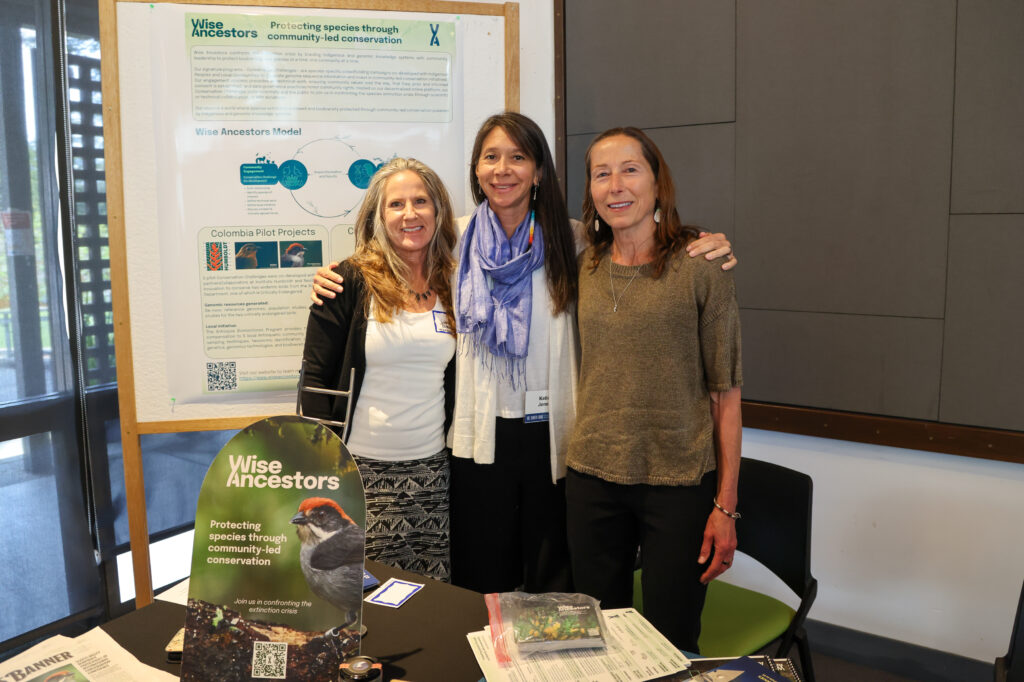
EEB Professor Joanna Kelley described her project to analyze the DNA of brown bears across North America to understand which populations have the genetic diversity to recover and thrive, and which are quietly running out of options. Meaghan Clark, a postdoc in EEB Professor Malin Pinsky’s lab, shared about searching for “super kelp” with genetic variants that help them survive warming oceans, a project funded by the Genomics Institute’s seed funding program. EEB Adjunct Assistant Professor and CALeDNA Director Rachel Meyer uses trace amounts of DNA shed by organisms into the environment around them (eDNA) to assess the health of entire ecosystems through simple water and soil samples. Katie Jones, the community engagement director at Wise Ancestors, a nonprofit co-founded by David Haussler, described what it looks like to co-design conservation science with the Indigenous communities who have stewarded these species for generations.
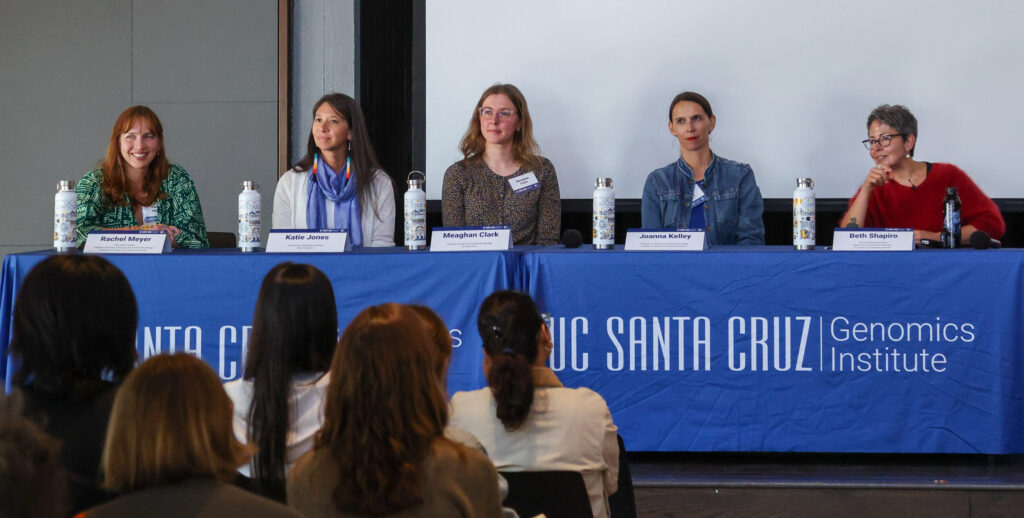
One of the through lines that connected all of these projects was intense collaboration. The Genomics Institute doesn’t just produce science, it convenes the partnerships that allow science to become action. Each of the panelists spoke about working with a mix of government agencies, land managers, tribal nations, nonprofits, citizen scientists, and donors around problems that no single lab or institution could solve alone.
Every panelist was clear that the work does not end in a lab and were committed to building partnerships that would allow their science to have the most impact. That requires building trust with communities that will actually steward these species, and for the public to care.
The panelists offered many ways that participants in the symposium could get involved, from supporting legislation that enables new conservation technologies, to showing up as volunteers, voters, and financial supporters. Meyer announced a new project with the California Department of Fish and Wildlife to build a statewide stream health index using eDNA, for which she is recruiting community volunteers. The project will dramatically reduce the time and effort required to assess the health of vital waterways, and is only possible because of grassroots efforts and early supporters, like the Genomics Institute, who believed in the technology when it was still brand new.
Ask a scientist
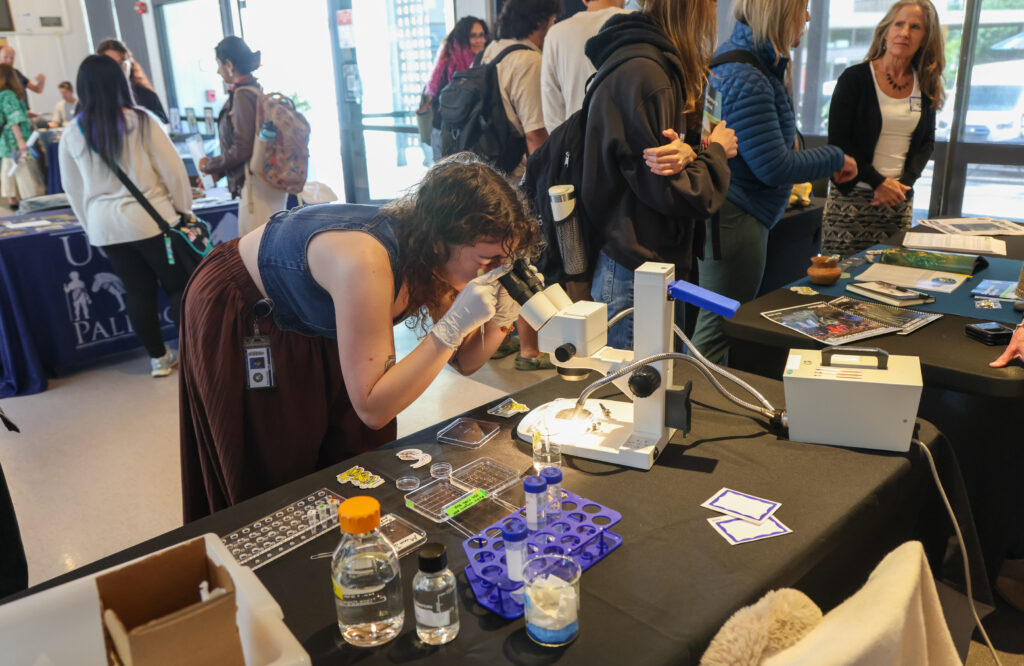
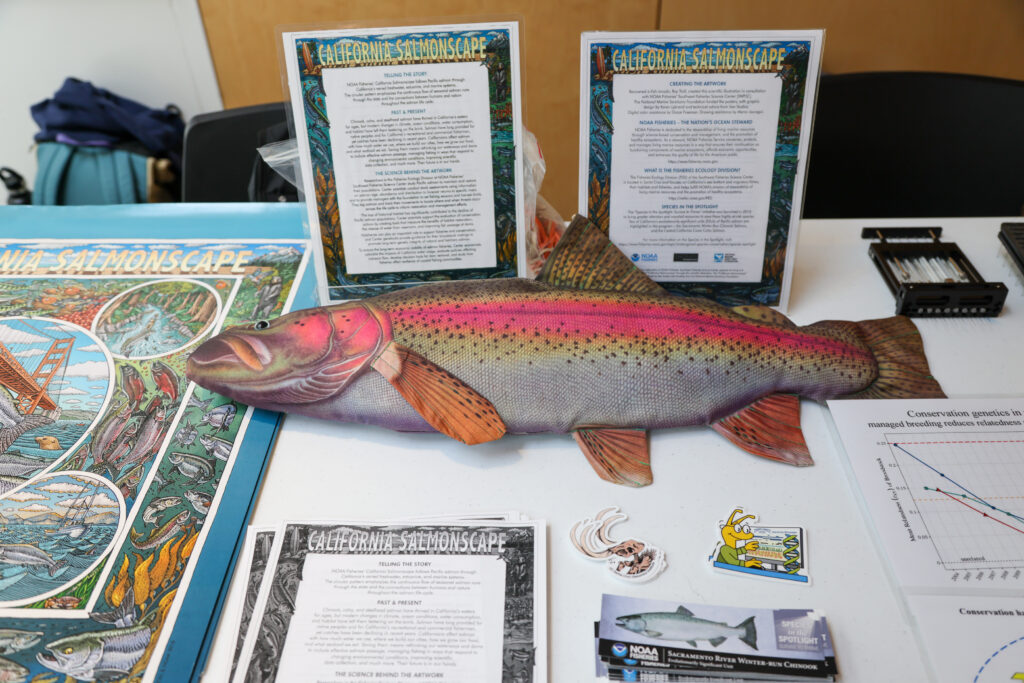
After the panel, attendees explored a showcase featuring eight GI-affiliated labs. The displays were hands-on and vivid: live kelp in a tank, bear skulls and pelts, fish preserved in jars, microscope samples, portable centrifuges used for field DNA processing, and beautifully designed California salmonscape poster giveaways.
Participants were able to speak directly with scientists leading conservation projects both locally and globally. Several researchers noted afterward that the event gave them a rare chance to see what colleagues in other labs were doing, sparking ideas for collaborations they hadn’t imagined before. Others had meaningful conversations with students and community members about how they could become more engaged in the work.
Get Involved
The UC Santa Cruz Genomics Institute funds the early-stage projects, like the kelp preservation project and eDNA work shared at the symposium, and helps foster the collaboration that makes science sustainable.
This work is urgent. It is also working. To support their conservation genomics program, please consider donating to their Conservation Seed Fund, or reach out to genomics.info@ucsc.edu to learn more about how you can help. You can also subscribe to their quarterly newsletter to stay in touch!