Earth & Space
UC Santa Cruz partners with NASA’s Ames Research Center to create opportunities for students and research collaborations
The partnership, established as a Space Act agreement, builds on a collaboration between campus and the government research center that was first forged in 2003
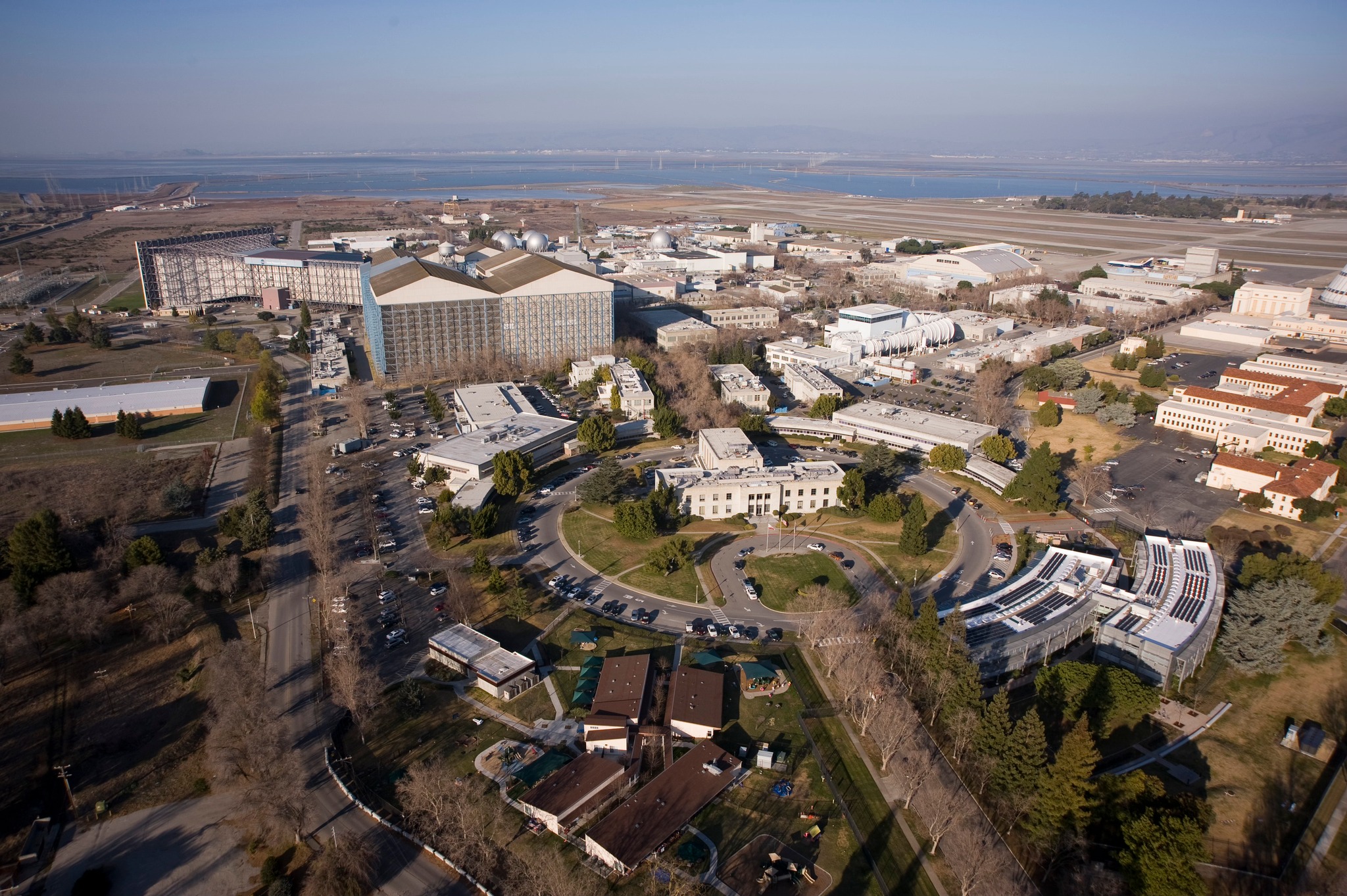
NASA’s Ames Research Center—one of the space agency’s 10 field centers—is located in the heart of Silicon Valley, and since 1939, has led NASA in conducting world-class research and development in aeronautics, exploration technology, and science aligned with the center’s core capabilities.
Credit: NASA Ames Research Center
Press Contact
Key takeaways
- UC Santa Cruz and NASA have teamed up through 2028 to facilitate new research collaborations. Campus members have expressed widespread interest in topics ranging from artificial intelligence to climate resilience and space biosciences.
- The partnership will also give students hands-on learning and career opportunities across many frontier areas of science and engineering.
- Starting with a kickoff meeting in late May, UC Santa Cruz and NASA will conduct joint workshops and research discussions to spark new ideas.
A new agreement between NASA and the University of California, Santa Cruz, launches a new collaboration with the agency’s Ames Research Center at Moffett Field to foster frontier research collaborations and to create educational and career-development opportunities for UC Santa Cruz students.
The agreement, established through the framework of the National Aeronautics and Space Act, runs through December 2028. Under this agreement, Ames and UC Santa Cruz will jointly develop new research collaborations and student-exchange opportunities, motivated by a mutual interest in advancing science and technology.
“UC Santa Cruz has a long history of advancing bold, interdisciplinary research, and we’re excited to renew this partnership with NASA Ames,” said UC Santa Cruz Chancellor Cynthia Larive. “This collaboration creates incredible opportunities for our students to engage with real-world challenges and take part in cutting-edge discovery. It also helps inspire the next generation of scientists, engineers, and innovators.”
This new collaboration is a successor to the University Affiliated Research Center, a partnership between UC Santa Cruz that ran from 2003 to 2016. In January 2024, Larive led a delegation of over a dozen faculty members that identified a range of common interests with Ames. The delegation agreed that collaboration should be re-established, and after two years of discussion and deciding on the terms, a new agreement was reached.
“This effort was led by the Science Division, but the agreement applies to the whole campus. All students, faculty, and other researchers can potentially benefit,” said Science Division Dean Bryan Gaensler. “It’s clear that there is a lot of interest and excitement, and that there is a huge number of areas of overlap with the work being done at NASA Ames.”
When Gaensler sent out an initial call throughout campus to gauge interest in a partnership with Ames, he received more than 70 responses from people across all five divisions: the sciences, engineering, humanities, social sciences, and arts. With a partnership re-established, UC Santa Cruz can directly place students in Ames research laboratories, engage NASA experts to contribute to lectures or courses, co-host workshops or symposia, and make use of NASA’s testing facilities and lab tools.
Thus far, areas of strong interest that have been expressed by those on campus include astrobiology, materials science and engineering, nanotechnology and smart materials, artificial intelligence, atmospheric science, remote sensing, and environmental resilience. At a kickoff meeting on May 27 to formally launch the partnership, more than 130 participants will focus on three broad areas covered by the Ames science directorate: Earth science, space science and astrobiology, and space bioscience.
Gaensler said that the partnership will enhance research opportunities and the student experience with new perspectives and activities that can only be offered at a NASA research facility.
“Genuinely new ideas and breakthroughs often come when people with differing expertise explore the boundaries of knowledge together,” Gaensler said. “The many fresh collaborations that this agreement will make possible will be a great source of creativity for our faculty and researchers, and will make for a fantastic suite of research experiences for our students.”