
Health
-
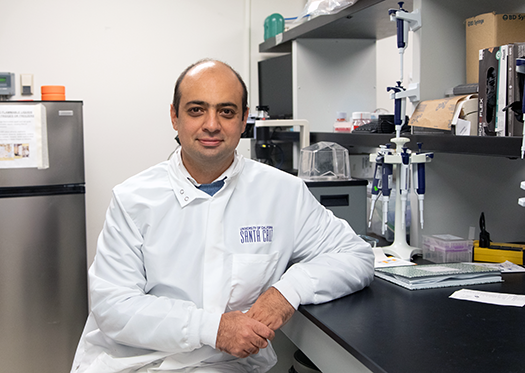
New grant funds effort to uncover therapeutic targets for neuropsychiatric disorders
A $10.3 million grant from the California Institute for Regenerative Medicine (CIRM), the state’s stem cell agency, will fund a multi-UC effort to better understand neuropsychiatric disorders.
-

UC Santa Cruz Innovation Catalyst Grant program propels research into real-world solutions
UC Santa Cruz has announced the Innovation Catalyst Grant proof-of-concept program awardees, showcasing the campus’s commitment to fostering transformative research with significant societal benefits.
-

Long read sequencing reveals more genetic information while cutting time and cost of rare disease diagnoses
A new study shows that long-read sequencing has the potential to improve the rate of diagnosis while reducing the time to diagnosis from years to days — in a single test and at a much lower cost.
-

Mangroves save $855 billion in flood protection globally, new study shows
Mangroves have been shown to provide $855 billion in flood protection services worldwide, according to a new study from the Center for Coastal Climate Resilience at UC Santa Cruz. The research is featured in the World Bank’s 2024 edition of The Changing Wealth of Nations.
-

2024 iGEM team’s foundational science project tackles infant formula affordability
The 2024 UC Santa Cruz iGEM team won a silver medal at the international Jamboree for a project focused on addressing the high cost of infant formula through a foundational synthetic biology approach.
-

How optogenetics can put the brakes on epilepsy seizures
In what could one day become a new treatment for epilepsy, researchers at UC San Francisco, UC Santa Cruz, and UC Berkeley have used pulses of light to prevent seizure-like activity in neurons.
-

Bioluminescent proteins made from scratch enable non-invasive, multi-functional biological imaging
Assistant Professor of Biomolecular Engineering Andy Yeh is designing completely artificial proteins that produce bioluminescence to serve as a non-invasive method for bioimaging, diagnostics, drug discovery, and more.
-

Engineers awarded CDC contract to build pathogen-tracing public health tools
The CDC has awarded Corbett-Detig and his team at the UCSC Genomics Institute a two-year, $2.52 million contract to continue their work tracking the COVID-19 virus’s evolution and expand their software tools to track other pathogens.
-
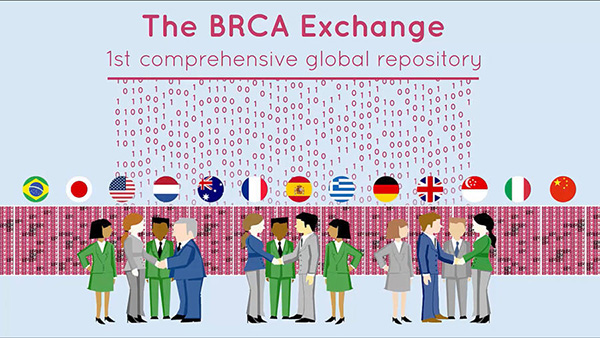
Powerful new analyses improve breast cancer risk assessment on a massive scale
A new feature on the BRCA Exchange, a platform which consolidates data on the genes associated with breast cancer, is rolling out a new feature to make cancer risk much easier to assess.
-
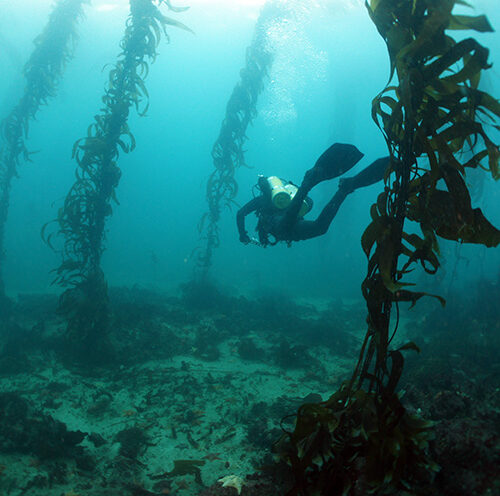
Genomics Institute provides seed funds for six multidisciplinary projects
The Genomics Institute has awarded grants of up to $50,000 to six multidisciplinary research projects in the inaugural year of its seed funding program
-

New apps will enable safer indoor navigation for blind people
Two new apps will enable blind people to navigate indoor buildings with spoken directions from a smartphone app, providing a safe method of wayfinding where GPS doesn’t work.
-
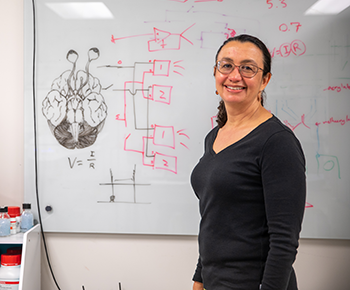
Researchers to investigate genetic roots of autism, look for new treatments
A new award from the California Institute for Regenerative Medicine will support a team of UC Santa Cruz researchers in exploring the genetic underpinnings of autism spectrum disorder.