
Health
-

How optogenetics can put the brakes on epilepsy seizures
In what could one day become a new treatment for epilepsy, researchers at UC San Francisco, UC Santa Cruz, and UC Berkeley have used pulses of light to prevent seizure-like activity in neurons.
-

Bioluminescent proteins made from scratch enable non-invasive, multi-functional biological imaging
Assistant Professor of Biomolecular Engineering Andy Yeh is designing completely artificial proteins that produce bioluminescence to serve as a non-invasive method for bioimaging, diagnostics, drug discovery, and more.
-
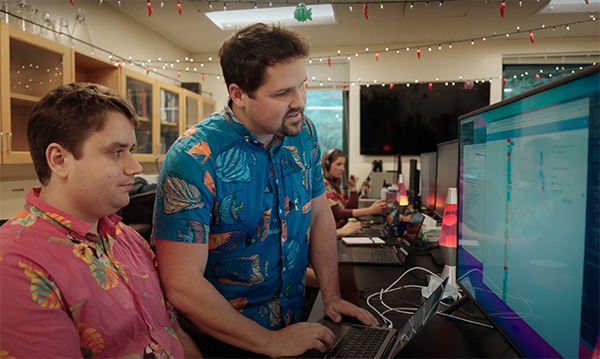
Engineers awarded CDC contract to build pathogen-tracing public health tools
The CDC has awarded Corbett-Detig and his team at the UCSC Genomics Institute a two-year, $2.52 million contract to continue their work tracking the COVID-19 virus’s evolution and expand their software tools to track other pathogens.
-

Powerful new analyses improve breast cancer risk assessment on a massive scale
A new feature on the BRCA Exchange, a platform which consolidates data on the genes associated with breast cancer, is rolling out a new feature to make cancer risk much easier to assess.
-

Genomics Institute provides seed funds for six multidisciplinary projects
The Genomics Institute has awarded grants of up to $50,000 to six multidisciplinary research projects in the inaugural year of its seed funding program
-
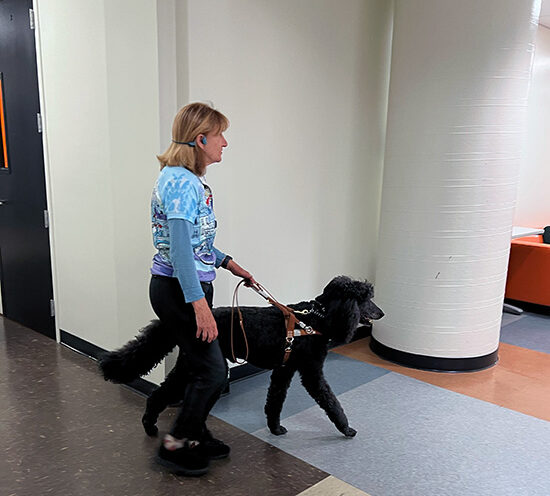
New apps will enable safer indoor navigation for blind people
Two new apps will enable blind people to navigate indoor buildings with spoken directions from a smartphone app, providing a safe method of wayfinding where GPS doesn’t work.
-
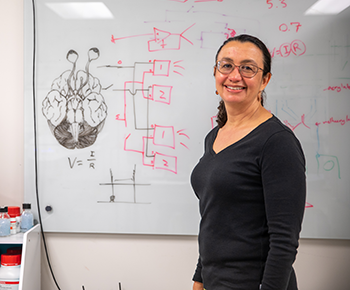
Researchers to investigate genetic roots of autism, look for new treatments
A new award from the California Institute for Regenerative Medicine will support a team of UC Santa Cruz researchers in exploring the genetic underpinnings of autism spectrum disorder.
-

Genomics Institute researcher Melissa Cline to lead efforts to facilitate diagnosis of genetic diseases
Genomics Institute associate research scientist Melissa Cline will serve as the co-lead of the Global Alliance for Genomics and Health’s Genomic Knowledge Standards Work Stream.
-

Singing from memory unlocks a surprisingly common musical superpower
UC Santa Cruz psychologists studied “earworms,” the types of songs that get stuck in your head and play automatically on a loop, to show that highly accurate pitch memory is much more common than might be expected.
-

UCSC alumni awarded large NSF grant to grow virtual reality physical rehabilitation startup Immergo Labs
The National Science Foundation awarded three Baskin Engineering alumni with a $1,000,000 Small Business Innovation Research grant to support the research and development of an extended reality platform for full-body physical rehabilitation.
-

Genomics Institute’s Research Mentoring Internship recognized with ‘Inspiring Programs in STEM’ award
The UC Santa Cruz Genomics Institute’s Research Mentoring Internship program was recognized with the ‘Inspiring Programs in STEM’ award from Insight Into Diversity magazine.
-
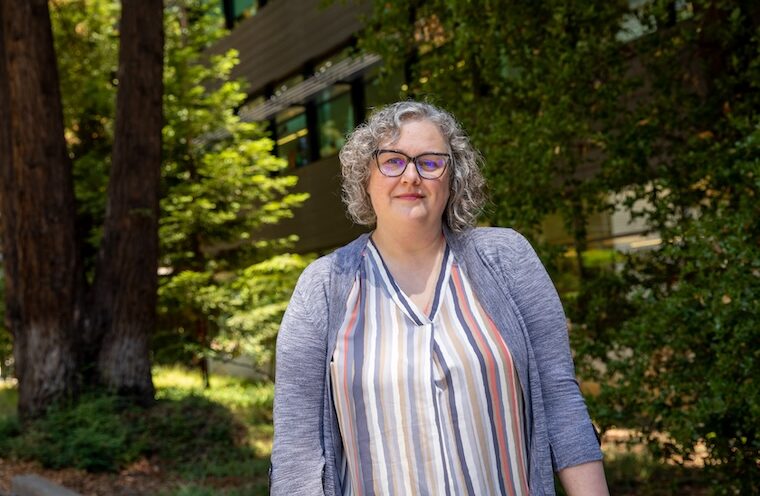
Biochemist Carrie Partch selected as Howard Hughes Medical Institute investigator
Carrie Partch, professor of chemistry and biochemistry at UC Santa Cruz, is among 26 top scientists chosen by the Howard Hughes Medical Institute (HHMI) to be HHMI investigators and receive the support needed to move their research in creative new directions and make groundbreaking discoveries.