
Health
-

Scientists find that small regions of the brain can take micro-naps while the rest of the brain is awake and vice versa
For the first time, scientists have found that sleep can be detected by patterns of neuronal activity just milliseconds long
-

Study offers guidance on state-of-the-art long-read RNA sequencing techniques
A new study evaluates the strengths and weaknesses of the two leading long-read RNA sequencing platforms and offers guidance for the field.
-

Stem cell study reveals distinct population of ‘troublemaker’ platelet cells that appear with aging and lead to blood clotting, disease
Professor of Biomolecular Engineering Camilla Forsberg and her research group have discovered a distinct, secondary population of platelets that appears with aging and have hyperreactive behavior and unique molecular properties, which could make them easier to target with medication.
-
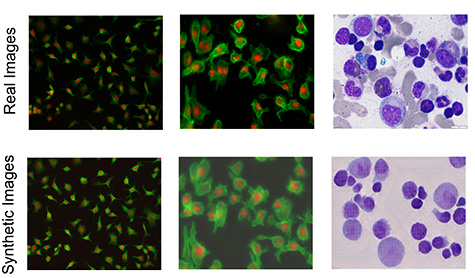
UC Santa Cruz researchers’ tool creates ‘synthetic’ images of cells for enhanced microscopy analysis
UC Santa Cruz researchers have developed a method to use an image generation AI model to create realistic images of single cells, which are then used as “synthetic data” to train an AI model to better carry out single cell-segmentation.
-
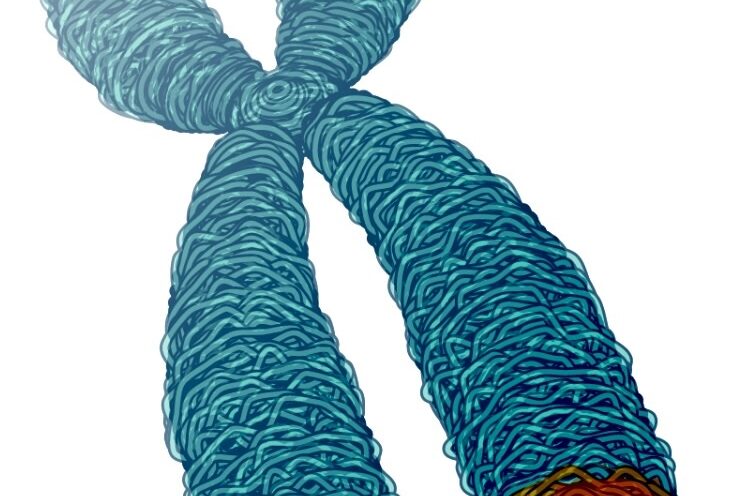
New study finds potential targets at chromosome ends for degenerative disease prevention
Published online today in Science, a new study finds that telomere lengths follow a different pattern than has thus far been understood. Instead of telomere lengths falling under one general range of shortest to longest across all chromosomes, this study finds that different chromosomes have separate end-specific telomere-length distributions.
-

New diagnostic tool achieves accuracy of PCR tests with faster and simpler nanopore system
A new diagnostic tool developed by UCSC’s Holger Schmidt and his collaborators can test for SARS-CoV-2 and Zika virus with the same or better accuracy as high-precision PCR tests in a matter of hours.
-
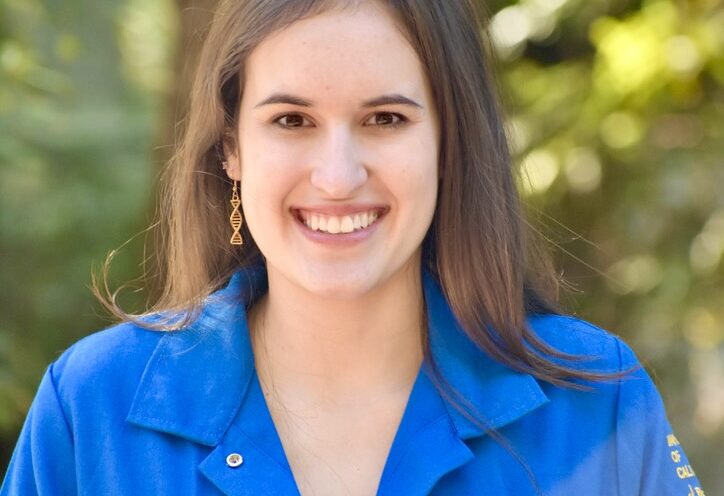
Ph.D. student takes gut-wrenching research to the stage
Natalie Pedicino, a Ph.D. student in Molecular, Cell, and Developmental Biology, will bolt up to San Francisco on May 3 to distill her past three years of research into a three-minute lightning talk that will test her stage presence and science-communication skills.
-
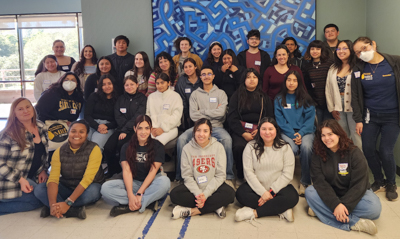
Santa Cruz County youth aim to improve community mental health through better support for immigrants
A three-year partnership between UC Santa Cruz and United Way to empower young change-makers is wrapping up this spring, with youth leaders from across Santa Cruz County preparing to distribute resource kits for local immigrants.
-
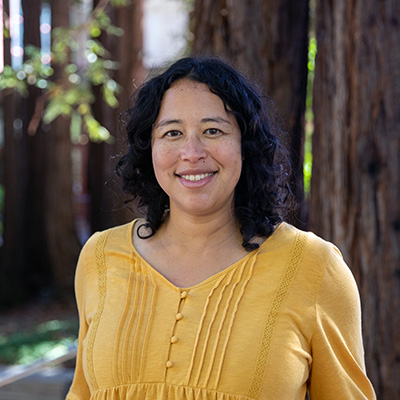
Research on understudied lung cancer drivers may improve treatments
Angela Brooks has been awarded a $2.5 million grant from the National Institutes of Health’s prestigious R01 program to study how gene isoforms impact cancer progression and what treatments might be most effective or lead to drug resistance.
-

Chemists use peptides from Alzheimer’s and Type II diabetes to describe five new rippled beta-sheets
Scientists from the University of California, Santa Cruz, synthesized peptides from proteins associated with Alzheimer’s and Type II Diabetes and described five new rippled beta-sheet structures.
-
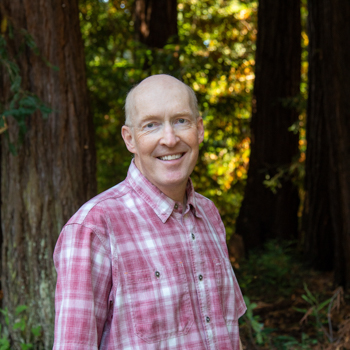
Lessons from COVID reveal how monopoly power in the biopharmaceutical industry is evolving
In his latest paper, Politics Professor Matt Sparke and his coauthor use the case of COVID to demonstrate both the enduring problem of bio-pharmaceutical monopolies and the ways they have been extended and entrenched through complex market-state interconnections.
-

Protein designer awarded $2.5M to develop bioluminescent protein for deep tissue imaging
Assistant Professor of Biomolecular Engineering Andy Yeh was awarded a nearly $2.5 million grant from the Chan Zuckerberg Initiative to develop completely artificial enzymes that can produce bioluminescence in the body for deep tissue imaging.