BE-healthwellbeing
-

Working to improve clarity for patients assessing their genetic breast cancer risk
A project to expedite the analysis of variants on the BRCA 1 and 2 genes, the most commonly affected genes in breast cancer cases, will help more people to better understand their cancer risk.
-
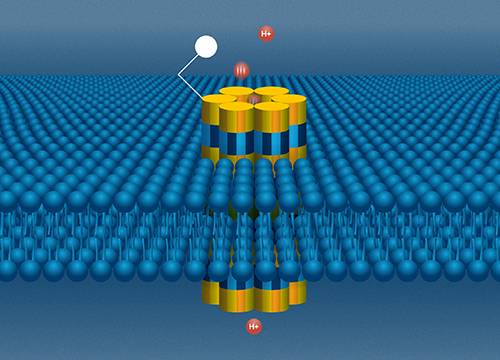
Novel device combines nanopores with electronic signals for disease detection
Research led by UC Santa Cruz Professor of Electrical and Computer Engineering Marco Rolandi shows the power of bioprotonic nanopores for disease detection.
-
New blood test for noncoding RNA significantly improves cancer detection
Assistant Professor of Biomolecular Engineering Daniel Kim and his lab are developing more accurate and powerful liquid biopsy technologies that take advantage of signals from RNA “dark matter,” an understudied area of the genome.
-
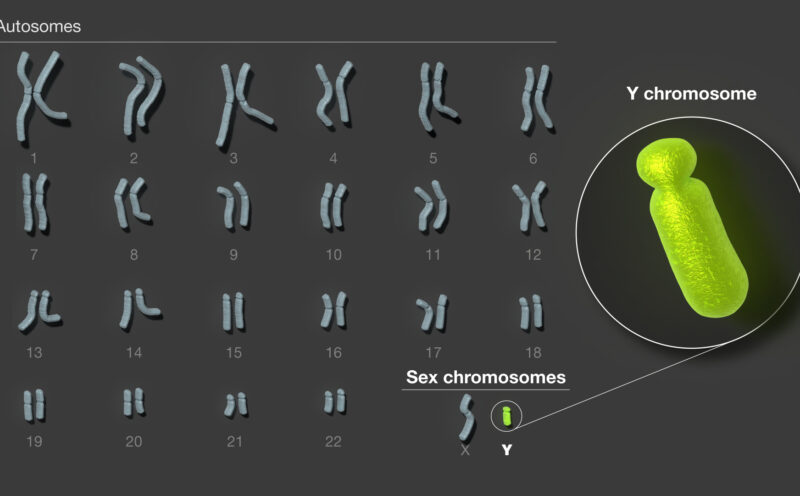
Scientists release the first complete sequence of a human Y chromosome
Scientists have completed the first full sequence of a human Y chromosome, completing the set of end-to-end human chromosomes and helping researchers to better understand human reproduction, evolution, and population change.
-
Novel deep learning-based software detects and tracks individual cells with high precision
Assistant Professor of Biomolecular Engineering Ali Shariati and doctoral student Abolfazl Zarageri together with several student researchers in the Shariati lab have developed and released a new deep learning model called “DeepSea,” one of the only tools with the ability to segment cells, track them and detect their division to follow lineages of cells.
-
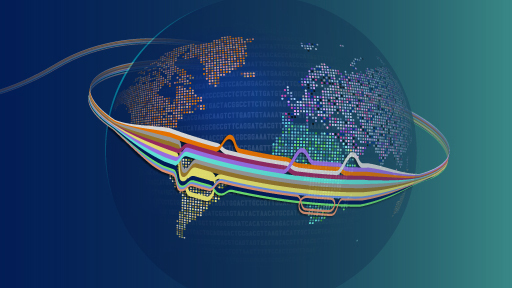
Human pangenome reference will enable more complete and equitable understanding of genomic diversity
UC Santa Cruz scientists, along with a consortium of researchers, have released a draft of the first human pangenome—a new, usable reference for genomics that combines the genetic information of 47 individuals from different ancestral backgrounds to allow for a deeper, more accurate understanding of worldwide genomic diversity.
-
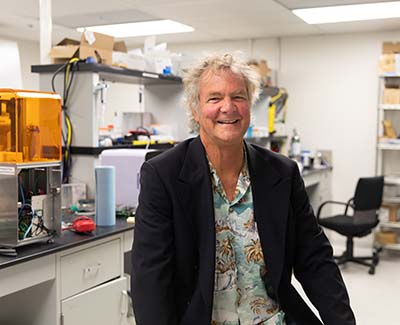
UC Santa Cruz to lead data collection center for major federal project on genetic underpinnings of neurological conditions
The UC Santa Cruz Genomics Institute will run the Data Coordination Center for the Scalable and Systematic Neurobiology of Psychiatric and Neurodevelopmental Disorder Risk Genes (SSPsyGene) Consortium.
-
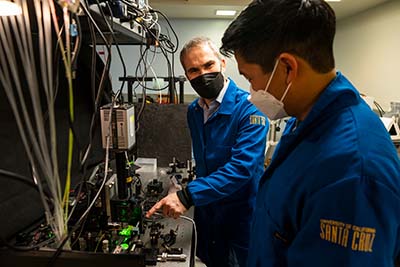
Deep neural network provides robust detection of disease biomarkers in real time
Holger Schmidt’s lab has developed a deep neural network that improves the accuracy of their unique devices for detecting pathogen biomarkers.
-
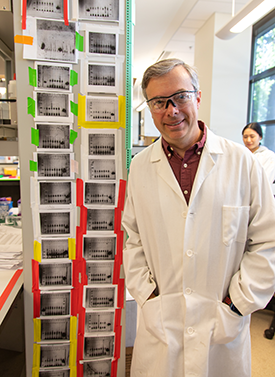
Naming system for transfer RNA fragments will increase research productivity, standardization
UC Santa Cruz Professor of Biomolecular Engineering Todd Lowe and his group created a new naming scheme for tRNA fragments aimed at standardizing research.
-
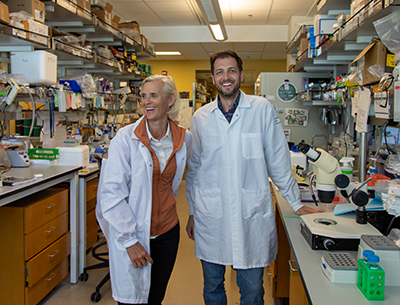
Two major stem cell research projects supported with more than $2.6 million in funding
The California Institute for Regenerative Medicine (CIRM) will provide more than $2.6 million in total funding for two major stem cell research projects led by scientists at UC Santa Cruz, the organization announced.
-
Researchers produce first-ever toolkit for RNA sequencing analysis using a ‘pantranscriptome’
Researchers at UC Santa Cruz introduce the first-ever method for analyzing RNA sequencing data genome-wide using a “pantranscriptome.”
-

Study presents vision of machine learning leveraged for precision medicine
In a new perspective published in the journal Cell Reports Physical Science, Associate Professor of Applied Mathematics Marcella Gomez details a vision for how the field can move beyond static data to create systems that measure and monitor the real-time responses of the body to a variety of factors and use a machine learning algorithm…