BE-healthwellbeing
-
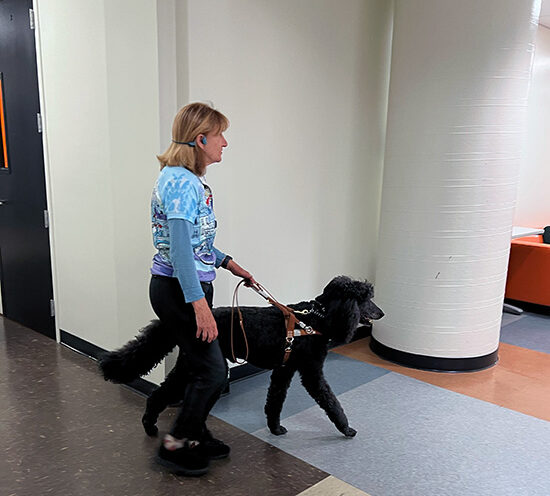
New apps will enable safer indoor navigation for blind people
Two new apps will enable blind people to navigate indoor buildings with spoken directions from a smartphone app, providing a safe method of wayfinding where GPS doesn’t work.
-
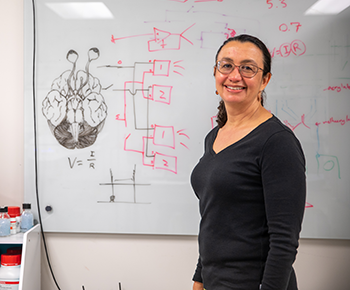
Researchers to investigate genetic roots of autism, look for new treatments
A new award from the California Institute for Regenerative Medicine will support a team of UC Santa Cruz researchers in exploring the genetic underpinnings of autism spectrum disorder.
-

UCSC alumni awarded large NSF grant to grow virtual reality physical rehabilitation startup Immergo Labs
The National Science Foundation awarded three Baskin Engineering alumni with a $1,000,000 Small Business Innovation Research grant to support the research and development of an extended reality platform for full-body physical rehabilitation.
-

Scientists find that small regions of the brain can take micro-naps while the rest of the brain is awake and vice versa
For the first time, scientists have found that sleep can be detected by patterns of neuronal activity just milliseconds long
-

Stem cell study reveals distinct population of ‘troublemaker’ platelet cells that appear with aging and lead to blood clotting, disease
Professor of Biomolecular Engineering Camilla Forsberg and her research group have discovered a distinct, secondary population of platelets that appears with aging and have hyperreactive behavior and unique molecular properties, which could make them easier to target with medication.
-
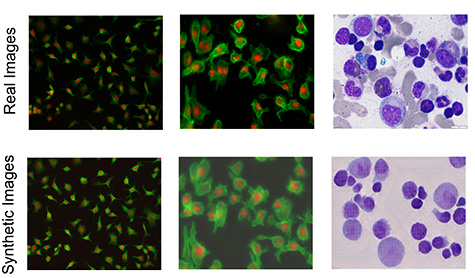
UC Santa Cruz researchers’ tool creates ‘synthetic’ images of cells for enhanced microscopy analysis
UC Santa Cruz researchers have developed a method to use an image generation AI model to create realistic images of single cells, which are then used as “synthetic data” to train an AI model to better carry out single cell-segmentation.
-

New diagnostic tool achieves accuracy of PCR tests with faster and simpler nanopore system
A new diagnostic tool developed by UCSC’s Holger Schmidt and his collaborators can test for SARS-CoV-2 and Zika virus with the same or better accuracy as high-precision PCR tests in a matter of hours.
-
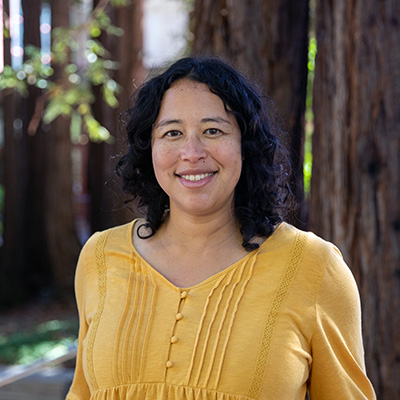
Research on understudied lung cancer drivers may improve treatments
Angela Brooks has been awarded a $2.5 million grant from the National Institutes of Health’s prestigious R01 program to study how gene isoforms impact cancer progression and what treatments might be most effective or lead to drug resistance.
-

Protein designer awarded $2.5M to develop bioluminescent protein for deep tissue imaging
Assistant Professor of Biomolecular Engineering Andy Yeh was awarded a nearly $2.5 million grant from the Chan Zuckerberg Initiative to develop completely artificial enzymes that can produce bioluminescence in the body for deep tissue imaging.
-
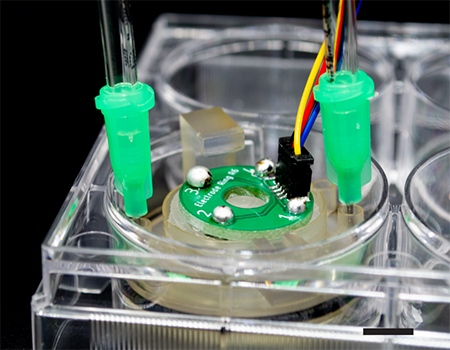
Bioelectronics enable precise control of organoids for better understanding of neuro diseases, neuron circuits
UC Santa Cruz researchers have developed a new plug-and-play bioelectronics system that enables researchers to precisely control neuronal activity in cortical organoids, which will help unlock new discoveries on how brains form neural circuits and the underpinnings of neurodevelopmental and degenerative diseases.
-
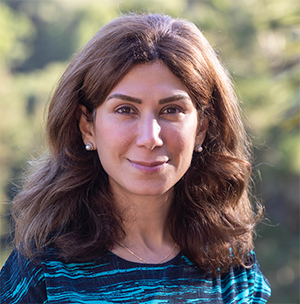
Innovative PET technology will enable precise multitracer imaging of the brain
UC Santa Cruz Associate Professor of Electrical and Computer Engineering Shiva Abbaszadeh is developing technology that will enable precise multitracer positron emission tomography imaging of the human body’s most complex organ with the support of a $4 million NIH grant.
-

Cloud technologies bring organoids into undergraduate classrooms for the first time
For the first time, remote education tools have allowed undergraduate students to gain direct experience experimenting with cortical organoids grown at UC Santa Cruz.