bashapir
-

Two Centuries On, Smithsonian Connects Jefferson’s Hair to Hemings’s Children
But after getting permission from the Smithsonian’s Board of Regents, Kurin started working with Beth Shapiro and Ed Green, two experts in ancient DNA at the University of California, Santa Cruz, who were pioneering new techniques for extracting and sequencing DNA from challenging sources. Additional coverage in the New Yorker, Atlantic, NPR, Smithsonian Magazine, and…
-
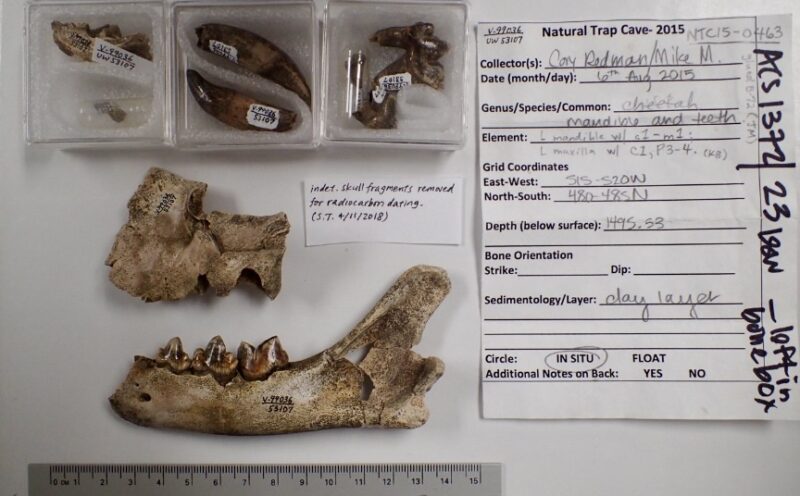
Not a cheetah: Ancient DNA reveals the surprising Arctic life of extinct North American cat
New paleogenomics research reveals how the so-called American ‘cheetah’ adapted to harsh Arctic conditions by preying on fish
-

Researchers took DNA from 115 ancient bison. What they found will help the bison of today
Writing in Science, the researchers say their findings could help guide conservation efforts. “Ancient DNA is rewriting the story of one of America’s most iconic conservation successes,” says Beth Shapiro from the University of California, Santa Cruz. Additional coverage in Science Magazine.
-
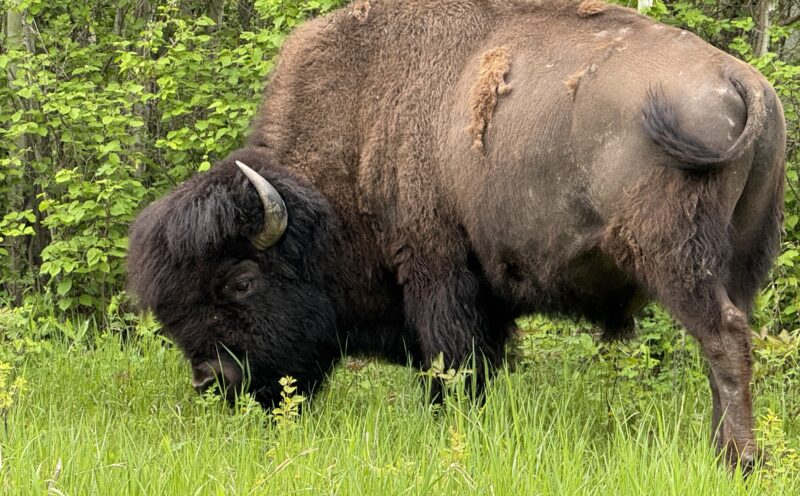
Decoding the North American bison’s genome to better inform conservation efforts
UC Santa Cruz researchers lead analysis of ancient DNA that yields a genomic roadmap for the restoration of the continent’s largest land mammal, pushed nearly to extinction because of past human activities
-

Scientists say Beefalo are all beef, no -alo. Breeders disagree
“It was a surprise to us to discover that most of the Beefalo individuals we sequenced did not have detectable bison ancestry,” says Beth Shapiro, an evolutionary biologist at the University of California, Santa Cruz.
-
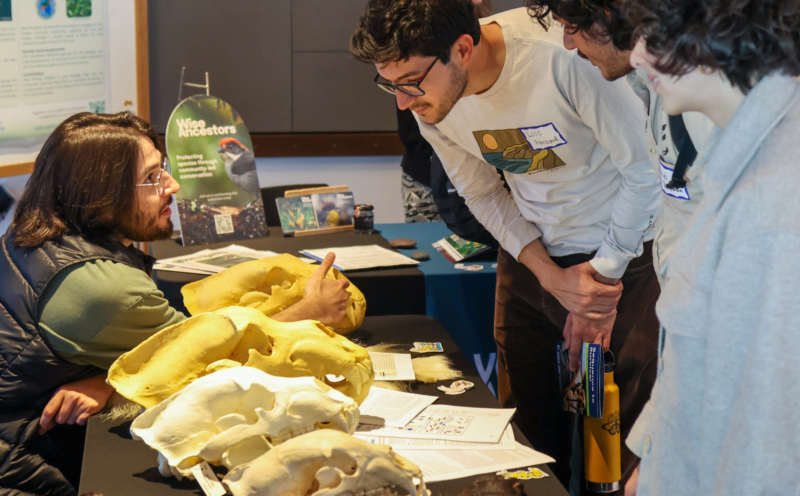
Extinction is not inevitable: Genomics symposium explores using DNA to save life on Earth
Conservation genomics is a bold new tool for protecting life on earth, but it will take all of us to slow the extinction crisis.
-

Scientists Identify the World’s First Known Dog, Which Pushes Back the Animals’ Genetic Record by About 5,000 Years
Regardless, the studies provide a “significant advance” in understanding the origins of dogs, Beth Shapiro, an evolutionary biologist at the University of California, Santa Cruz, who was not involved in the work, tells Science News.
-

Can a species ‘de-evolve’? Wild tomatoes in the Galápagos may provide compelling evidence
Beth Shapiro, a professor of ecology and evolutionary biology at University of California, Santa Cruz, said she finds the term to be a great way to engage more people in the concept of evolution.
-

‘It’s just a weird, weird bird’: Why we got the dodo so absurdly wrong
“The dodo laid a single egg in a nest on the ground, which made these eggs particularly vulnerable to predation by introduced species like rats and pigs, which arrived on Mauritius at the same time as people,” says Beth Shapiro, an evolutionary biologist at the University of California-Santa Cruz.
-

Following Late Pleistocene horse migration toward our sustainable future
Cutting-edge UC Santa Cruz Paleogenomics Lab was key to genetically tracing mass movements long ago
-

Acclaimed evolutionary biologist Beth Shapiro elected to National Academy of Sciences
The academy provides science, engineering, and health-policy advice to the federal government and other organizations.
-

Ancient DNA research aids de-extinction efforts and reveals surprising dire wolf ancestry
UC Santa Cruz scientists worked with Colossal Biosciences to help reveal secrets in the dire wolf genome that contributed to what the startup is calling the world’s first de-extinction