Earth & Space
Not a cheetah: Ancient DNA reveals the surprising Arctic life of extinct North American cat
New paleogenomics research reveals how the so-called American ‘cheetah’ adapted to harsh Arctic conditions by preying on fish

Miracinonyx trumani skull fragments recovered deep underground from Natural Trap Cave, Wyo. (Credit: Julie Meachen)
Press Contact
Key takeaways
- Ancient DNA analysis reveals that Miracinonyx trumani was a relative of the modern puma, and its famous speed and slender build were simply a result of evolutionary convergence.
- While their southern relatives thrived in temperate grasslands, northern populations in the Arctic Yukon displayed remarkable flexibility by carving out a specialized niche as fish eaters.
- Rather than a sudden collapse due to inbreeding, the species experienced a slow, long-term reduction in genetic diversity, leaving it unable to adapt when the climate eventually shifted.
A new study led by researchers at the University of California, Santa Cruz, has overturned decades of assumptions about Miracinonyx trumani, the extinct predator popularly known as the American “cheetah.” By analyzing nuclear paleogenomes and stable isotopes from fossils found as far north as the Yukon, scientists have discovered that this iconic cat was not a true cheetah, but a highly adaptable relative of the puma that specialized in eating fish to survive the Arctic.
The findings, published on September 4 in Current Biology, reveal that the species’ range extended 20 degrees of latitude further north than previously recognized. While southern populations in regions like Wyoming and Florida lived as generalist predators in temperate grasslands, their northern counterparts in the Arctic Yukon carved out a unique niche as tertiary consumers, likely specializing in anadromous fish such as salmon.
With slender bodies and long front legs that may have helped them move efficiently across the open landscapes of Pleistocene North America, an adult M. trumani was thought to weigh around 150 pounds on average, stand about 3 feet tall, and measure about 8 feet long to the tip of its tail. Despite its cheetah-like appearance, this and other recent research suggest they were a versatile predator, capable of both terrestrial pursuit and grasping prey with powerful forelimbs.
“These cats were remarkably flexible, much like pumas are across their range today,” said Molly Cassatt-Johnstone, a Ph.D. candidate in the Paleogenomics Lab at UC Santa Cruz and lead author of the study. “We found loss-of-function mutations in certain genes that regulate circadian rhythms, suggesting they may have adapted to the extreme light cycles of summers and winters in northern latitudes.”
The ghosts of predators past
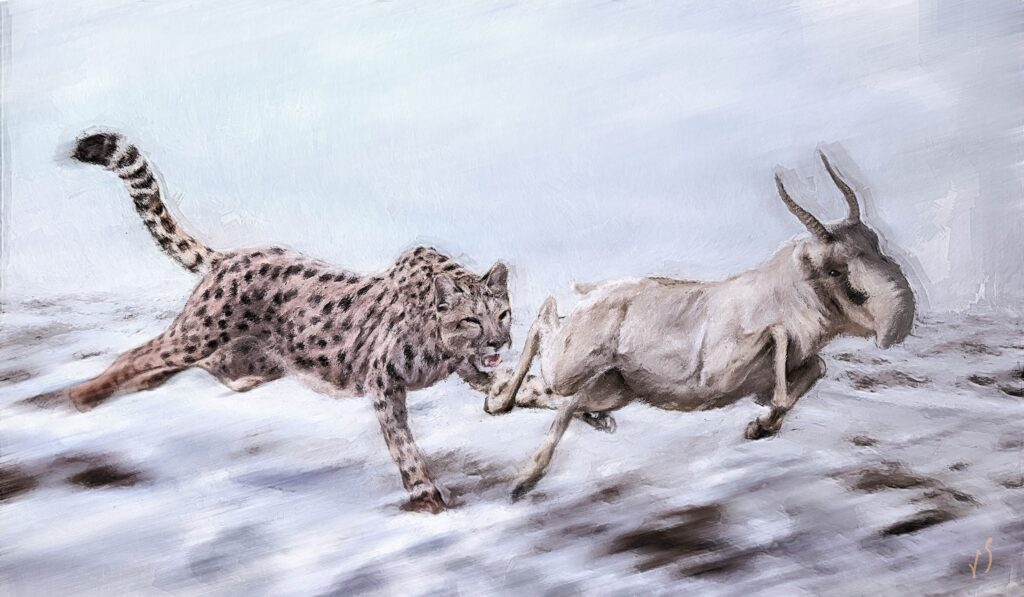
For decades, M. trumani has been a staple of North American paleoecology, often cited as the evolutionary reason why the American pronghorn is so fast. This “ghosts of predators past” hypothesis suggested that the pronghorn’s extreme speed was a co-evolved defense against the high-speed pursuit of a cheetah-like hunter.
However, the new genomic data confirm that M. trumani was actually a sister species to the modern puma, having diverged from that lineage roughly 2.6 million years ago. Its slender, “cheetah-like” body is now understood as a striking example of evolutionary convergence, where two unrelated species evolve similar traits to survive in similar environments.
The research highlights the danger of naming extinct species based solely on how they look. According to the authors, the name American “cheetah” is doubly misleading, as it implies a close relationship and a shared specialized hunting style that the data simply do not support.
Arctic adaptations and a lost sense of taste
By sequencing high-coverage genomes from fossils dating back 23,000 to 31,000 years, the team identified specific genetic blueprints that allowed these cats to thrive in the extreme environments of the Late Pleistocene.
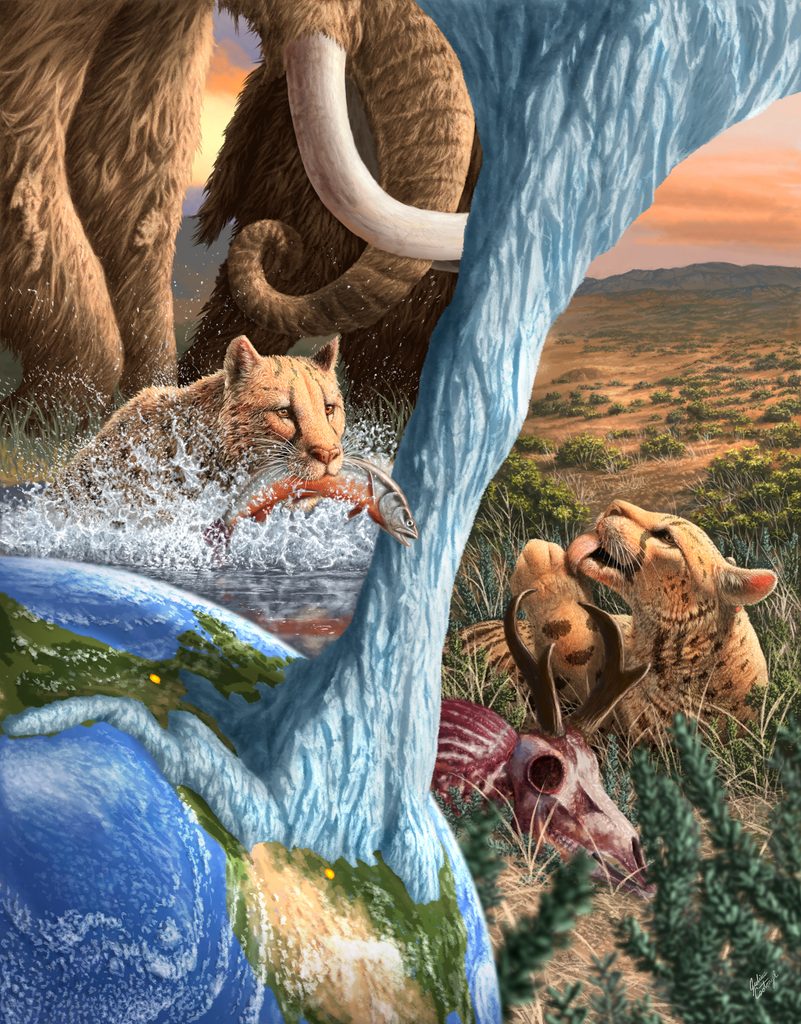
Fossil specimens analyzed in this study from Yukon Territory were recovered from the Tr’ondëk Hwëch’in and Vuntut Gwitchin Traditional Territories, with respect for their deep-rooted relationship to and stewardship of these lands.
Tr’ondëk Hwëch’in, which translates to “the people who lived at the mouth of the Klondike,” values opportunities to work alongside researchers in deepening a shared understanding of the region, said Ty Styner, heritage officer for Tr’ondëk Hwëch’in Government. “Nun Dänojà’ (long-ago animals) are an important part of the land-based heritage and deep history of the Traditional Territory,” Styner said. “Research like this helps bring color to the past, revealing a richer picture of the ancient ecosystems that once existed here and the many forms of life that have shaped this place through time.”
The study also revealed a unique sensory loss: M. trumani and all lineages of felids sampled in this study lacked a functional gene that encodes a receptor for sour taste. While all cats are known to lack a “sweet tooth,” this is the first recorded instance in felids of inactivation of genes involved in perception of sour flavors, a trait sometimes associated with highly specialized diets.
A legacy of low diversity
Beyond its diet and appearance, the study offers sobering insights into the species’ extinction at the end of the Pleistocene. The researchers found that M. trumani in Wyoming and the Yukon had low genetic diversity. But unlike pumas, their modern relatives, they didn’t show any signs of inbreeding or sharp bottlenecks—just a slow, long-term decline from the early to the late Pleistocene, which may explain their scarcity in the fossil record and ultimate extinction vulnerability.
Low genetic diversity didn’t doom this species by itself, said senior author Beth Shapiro, professor of ecology and evolutionary biology at UC Santa Cruz and co-director of the Paleogenomics Lab. “Miracinonyx persisted for a very long time without the signs of inbreeding we’d expect before a collapse,” she explained. “The decline was slow, not sudden, and that may be what left it unable to adapt when the climate shifted.”
This study was a collaborative effort involving researchers from UAF, the Yukon Palaeontology Program, and Des Moines University.