Science
-

Summer Session helps students earn degrees
UC Santa Cruz staff and faculty have been steadily working to increase summer session enrollment, leading UCs in online offerings and working with departments to offer the classes students need to graduate.
-
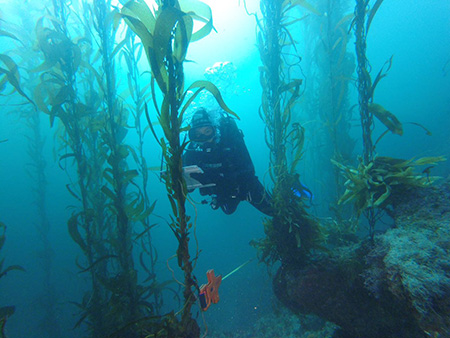
Cooperative research effort documents northward migration of kelp forests
From Alaska to Mexico, warming waters are driving widespread changes in these highly productive coastal ecosystems.
-
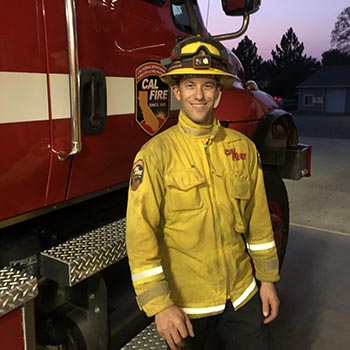
In the line of fire
Alumnus Adam Lowdermilk had built a career as a musician, but the tragic 2018 Camp Fire prompted a change of heart and a leap into firefighting.
-

John R. Lewis College: Providing the tools to stand up against injustice and create change
John R. Lewis College students take on social justice issues while pushing for positive growth and progress in society.
-

Rising to the Eco-Challenge
Two Slug alumni were part of a grueling, 11-day, 416-mile adventure race called Eco-Challenge Fiji, caught in a 10-episode series streaming on Amazon Prime.
-

New observations of black hole devouring a star reveal rapid disk formation
The first clear confirmation of accretion disk formation in a tidal disruption event without x-ray emissions supports theoretical predictions.
-

Marine mammals show off their training in evacuation from Long Marine Lab
All of the resident marine mammals at UCSC’s Long Marine Laboratory are safe and well after a successful evacuation effort.
-
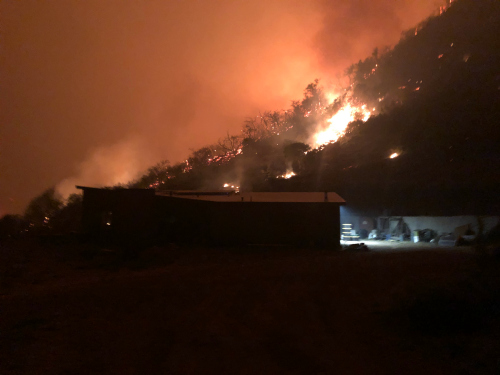
Research buildings saved as wildfire sweeps across Big Creek Natural Reserve
Fire preparedness and hard work by fast-moving fire crews and UC Santa Cruz staff is being credited for saving research and residential buildings at the Landels-Hill Big Creek Natural Reserve on the Big Sur coast.
-
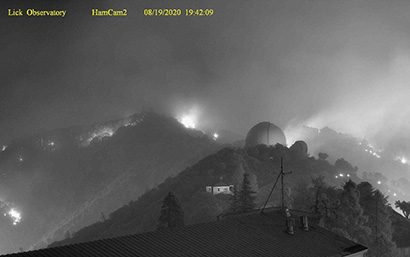
UC’s Lick Observatory threatened by fire
Residences on Mt. Hamilton sustained some damage, but fire crews have so far been able to protect the observatory’s telescope domes and visitor center.
-
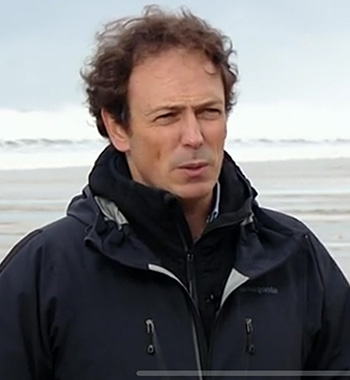
Coastal scientist Borja Reguero awarded Early-Career Research Fellowship
The Gulf Research Program of the National Academies of Sciences, Engineering, and Medicine has awarded a 2020 Early-Career Research Fellowship to IMS researcher Borja Reguero.
-

Alaska’s salmon are getting smaller, affecting people and ecosystems
A comprehensive study of four salmon species across all regions of Alaska finds salmon are returning to rivers smaller and younger than in the past.
-

UCSC partners with CSUMB for postdoctoral training and mentorship program
A $4.2 million NIH grant to UCSC’s Institute for the Biology of Stem Cells is funding an innovative program to address underrepresentation of minorities in biomedical faculty.