Science
-

Blazing a Slug trail to the Olympics
Rhythmic gymnast Izzy Connor will be the first UC Santa Cruz student to compete in the Olympics—the result of years of both personal struggle and success.
-
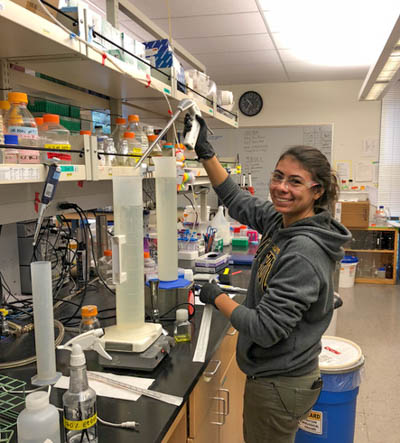
Statistical analysis quantifies how chemistry undergraduates benefit from graduate student diversity
A study of chemistry lab courses at UC Santa Cruz suggests that diversity among graduate student teaching assistants may be among the most essential factors in retaining underrepresented minority undergraduates in STEM courses.
-

Physics PhD student receives Graduate Instrumentation Research Award
Funding from the American Physical Society program supports graduate student Yuzhan Zao’s research on silicon detectors for particle physics experiments.
-

Haziness of exoplanet atmospheres depends on properties of aerosol particles
A laboratory study of haze particles produced under different conditions helps explain why some exoplanets may be obscured by hazy atmospheres.
-

$2 million grant revamps Chemical Screening Center
A new NIH grant will facilitate more efficient and accessible biomedical research.
-

Seymour Center welcomes new executive director
After an extensive search, the UC Santa Cruz Seymour Marine Discovery Center has chosen Jonathan Andres Hicken to be its new executive director.
-
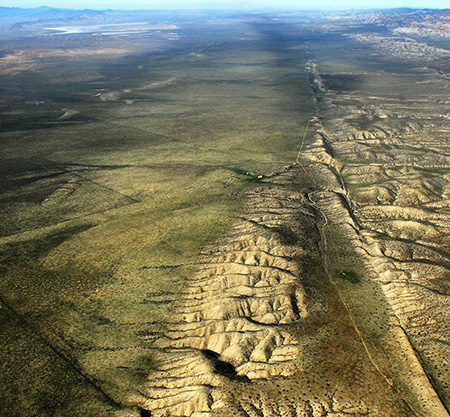
Model reveals interactions between rivers and fault lines
Researchers created a model that uses the movement at fault lines to understand river flow and vice versa.
-
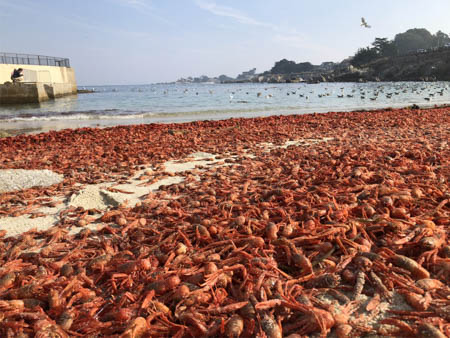
Unusual currents explain mysterious red crab strandings
New findings suggest that abnormal ocean currents cause the occasional appearance of pelagic red crabs outside their native range.
-

Martian south polar cap composition focus of new study
A team of scientists have determined that Mars’ south polar ice sheet may be made of clays, metal-bearing minerals, or saline ice.
-

Jonathan Fortney garners Simons Investigator in Astrophysics award
The $500,000 award from the Simons Foundation will support Fortney’s research on planetary atmospheres.
-
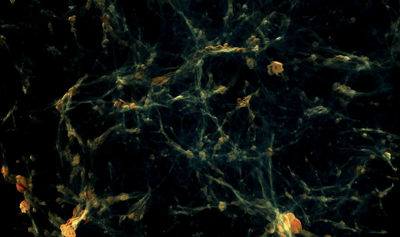
Cosmic dawn occurred 250 to 350 million years after Big Bang
Cosmic dawn, when stars formed for the first time, occurred 250 million to 350 million years after the beginning of the universe, according to a new study.
-
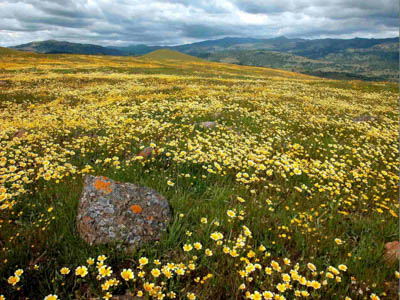
New study shows how loss of drought-sensitive species could affect health of California grasslands
At a grassland site near San Jose, scientists studied experimental research plots to determine what might happen if the plants that ecologists expect to be hit hardest by drought actually disappeared.