Science
-

When humans disturb marine mammals, it’s hard to know the long-term impact
Scientists are developing new tools to determine when short-term changes in behavior caused by human activities have biological significance for protected populations.
-

Experts weigh in on the future of drought management
UC Santa Cruz experts share insights on how technological innovations and long-term policy vision could help protect water supply.
-

Fostering diversity, equity, and inclusion in ocean sciences
Oceans Sciences DEI and Anti-Racism fund raises awareness about diversity in the geosciences and helps graduate students from disadvantaged backgrounds succeed in the field.
-

Nearby star-forming region yields clues to the formation of our solar system
The Ophiuchus star-forming complex offers an analog for the formation of the solar system, including the sources of elements found in primitive meteorites.
-

Alumnus Nicholas St. Fleur wins top award for young science journalists
Nicholas St. Fleur, a 2014 graduate of UCSC’s Science Communication Program, has received the 2021 Evert Clark/Seth Payne Award from the Council for the Advancement of Science Writing, the top annual prize in the U.S. for science journalists age 30 or younger.
-

Study takes unprecedented peek into life of 17,000-year-old mammoth
An international research team has retraced the astonishing lifetime journey of an Arctic woolly mammoth that roamed the Alaska landscape 17,000 years ago.
-

Two new grants support faculty diversity and retention
UC Santa Cruz was awarded grants from the University of California to support two collaborative multi-campus projects for advancing faculty diversity.
-

Fostering anti-racism in ecology, evolution, and conservation biology
A UCSC team has assembled a toolkit of resources for academic departments to use in addressing issues of diversity, equity, and inclusion.
-
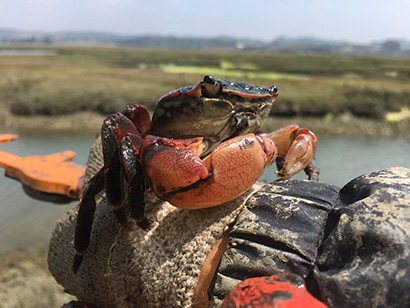
Salt marsh resilience compromised by crabs along tidal creek edges
A long-term study in Elkhorn Slough revealed the impact of superabundant crabs on salt marsh vegetation and the vulnerability of tidal creek banks to erosion.
-
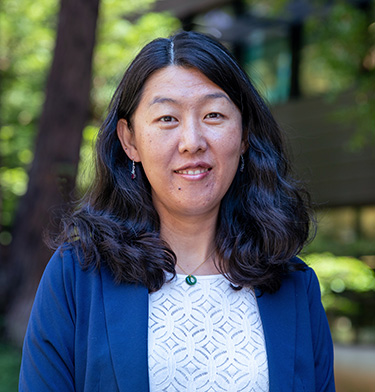
Five-year NIH grant supports collaborative research into rejuvenating the aging brain
Scientists at UC Santa Cruz, UC Berkeley, and Stanford are working together to discover and treat the causes behind age-associated cognitive decline.
-
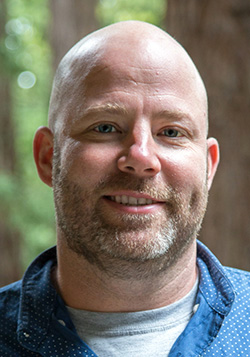
NIH grant funds collaborative research on protein-RNA interactions in cancer
Biologist Jeremy Sanford has received major funding from the National Cancer Institute for research on the role of protein-RNA interactions in cancer.
-

Switzer Fellowship will help graduate student engage communities in climate planning
Coastal Science and Policy Program master’s student Diana Fu won a Switzer Foundation fellowship to support her work advancing environmental justice through climate change adaptation.