Earth & Planetary Sciences
-
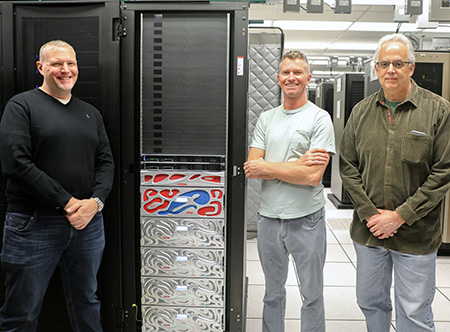
Powerful new supercomputer supports campus research in physical sciences
UCSC faculty are using the new system for research in astrophysics, climate science, materials science, chemistry, and other fields.
-

Marine scientist Adina Paytan to receive A.G. Huntsman Medal
Adina Paytan, a research professor in the Institute of Marine Sciences, has been honored with the 2019 A.G. Huntsman Award for Excellence in the Marine Sciences presented by the Royal Society of Canada.
-

2017 North Korean nuclear test was order of magnitude larger than previous tests
A new assessment of the explosion’s size was led by UC Santa Cruz seismologist Thorne Lay and undergraduate researcher Dimitri Voytan.
-

Seismologist Emily Brodsky receives multiple honors from professional societies
The American Geophysical Union and the Geological Society of America are both recognizing Brodsky for her scientific contributions.
-

Air Resources District funds air pollution research and teaching at UC Santa Cruz
Partnership between UCSC and the Monterey Bay Air Resources District supports a new course on air pollution and research on high-tech sensors to detect pollutants.
-

Iron volcanoes may have erupted on metal asteroids
NASA’s upcoming mission to the asteroid Psyche could look for signs of past eruptions, and evidence of ‘ferrovolcanism’ may also turn up in iron meteorites.
-
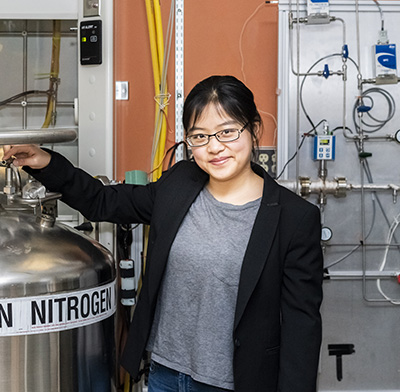
Postdoctoral fellowship supports planetary science research
The 51 Pegasi b Fellowship will fund Xinting Yu’s research at UC Santa Cruz on formation of clouds and hazes on exoplanets.
-

Sixth annual Climate Conference links science and justice
For the first time, the annual UC Santa Cruz Climate Conference will bring together prominent ocean scientists and leading social-justice advocates to discuss the environmental and equity dimensions of the crisis.
-
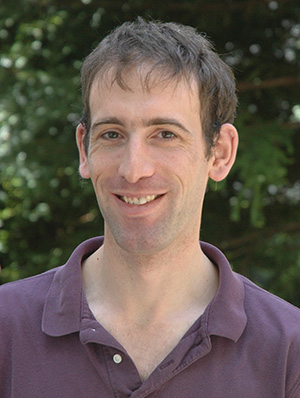
Planetary scientist Francis Nimmo honored by Royal Astronomical Society
The Royal Astronomical Society (RAS) has awarded the 2019 Harold Jeffreys Lectureship to Francis Nimmo, professor of Earth and planetary science at UC Santa Cruz.
-
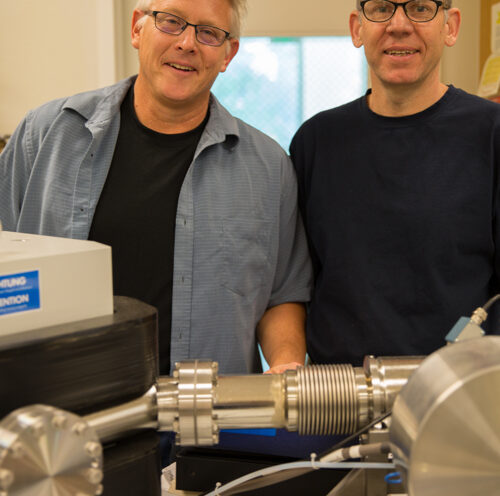
NSF funds innovative stable isotope equipment at UC Santa Cruz
The new equipment will support research across a wide range of disciplines, ranging from oceanography and earth science, paleontology, anthropology, ecology and fundamental biochemical cycle research.
-

The complex history of Earth’s magnetic reversals
UC Santa Cruz geology professor Robert Coe will be presenting his paper, “What We Know and Don’t Know about Reversals” during the upcoming American Geophysical Union (AGU) meeting in Washington, D.C. this December.
-

Grassland expansion—not human hunting—drove ancient African extinctions
A new study revealed ecological changes in the African savanna, not the emergence of our hominin ancestors, led to the extinction of African ‘megaherbivores’ millions of years ago.