Astronomy & Astrophysics
-
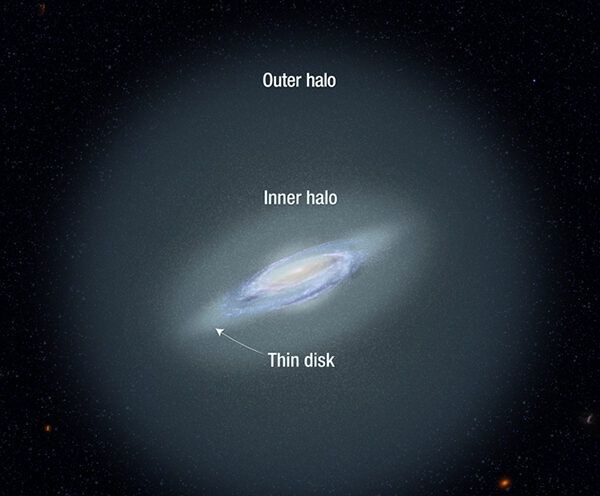
Astronomers find the most distant stars in our galaxy halfway to Andromeda
A search for variable stars called RR Lyrae has found some of the most distant stars in the Milky Way’s halo a million light years away.
-
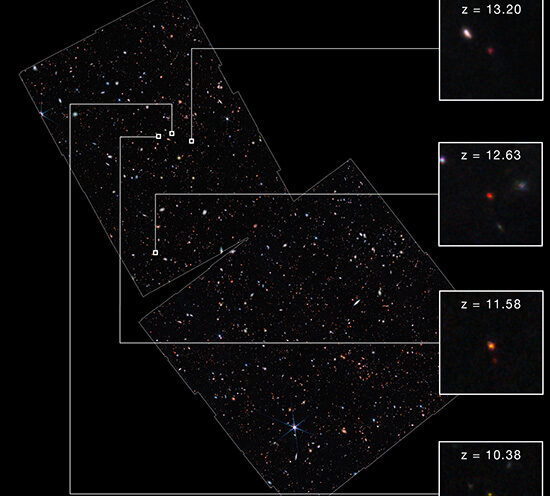
Astronomers report most distant known galaxies, detected and confirmed by Webb telescope
Spectroscopic observations with the James Webb Space Telescope confirm four early galaxies dating back to less than 400 million years after the Big Bang, three of which are the most distant confirmed to date.
-
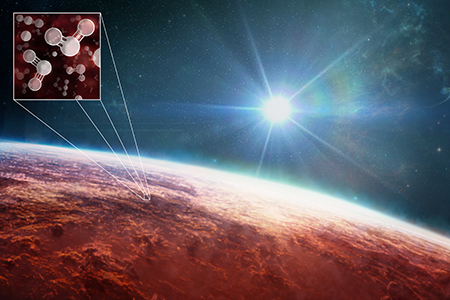
New JWST data reveal more details of exoplanet WASP-39b’s atmosphere
A ‘mystery molecule’ seen in the initial spectrum has been identified as sulfur dioxide produced by photochemical reactions in the planet’s atmosphere.
-

Batalha testifies at Congressional hearing on the initial scientific findings of the JWST
The James Webb Space Telescope is the largest and most powerful telescope humans have sent to space and, Batalha asserts, it is ushering in a new era of exoplanet science.
-

Webb telescope draws back the curtain on universe’s early galaxies
Initial findings from JWST Early Release Science programs include the discovery of two exceptionally bright galaxies in the early universe.
-

List of most highly cited researchers features 19 UCSC scientists and engineers
A new list of the world’s most highly cited researchers includes 19 scientists and engineers at UC Santa Cruz.
-

Death of a star reveals midsize black hole lurking in a dwarf galaxy
By studying intermediate-mass black holes, scientists hope to improve their understanding of the growth of supermassive black holes in massive galaxies.
-
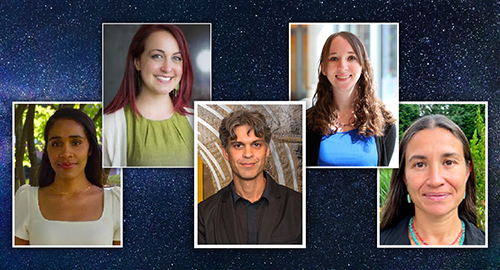
New astronomy network catalyzes scientific excellence
A new STEM mentoring network seeks to maximize scientific excellence and output within the astronomy and astrophysics community by cultivating inclusive environments where people with marginalized identities can thrive.
-
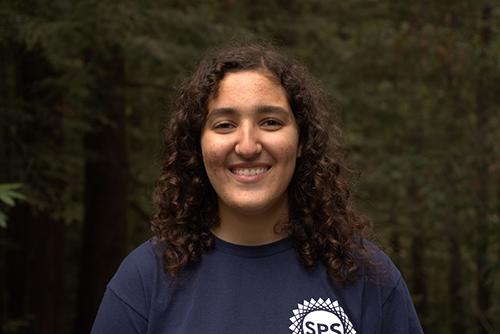
COSMOS program serves as a portal for aspiring astrophysicist’s journey to UC Santa Cruz
Her high school experience on campus motivated and inspired Julia Stewart (Crown ’24, astronomy) to matriculate to UCSC. Now she is paving the way for the next generation of math and science protégés seeking their own North Star
-

Astronomer Enrico Ramirez-Ruiz honored as Fellow of the California Academy of Sciences
Ramirez-Ruiz and alumnus Scott Shaffer were selected by the California Academy of Sciences to join the ranks of Academy Fellows.
-
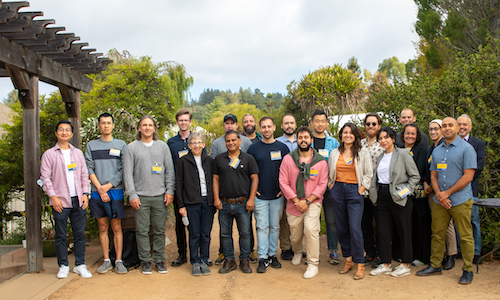
UCSC welcomes 41 outstanding new faculty members
With the start of the 2022-23 academic year, UC Santa Cruz welcomes 41 new senate faculty members. The research and creative scholarship and expertise brought to our campus by these new faculty colleagues will strengthen existing areas of work and open discovery opportunities.
-

Collaboration between engineering and astrophysics will develop cutting-edge spectrometers-on-a-chip
Two researchers have won an NSF grant that will allow them to pursue the emerging technology of spectrometers on a chip – tiny devices for separating and measuring light at ultraviolet, visible, and infrared wavelengths which can enable advances in astronomy when used as part of telescope instrumentation.