Astronomy & Astrophysics
-

2023 astronomy Ph.D. graduate honored for dissertation work, mentoring and leadership
The Astronomical Society of the Pacific has honored recent UC Santa Cruz Ph.D. graduate Maggie Thompson for research “considered unusually important to astronomy.”
-
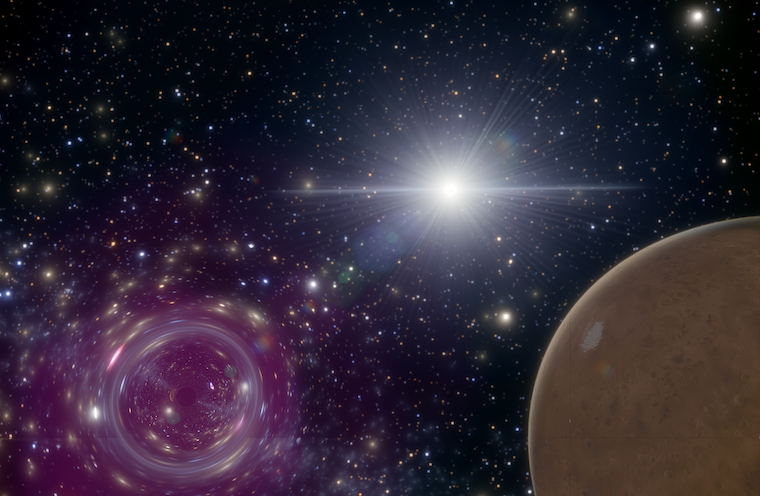
A wobble from Mars could be sign of dark matter, new study finds
New simulations suggest that there are enough primordial black holes—potential dark matter candidates—in the universe for one to pass through the inner solar system every decade. The work builds upon an astrophysical theory that has growing popularity.
-

UC Santa Cruz research will harness advanced AI to better measure, predict climate-change impacts
Two UC Santa Cruz research projects designed to leverage advanced forms of artificial intelligence to improve how scientists measure and predict the effects of climate change have won funding from a $20 million investment by the National Science Foundation.
-

Scientists to study nearby galaxies for galactic-formation history, dark matter
At approximately 100,000 light years in diameter, the Milky Way’s vastness and the broader, ever-changing dynamics of the cosmos defy any attempt to fully understand our home galaxy and its history. UC Santa Cruz astronomer Puragra “Raja” GuhaThakurta sums up this dilemma in more familiar and figurative terms: “We simply don’t have a selfie stick…
-
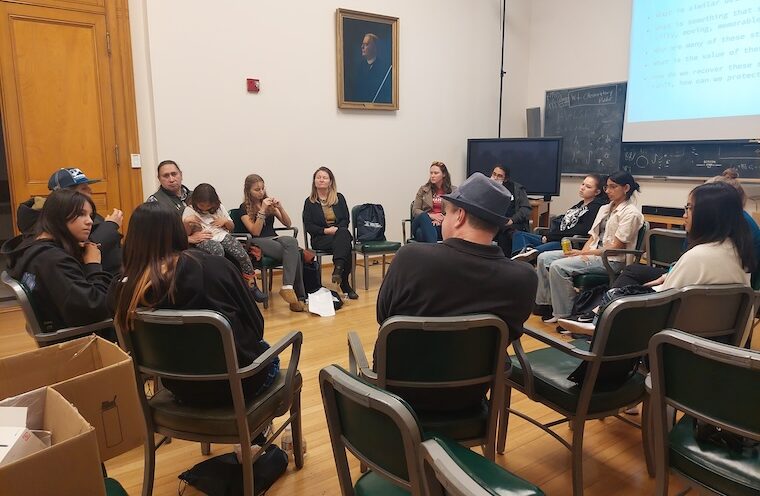
Annual event at Lick Observatory links modern astronomy to native perspectives
In collaboration with the UC Santa Cruz American Indian Resource Center, the University of California Observatories (UCO) recently hosted the second annual Native Star Stories Night at Lick Observatory. Held this year on May 9, the special event is intended to show that this traditional way of engaging with the cosmos remains as relevant and…
-
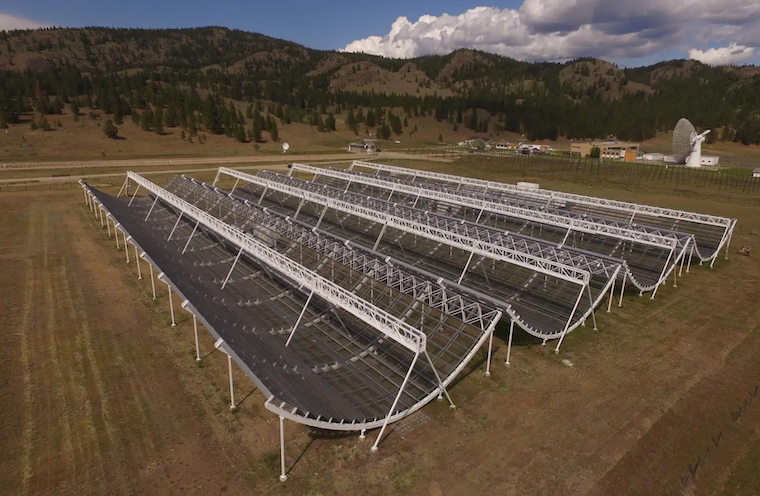
UC Santa Cruz astrophysicists honored for advancing research on the mysterious FRB
Fast radio bursts are sudden flashes of radio waves coming from random parts of the sky. Each one is on only for a few milliseconds, but they are extraordinarily bright: In those few milliseconds, some can put out more energy than our sun does in an entire year.
-

Ph.D. student leads effort to open Kosovo’s first observatory
Earth’s newest observatory will open to the public on June 20, 2024, coinciding with the summer solstice, thanks in large part to a UC Santa Cruz student from Kosovo who discovered her love of astronomy as a child amidst the chaos of the country’s brutal war for independence over 20 years ago.
-

Earliest, most distant galaxy discovered with James Webb Space Telescope
An international team of astronomers today announced the discovery using NASA’s James Webb Space Telescope (JWST) of the two earliest and most distant galaxies yet confirmed, dating back to only 300 million years after the Big Bang.
-

New exoplanets catalog showcases diverse, exotic worlds
Our understanding of exoplanets, those strange worlds that orbit stars beyond our solar system, is now broader and deeper thanks to separate studies published this week featuring the work of researchers at UC Santa Cruz.
-
UC Santa Cruz ‘Shadow the Scientists’ program honored for astronomical DEI efforts
A science-inclusion program based at UC Santa Cruz that has allowed thousands of school-age children, educators, and inquisitive individuals to look through world-class telescopes alongside trained astronomers has been honored for opening up scientific exploration to those from underrepresented backgrounds around the world.
-

First results from DESI make the most precise measurement of our expanding universe
We now have the largest 3-D map of our cosmos ever created, thanks to DESI—a powerful instrument mounted atop a telescope in Arizona with a robotic array of 5,000 fiber-optic “eyes” that look into the night sky.
-
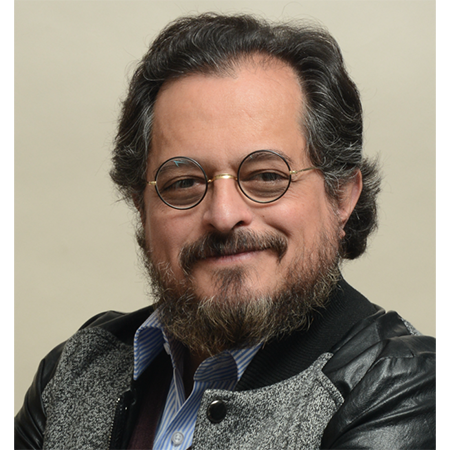
The Science Division announces recipients of Distinguished Alumni Awards
Dr. José de Jesús González, Dr. Maximiliano Mateo Cuevas, and Dr. Charles A. Lawson are this year’s Distinguished Alumni Award recipients for the Science Division.