Astronomy & Astrophysics
-
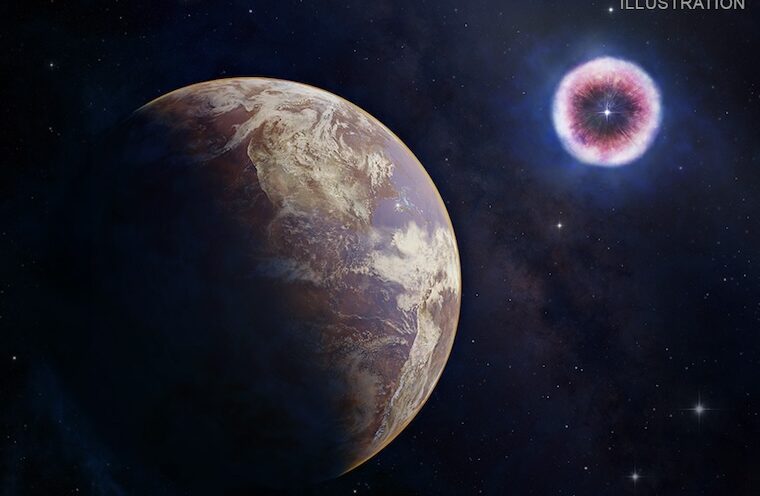
Cosmic radiation from supernova altered virus evolution in Africa, study proposes
A new study led by recent undergraduate student Caitlyn Nojiri and co-authored by astronomy and astrophysics professor Enrico Ramirez-Ruiz and postdoctoral fellow Noémie Globus examined iron isotopes to identify a 2.5 million-year-old supernova. The researchers connected this stellar explosion to a surge of radiation that pummeled Earth around the same time, and they assert that…
-
Hubble Telescope images combined into giant mosaic of neighboring Andromeda Galaxy
Astronomers are celebrating the completion of a 2.5-billion-pixel panoramic picture of the entire Andromeda Galaxy. The team includes several UC Santa Cruz researchers who made significant contributions to the enormous photomosaic that combines some 600 snapshots taken by the Hubble Space Telescope over more than a decade and 1,000 orbits.
-
American Astronomical Society honors four UC Santa Cruz affiliates at national meeting
At this week’s AAS national meeting, the society named UC Observatories Director Bruce Macintosh and two alumni, Laura Lopez and Mark Phillips, among the 24 new fellows chosen for 2025.
-
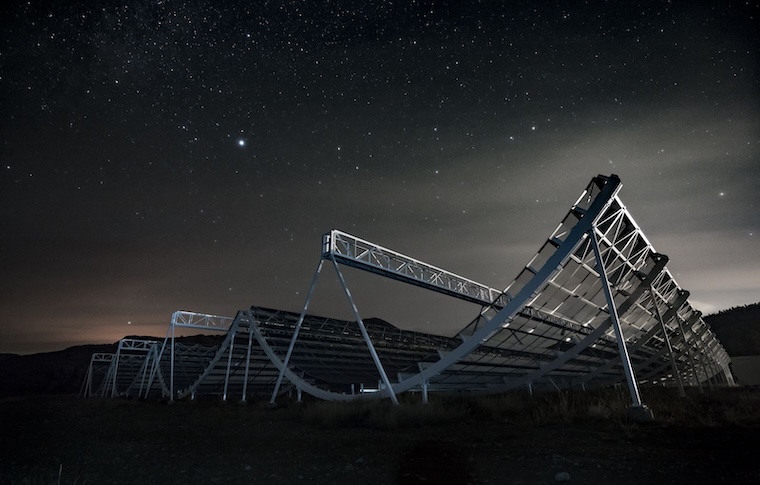
Researchers link mysterious cosmic signals to collapsed stars
An international team of scientists has provided the clearest evidence yet that some fast radio bursts (FRBs)—enigmatic, millisecond-long flashes of radio waves from space—originate from neutron stars, the ultra-dense remnants of massive stars that have exploded in a supernova.
-
Professor J. Xavier Prochaska to deliver December 4 Kraw Lecture
The Kraw Lecture Series aims to help audiences better understand the big picture behind scientific research at UC Santa Cruz and the broader trends at play. This tradition continues with the December 4 talk on how artificial intelligence (AI) is accelerating the scientific pursuit.
-
24 in 2024: list of most highly cited researchers includes UC Santa Cruz scientists and engineers
In a notable recognition of scholarly achievement, 24 scientists and engineers from UC Santa Cruz have earned a spot on the 2024 Highly Cited Researchers list, recently unveiled by Clarivate.
-

Team discovers ultra-massive galaxies in early Universe that challenge standard cosmology
An international team of astronomers has identified three ultra-massive galaxies—each nearly as massive as the Milky Way—already in place within the first billion years after the Big Bang. The discovery is surprising because it indicates that the formation of stars in the early Universe was far more efficient than previously thought, challenging current models of…
-
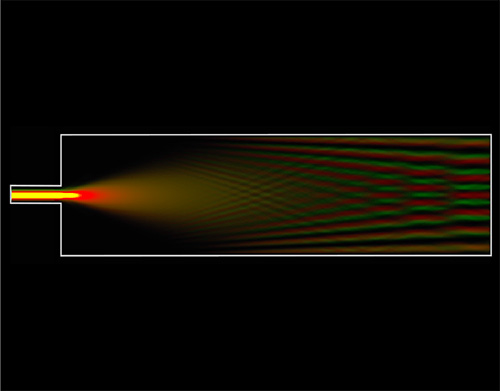
Ultra-small spectrometer yields the power of a 1,000 times bigger device
UC Santa Cruz researchers are designing new ways to make spectrometers that are ultra-small but still very powerful, to be used for anything from detecting disease to observing stars in distant galaxies
-
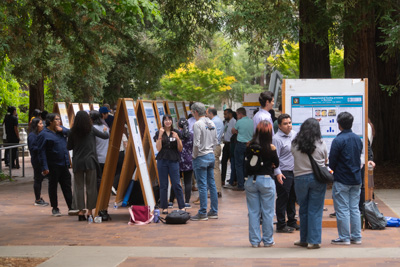
UC Santa Cruz receives NSF grant to transform diversity and inclusion in STEM graduate programs
The National Science Foundation (NSF) has awarded nearly $1 million to researchers at UC Santa Cruz to advance equity and inclusion by fostering a more inclusive, culturally rich environment in STEM graduate programs.
-

Science Division debuts ‘degree-defining experiences’ drawing on UC Santa Cruz’s unique strengths
The Science Division has received a $1 million donation to begin a major new program on “degree-defining experiences.” The program will pilot 17 projects across campus that aim to profoundly inspire undergraduate students and fill them with the kind of optimism that forever changes how they see their time at UC Santa Cruz and their…
-
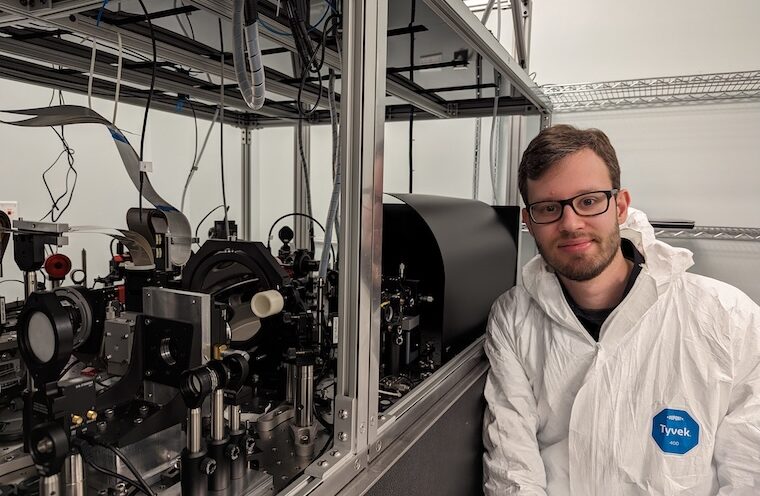
Astronomy postdoc to develop technologies that mold starlight to better detect exoplanets
The Astronomy & Astrophysics Department welcomes postdoctoral scientist Emiel Por, who invents technologies that mold the starlight captured by ground- and space-based telescopes to improve imaging of planetary companions. His work will be supported by the Heising-Simons Foundation’s 51 Pegasi b Fellowship program.
-

UC Santa Cruz astronomer delivers keynote speech for Mexico’s National Council of Humanities, Sciences and Technologies
The council chose Enrico Ramirez-Ruiz as the final speaker in the series, which leads up to the inauguration of Mexico’s new president on October 1, in honor of his distinguished career and accomplishments that followed his public education and training in Mexico.