Astronomy & Astrophysics
-
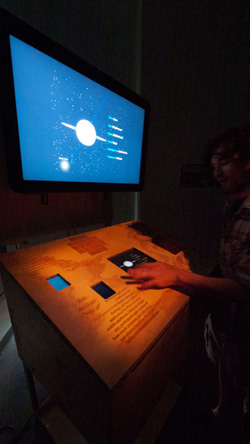
Kepler Explorer app puts distant planets at your fingertips
Kepler Explorer, an innovative app for iPads and iPhones, provides interactive displays of planetary systems discovered by the Kepler Mission.
-
Astrophysicist Michael Turner speaks April 16 on what came ‘Before the Big Bang’
Eminent cosmologist Michael Turner will discuss the origins of the universe in a free public lecture on Monday, April 16, at the Rio Theater.
-
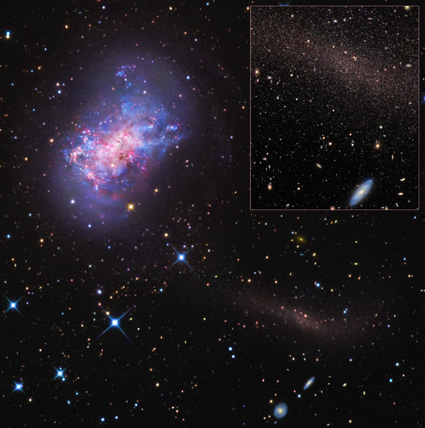
New images capture ‘stealth merger’ of dwarf galaxies
Images of a nearby dwarf galaxy show the remains of an even smaller companion galaxy in the process of merging with its host.
-
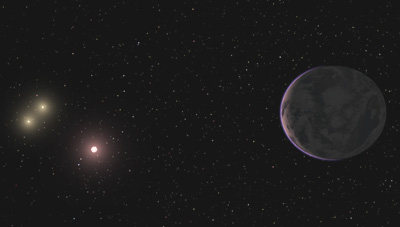
New super-Earth detected within the habitable zone of a nearby star
An international team of scientists has discovered a potentially habitable super-Earth orbiting a nearby star.
-
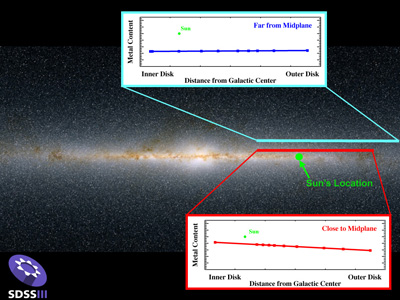
Wandering stars offer clues to history of our galaxy
Some stars have orbits that take them to interesting places, and they have interesting stories to tell about how they were formed.
-

Astronomers’ pristine gas discovery among top scientific breakthroughs of 2011
Lists from Science and Physics World of the top scientific breakthroughs of the year include the discovery of primordial gas clouds by UCSC astronomers.
-
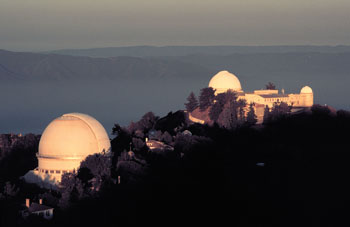
Lick Observatory open to public December 26 through January 1
Lick Observatory will be closed to the public December 24 and 25, but visiting hours will be extended for the rest of the holiday period.
-
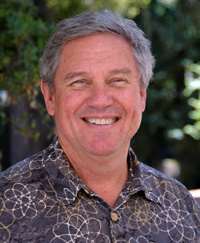
UC Santa Cruz astronomer Jerry Nelson to receive 2012 Franklin Medal
The Franklin Institute in Philadelphia has announced that Jerry Nelson, professor of astronomy and astrophysics, will receive the 2012 Benjamin Franklin Medal in Electrical Engineering.
-
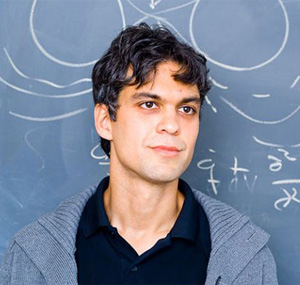
Astrophysicist Enrico Ramirez-Ruiz named to Silicon Valley’s ’40 Under 40′
Astrophysicist Enrico Ramirez-Ruiz is among 40 “rising stars” in Silicon Valley recognized by the Silicon Valley/San Jose Business Journal.
-
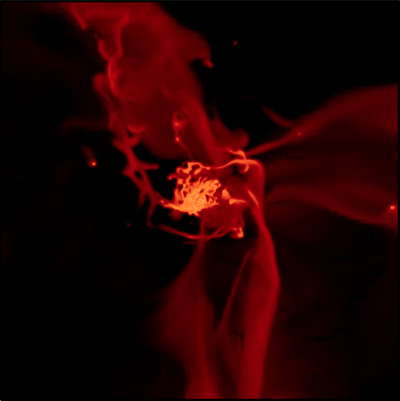
Astronomers find clouds of primordial gas from the early universe
For the first time, astronomers have found pristine clouds of the primordial gas that formed in the first few minutes after the Big Bang.
-

Galaxy mergers not the trigger for most black hole feeding frenzies
A survey of distant galaxies shows that galaxy mergers are not responsible for most active galactic nuclei.
-
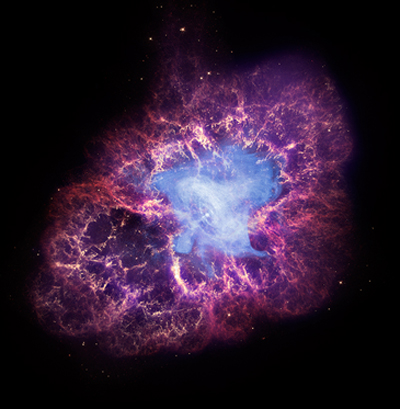
Crab pulsar beams most energetic gamma rays ever detected from a pulsar
Astrophysicists have detected pulsed gamma-ray emission from the Crab pulsar at energies far beyond what current theoretical models of pulsars can explain.