Astronomy & Astrophysics
-

Astronomers’ pristine gas discovery among top scientific breakthroughs of 2011
Lists from Science and Physics World of the top scientific breakthroughs of the year include the discovery of primordial gas clouds by UCSC astronomers.
-
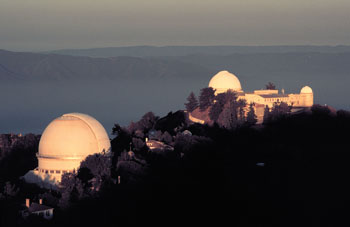
Lick Observatory open to public December 26 through January 1
Lick Observatory will be closed to the public December 24 and 25, but visiting hours will be extended for the rest of the holiday period.
-
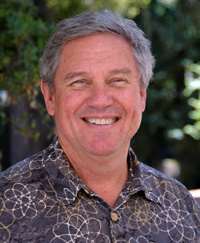
UC Santa Cruz astronomer Jerry Nelson to receive 2012 Franklin Medal
The Franklin Institute in Philadelphia has announced that Jerry Nelson, professor of astronomy and astrophysics, will receive the 2012 Benjamin Franklin Medal in Electrical Engineering.
-
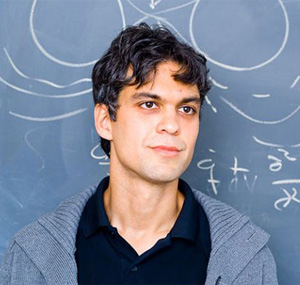
Astrophysicist Enrico Ramirez-Ruiz named to Silicon Valley’s ’40 Under 40′
Astrophysicist Enrico Ramirez-Ruiz is among 40 “rising stars” in Silicon Valley recognized by the Silicon Valley/San Jose Business Journal.
-
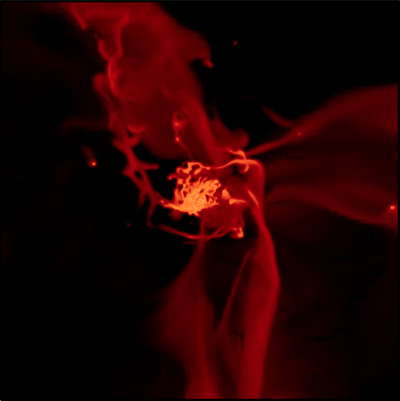
Astronomers find clouds of primordial gas from the early universe
For the first time, astronomers have found pristine clouds of the primordial gas that formed in the first few minutes after the Big Bang.
-

Galaxy mergers not the trigger for most black hole feeding frenzies
A survey of distant galaxies shows that galaxy mergers are not responsible for most active galactic nuclei.
-
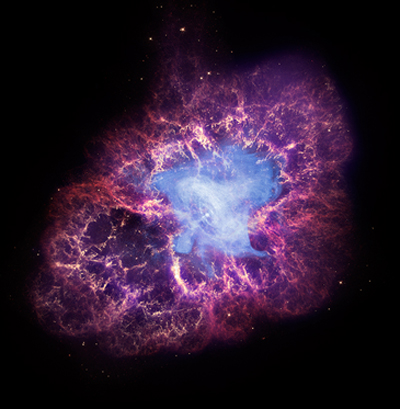
Crab pulsar beams most energetic gamma rays ever detected from a pulsar
Astrophysicists have detected pulsed gamma-ray emission from the Crab pulsar at energies far beyond what current theoretical models of pulsars can explain.
-

Founders Dinner on October 21 to honor achievement, service, and scholarship
UC Santa Cruz will host its fifth annual Founders Celebration dinner at the Cocoanut Grove in Santa Cruz on Friday, October 21.
-
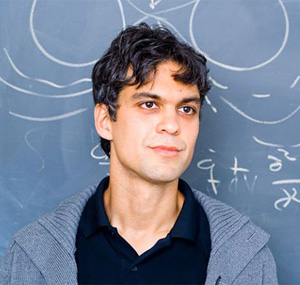
Astrophysicist Enrico Ramirez-Ruiz featured in research profile
A profile of astrophysicist Enrico Ramirez-Ruiz is featured on the University of California Research web page.
-
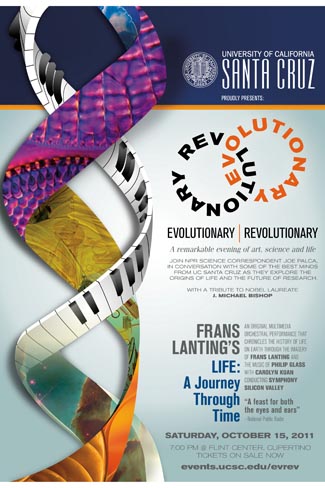
Frans Lanting’s multimedia show to highlight UCSC evening at Flint Center
For more than two decades, acclaimed nature photographer Frans Lanting has documented wildlife from the Amazon to Antarctica, in an effort to promote understanding about the Earth and its natural history. On October 15, he will join with the campus for a remarkable evening of art, science and life, at the Flint Center in Cupertino.
-
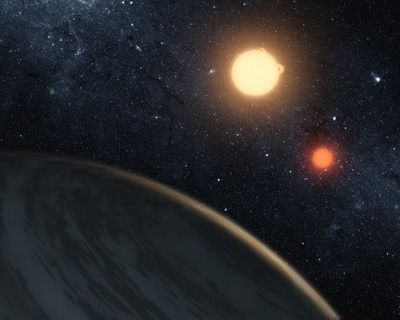
Astronomers confirm first planet orbiting two stars
A world with multiple suns is a common trope in science fiction, and scientific reality has now caught up, with a report from NASA’s Kepler mission of a planet orbiting two stars.
-
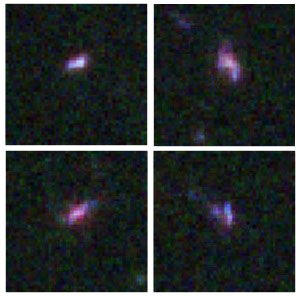
Small distant galaxies host supermassive black holes
Using the Hubble Space Telescope to probe the distant universe, astronomers have found supermassive black holes growing in surprisingly small galaxies, suggesting that central black holes formed at an early stage in galaxy evolution.