Astronomy & Astrophysics
-
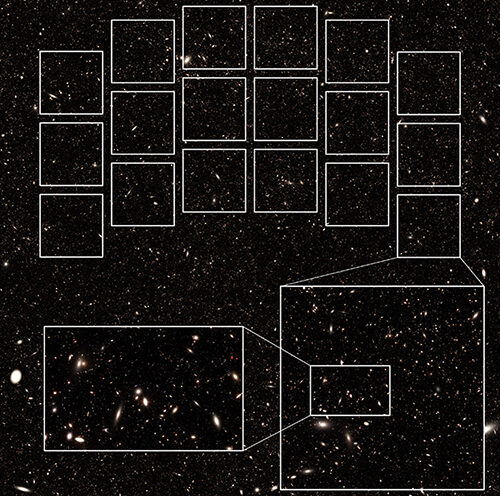
Simulated image shows how NASA’s Roman could expand on Hubble’s deepest view
The Roman Space Telescope will have the power to perform an observation similar to the Hubble Ultra Deep Field, but on a much larger scale.
-
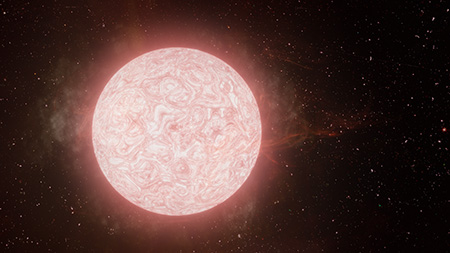
Astronomers witness the explosive end of a dying star
The Young Supernova Experiment transient survey observed a red supergiant during its final 130 days leading up to a supernova explosion.
-

In Memoriam: Bill Mathews (1937–2021)
William George “Bill” Mathews—astrophysicist, musician, and idea foundry—died on September 24 at the age of 84, but his sparkle lives on.
-
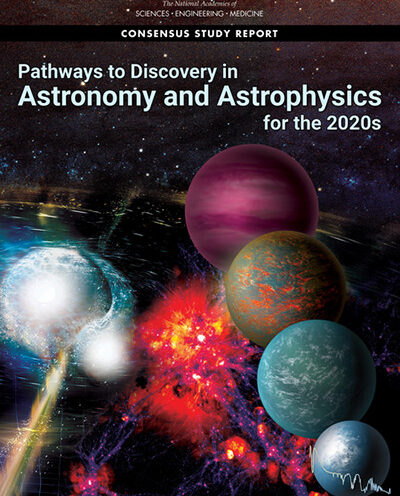
UCSC astronomers help shape influential report on national priorities for their field
The ‘Astro2020’ Decadal Survey on Astronomy and Astrophysics identifies the most compelling science goals and provides recommendations for funding agencies.
-
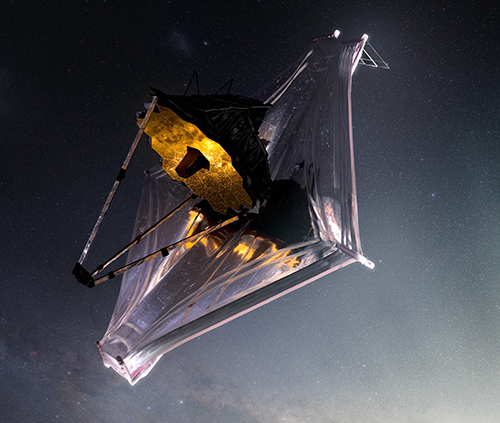
As launch of James Webb Space Telescope nears, astronomers anticipate new era of discoveries
UCSC astronomers will be among the first to use the powerful new space telescope, and have been involved in the project from the start.
-
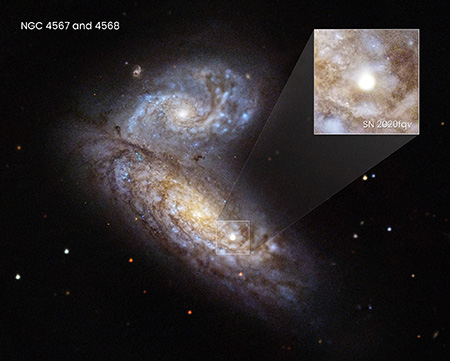
Astronomers witnessed the spectacular death of a star as it happened
Observations with multiple telescopes yield new insights into the final stages in the evolution of a massive star before it exploded in a core-collapse supernova.
-

Astrophysicist Enrico Ramirez-Ruiz wins SACNAS Distinguished Mentor Award
Ramirez-Ruiz will be honored by the Society for Advancement of Chicanos/Hispanics and Native Americans in Science at the 2021 SACNAS National Diversity in STEM Conference.
-

Astrophysicist Enrico Ramirez-Ruiz awarded American Physical Society’s Nicholson Medal
The American Physical Society’s 2021 Dwight Nicholson Medal for Outreach recognizes Ramirez-Ruiz for innovations in mentoring.
-

AAUW awards fellowships to three scholars at UC Santa Cruz
The American Association of University Women (AAUW) has awarded 2021-22 American Fellowships to three scholars at UC Santa Cruz who will pursue academic work and lead innovative community projects to empower women and girls.
-
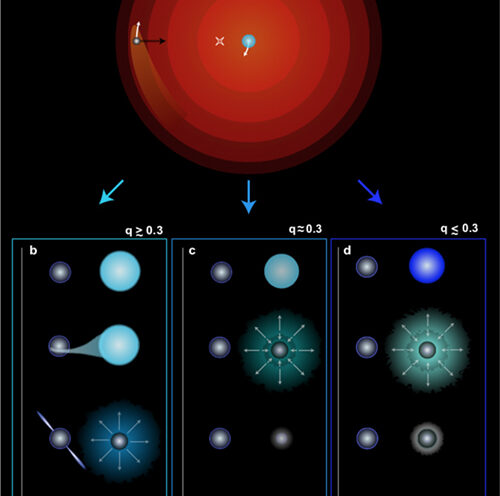
Astrophysicists explain the origin of unusually heavy neutron star binaries
Simulations of supernova explosions of massive stars paired with neutron stars can explain puzzling results from gravitational wave observatories.
-

Building community connections and STEM identity with science in the garden
A pilot program funded by the Packard Foundation brings science into the home environment through gardening.
-
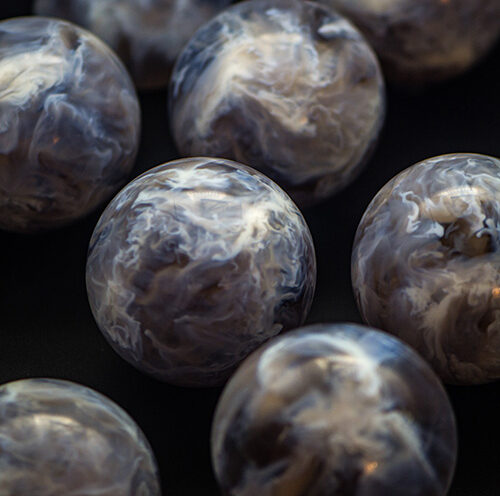
Astronomers create the first 3D-printed stellar nurseries
Researchers can now hold stellar nurseries in their hands thanks to 3D printing, revealing features often obscured in traditional renderings and animations.