Climate & Sustainability
Bruce Stein: Lasting leadership in conservation
Alumnus Bruce Stein (Rachel Carson ’78, biology and environmental studies) became a leading voice in the conservation field over the course of his 35-year career ultimately serving as the chief scientist and associate vice president at the National Wildlife Federation before retiring in 2024.
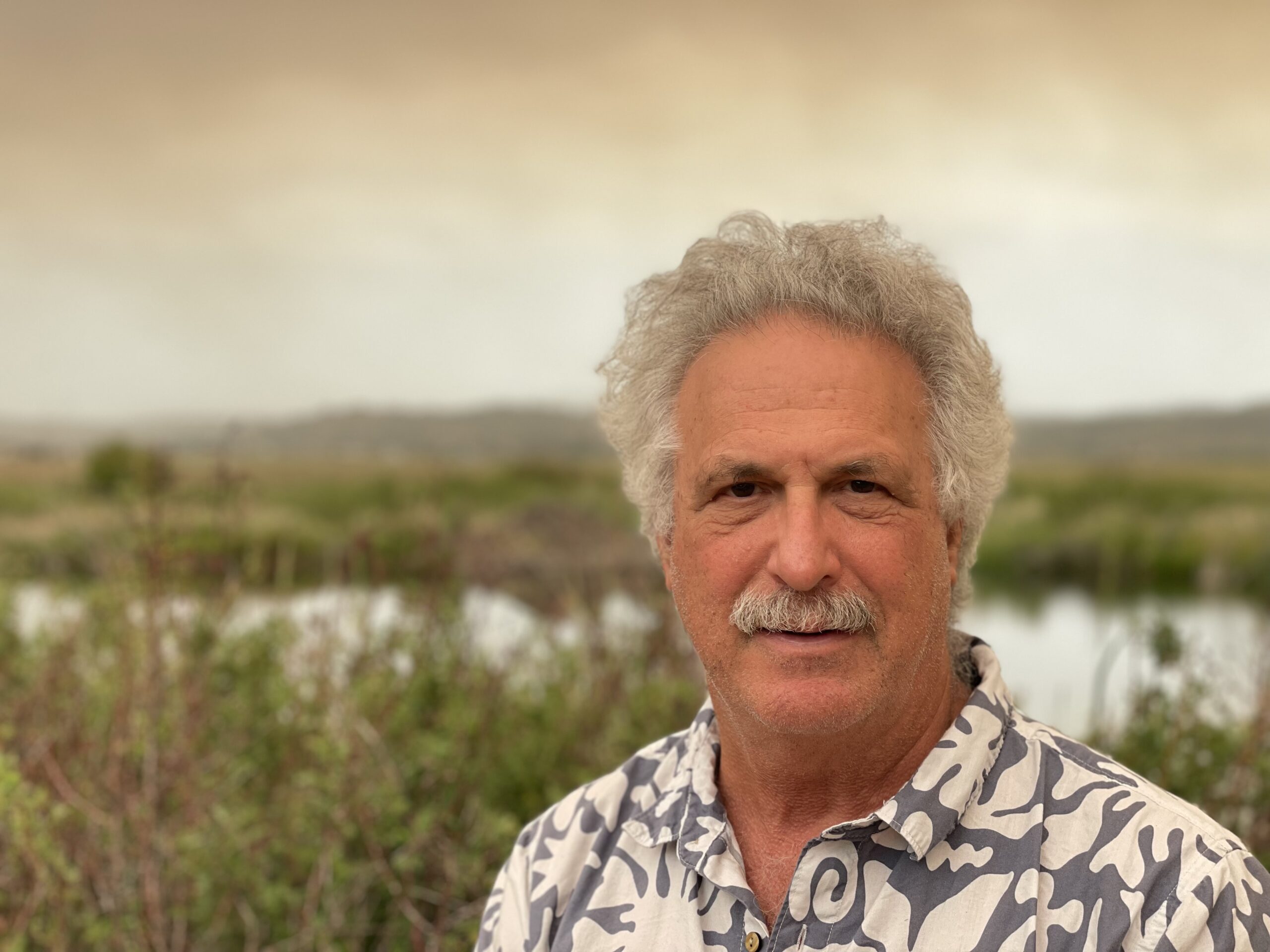
Bruce Stein (Rachel Carson ’78, biology and environmental studies) had an impactful, 35-year career in conservation.
Bruce Stein’s (Rachel Carson ’78, biology and environmental studies) passion for the natural world began in childhood, exploring the Southern California coastline and visiting national parks with his family. As a young adult, that early curiosity led him to the University of California Santa Cruz, drawn by its renowned natural history program, where he gained hands-on training in environmental science and developed a specialization in botany. Over the course of a 35-year career in conservation, Stein became a leading voice in the field, ultimately serving as chief scientist and associate vice president at the National Wildlife Federation before retiring in January 2024.
Stein grew up in Long Beach, California where he spent much of his time surfing and enjoying other water sports. In addition to exploring the ocean, Stein’s family visited the majority of the Western U.S. for their family vacations.
“I got a real early love for the outdoors and being in wild places,” Stein said.
When he was old enough to start Boy Scouts, he started backpacking and then in high school began rock climbing. These experiences set a course for pursuing outdoor and environmental work.
Stein initially started college at the University of California, Santa Barbara, but decided to transfer to UC Santa Cruz after spending the summer after his freshman year working as a backcountry ranger with the U.S. Forest Service. He met other rangers who were studying biology and learned that the type of biology offered at UCSC aligned more with his interest in the environment and conservation.
Stein took a broad range of biology courses at UC Santa Cruz, which gave him an in depth understanding of biodiversity, a term which was not yet coined at the time.
The natural history program, ran by Kenneth Norris at the time, was a pivotal part of Stein’s UCSC education. Norris was instrumental in establishing the UC Natural Reserve system, a network of lands throughout California representing different ecosystems.
For his senior thesis, Stein studied one such natural reserve, the Granite Mountains in the Eastern Mojave Desert. He served as principal investigator for a National Science Foundation grant that he and a group of other natural history students received to support their research in the remote mountain range. In addition to serving as the overall project’s lead, he focused on carrying out a botanical inventory of the mountain range, which set him on a path towards specializing in plant biodiversity. The project was critical for Stein’s professional development. He said he learned the discipline required to complete scientific research as well as gained practical skills such as proposal writing and project management.
After Stein finished his thesis and graduated college he spent a year traveling throughout South
America where he became interested in tropical rain forests. Following a short stint as an environmental consultant in San Francisco, Stein went to graduate school at Washington University in St. Louis to study tropical botany and plant taxonomy.
Stein studied under Peter Raven, Director of the Missouri Botanical Garden and a global leader in botany and tropical rainforest conservation. As a graduate student, Stein conducted field research in the tropical Andes and upper Amazon in South America. While his field work was focused on exploring for new species and unraveling the evolutionary patterns in a particular group of lobelia relatives, Stein realized that his passion was more in conservation. He was interested in using scientific knowledge to better protect species and ecosystems.
After finishing his Ph.D., Stein moved to Washington DC to work for the Nature Conservancy focusing on tropical rainforest conservation, and served as the director of scientific programs in Latin America. In the mid 1990s Stein’s career shifted from international work to concentrating on biodiversity conservation in the United States.
One of Stein’s greatest accomplishments was serving as the lead author and editor for one of the definitive works on the flora and fauna in the United States published in 2000, Precious Heritage: The Status of Biodiversity in the United States. The book is an in-depth review of the diverse array of species and ecosystems in the US, and is known for introducing what is now regarded as a key conservation biology principle—the 3Rs concept. The 3 Rs, representation, resilience, and redundancy, provides a framework for protecting and managing species in the face of rapidly changing environmental conditions, in particular by ensuring that a system can adapt to evolving environments, absorb shock, and bounce back from catastrophic events. It has been used widely including being adopted by the U.S. Fish and Wildlife Service to assess the recovery needs of federally listed endangered species.
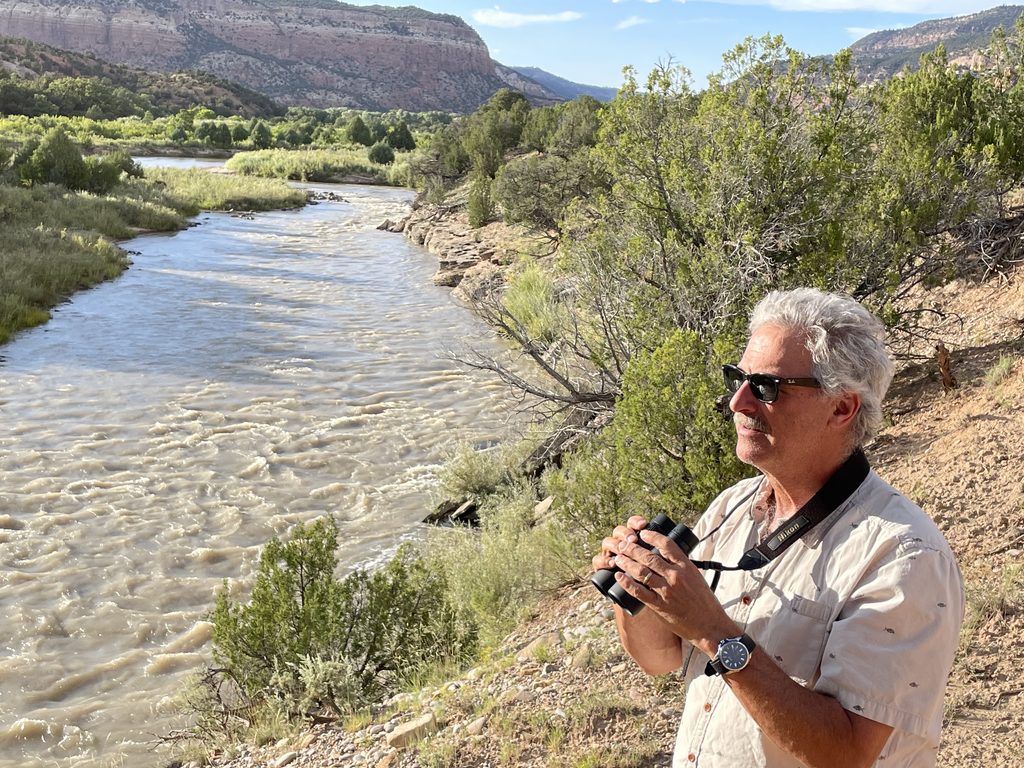
During the late 1990s and early 2000s scientists became more concerned with how global warming was impacting species and ecosystems. By 2005 or 2006 Stein shifted his career focus to tackling climate change.
“I became concerned that unless we took climate change more into account in our conservation work, we were setting ourselves up for failure and we were likely to lose a lot of the conservation gains we’ve achieved,” Stein said.
In 2008 Stein joined the National Wildlife Federation to work on ensuring that species can survive the impacts of climate change. There, Stein advanced the science and practice of climate adaptation, and led the development of the climate-smart conservation approach to natural resource planning. The planning approach is widely used by federal, state, and private land management and conservation organizations for how climate change can be integrated in conservation and natural resources work.
Stein retired from the National Wildlife Federation two years ago but continues to stay active in climate change related efforts. He is a member of the climate change specialist group for the International Union for Conservation of Nature and is involved in major biodiversity and climate change assessments conducted in North America. He continues to live in D.C., where he has been for 40 years and spends time in Park City, Utah with his son and grandson. Stein has been married for thirty years to his wife who also works in the environmental field. They have two children in their mid to late 20s.
Stein has and continues to serve as a leader in conservation efforts in the United States. He credits his undergraduate experience at UC Santa Cruz for empowering him to think big.
“UC Santa Cruz was so focused on giving undergraduates an agency to do whatever they wanted to do that really empowered us to think big and bold and do things that I think traditionally people wouldn’t think undergraduates would be able to do,” Stein said.
Recalling the National Science Foundation grant that was awarded to support the team of UCSC students working in the Granite Mountains, Stein remembers that about half the proposal reviewers made comments to the effect that “these kids can’t do this.”
“We were so happy to prove them wrong,” Stein said.