Arts & Culture
UC Santa Cruz history professor tapped to lead historic slave trade database as it moves to Harvard
Slavevoyages.org, a free online database chronicling tens of thousands of slave-trade voyages, is heading to Harvard University, and UC Santa Cruz History Professor Gregory O’Malley has been chosen to lead it.
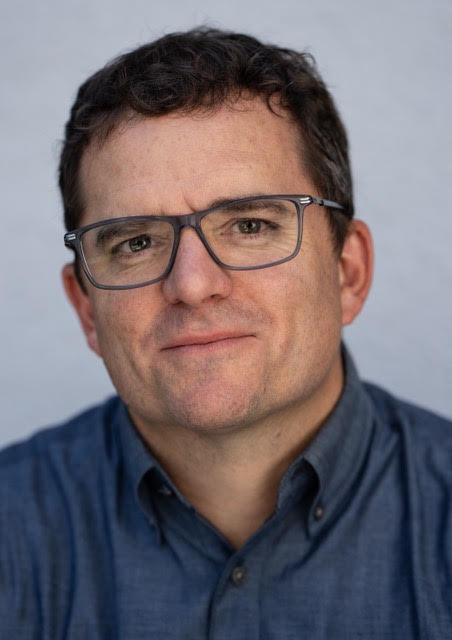
Professor Gregory O'Malley
Slavevoyages.org, a free online database chronicling tens of thousands of slave-trade voyages, is heading to Harvard University, and UC Santa Cruz History Professor Gregory O’Malley has been chosen to lead it.
“I feel very honored,” O’Malley said. “It’s such an important project, and one that I’ve admired before I was involved in it, both for the incredible research that went into it, but also the collaborative spirit of all those researchers. Instead of hoarding data for their own use to just publish articles, they have merged it with the work of other scholars and put it online as this resource, freely available to everyone.”
Slavevoyages.org contains the Transatlantic Slave Trade Database, with records of roughly 36,000 voyages that transported enslaved people across the Atlantic between 1514 and 1866. The website is also home to the Intra-American Slave Trade Database, co-founded by O’Malley and UC Irvine Professor Alex Borucki, which documents an equivalent number of voyages that moved enslaved people from one part of the Americas to another. SlaveVoyages.org has become an essential resource for academic researchers, museum curators, journalists, African American families searching for information about their ancestors, and schoolchildren across the country.
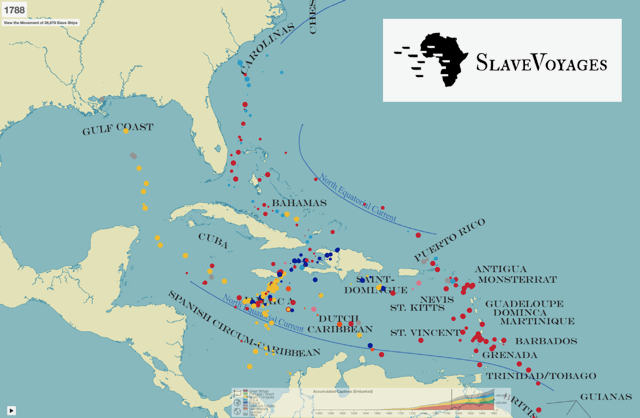
The database draws about 2,500 visitors a day and is one of the most frequently cited resources in the digital humanities.
“We can tell from the traffic data that it’s way more than academics who use it,” said O’Malley, who will administer the website remotely while remaining at UC Santa Cruz. “We can tell that schools use it because usage goes up Monday through Friday and goes down on weekends and summers.” The site contains lesson plans for middle school, high school, and college students, created by both the research team and by teachers who use the site.
SlaveVoyages will be permanently housed and funded at Harvard, under the joint sponsorship of The Hutchins Center for African and African American Research, led by its director, Henry Louis Gates Jr., the Alphonse Fletcher University Professor and the Harvard & the Legacy of Slavery Initiative, led by Sara Bleich, the vice provost for special projects at Harvard University.
Gates personally invited O’Malley to take on the leadership role.
“SlaveVoyages is without doubt the single most important database compiled in the history of the study of The Trans-Atlantic Slave Trade, and, I might add, in the history of the study of Europe between the 16th and the 19th centuries,” said Gates, a literary scholar and host of the popular PBS genealogy series Finding Your Roots, has relied on the database for his own research.
If a Pulitzer Prize were awarded for the creation of databases, David Eltis and Stephen Behrendt, its creators, would have been so honored for this achievement, Gates said.
“Before its creation, estimates of the number of Africans shipped across the Atlantic ranged wildly,” Gates said. “Slave Voyages has brought scholarly order out of that chaos. I can think of no other scholar more qualified to assume the leadership of the database than Greg O’Malley, one of the most outstanding scholars of the history of the slave-trade at work in the academy today.”
Harvard’s financial backing for SlaveVoyages marks a turning point for a project that has spent years scraping together support. “We had been chasing funds on an annual basis, not just grant funds for new research, but funds for the functionality and sustainability of the website,” O’Malley said.
SlaveVoyages.org has moved before. The first online version was launched at Emory University in 2008. The site later established a consortium of funding institutions, which relocated the project to Rice University, whose team built much of the technical infrastructure that will now carry over to Harvard. The database is being maintained by IQSS, The Institute for Quantitative Social Science at Harvard. But even as the site changes institutional homes, its research team remains geographically scattered.
That’s part of why the outgoing director at Rice, Daniel Domingues da Silva, recommended O’Malley to lead it: the project has always run on collaboration across institutions rather than requiring a single physical headquarters. Harvard will send funds to UC Santa Cruz each year so O’Malley can dedicate time to head up the team that runs the database.”
O’Malley has been a key contributor to the database for years. He co-founded the Intra-American Slave Trade database, which is now part of SlaveVoyages.org. “With the Intra-American and Transatlantic Databases on one site together, users can see all voyages that brought enslaved people to North America, for example, whether coming from the Caribbean or Africa,” he said. “You can get a more complete picture by looking at it all together.”
The site’s origins stretch back further than most users realize. The original transatlantic database was compiled by an international group of slave-trade scholars, spearheaded by Emory historian David Eltis, using punch card computing in the 1980s. They published a CD-ROM version in 1999 to make the database available to other researchers and then moved online in 2008.
Beyond the longstanding voyage records, in recent years the SlaveVoyages.org site added a “People Database” that lets visitors search for named individuals connected to specific voyages — enslaved people when their names survive in the historical record, as well as investors, ship captains, and others who profited from the trade. O’Malley played a central role in creating that People Database, as well.
The site also has a time-lapse feature that allows site users to view the movement of slave ships across the Atlantic, each ship represented by a dot–with its color representing the nation the ship belonged to and its size representing the number of enslaved people on board. A crowdsourcing feature also allows outside researchers to submit updates and new information, which a small team reviews and incorporates.
For O’Malley, the database’s real power lies in its ability to make an often cold historical record feel human. “People use it to study the economy of the trade, what profits were gained at the expense of enslaved people’s freedom,” he said. “But people also use it to study their own cultural roots, if they have ancestors who were enslaved – they can find the routes that brought their ancestors from regions in Africa to regions in the Americas. The data can feel cold and impersonal, but there are a lot of really humanizing questions you can use it to address — the dispersal of languages, cultures, ideas, food ways around the world. There’s a lot of insight in the data into very human things.”
It is that humanity behind the data that explains why museums around the world use data visualizations from SlaveVoyages to contextualize African diaspora art exhibits, and why an organization dedicated to memorializing the slave trade’s victims uses the data to lobby local governments all around the Atlantic to erect waterfront historic markers acknowledging each port’s role in the slave trade.
“And in an era when some want to whitewash history,” O’Malley said, “there is also something powerful in the database’s meticulous accounting, ship by ship and person by person, of every voyage that forcibly moved people across the Atlantic World. Every database entry includes citations to the primary sources in archives around the world that recorded these historical voyages. Quite literally, we have the receipts.”