Climate & Sustainability
More colorful songbirds face higher extinction risk
The bird pet trade seems to account for some, but not all, of this connection
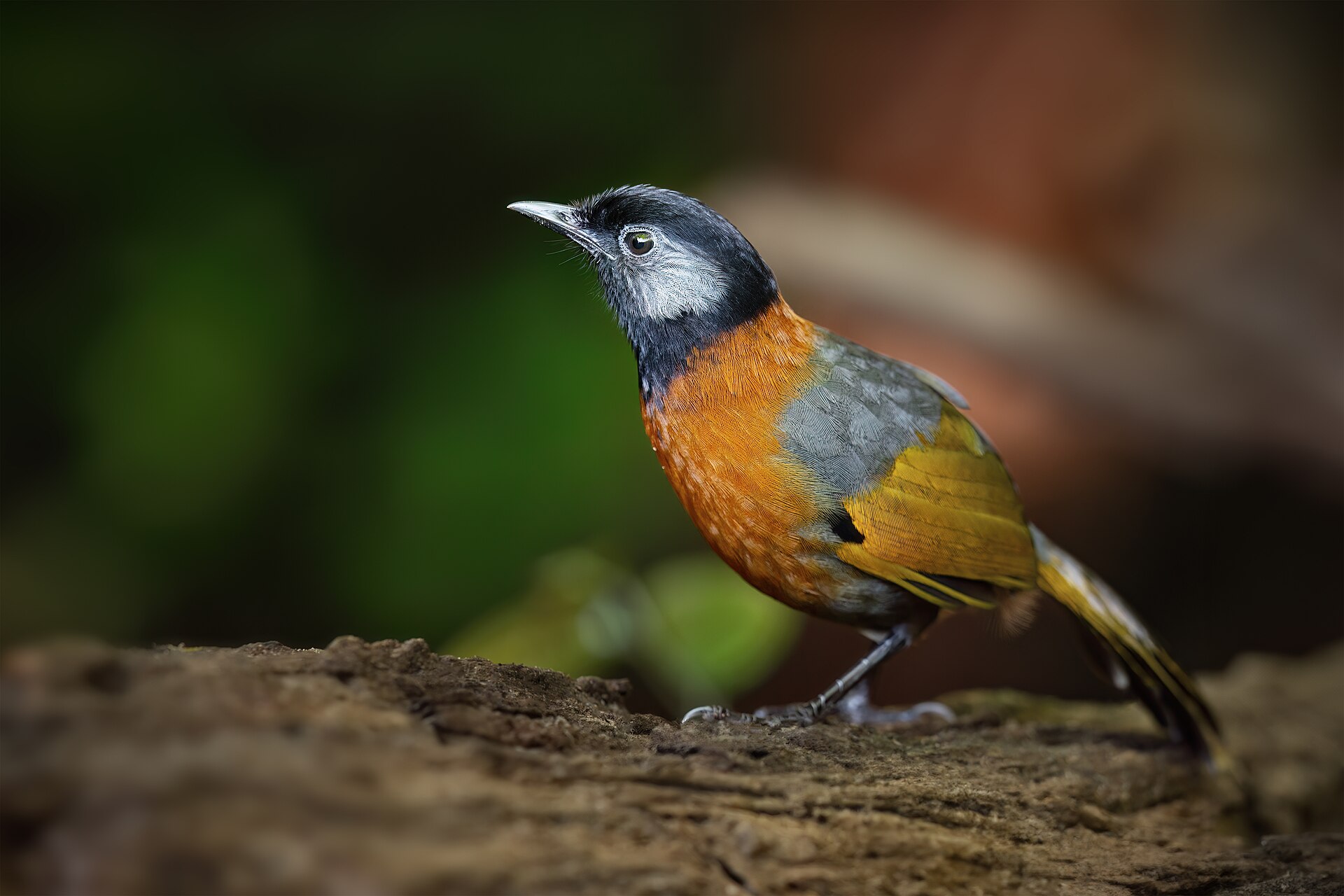
The striking Collared Laughingthrush, or "Halloween bird," served as in inspiration for this research.
Photo by JJ Harrison
Press Contact
Key takeaways
- Colorful passerine birds are at a greater extinction risk than drab species, particularly in Indomalaya (South and Southeast Asia).
- This correlation is stronger in temperate regions than tropics, and in countries with a lower human development index.
- The pet trade for songbirds may explain this relationship for some species, but the correlation is seen even in colorful songbirds not known to be traded.
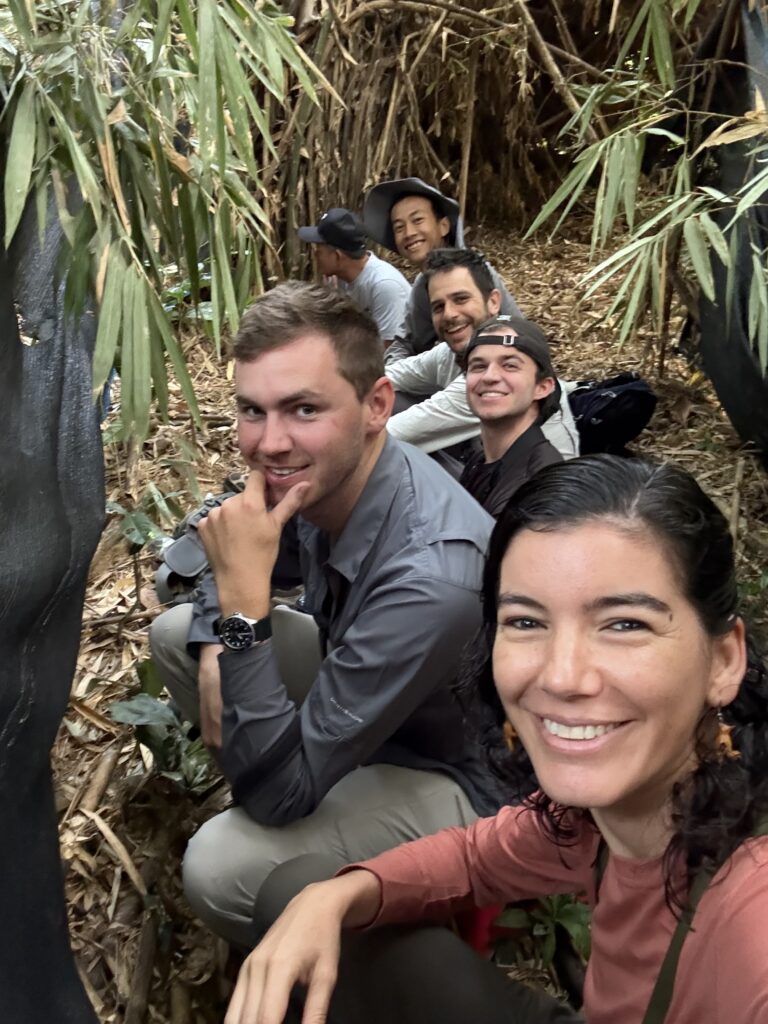
In the humid jungle of Vietnam, Natalia Ocampo-Peñuela and Monte Neate-Clegg spent hours patiently waiting to spot the rare “Halloween bird.” Officially known as the Collared Laughingthrush, this songbird has striking orange, silver, and black coloring and a distinct, singsong call. It’s extremely valuable and heavily traded as a pet in Vietnam, and is considered endangered by the International Union for Conservation of Nature (IUCN).
Their pursuit of the Halloween bird led the two University of California, Santa Cruz scholars to launch an investigation into the connection between a bird’s color and its extinction-risk status worldwide.
“We were crouched there in the gloom waiting for this enigmatic bird to appear, and as we sat, we pondered whether the pet trade differentially affects colorful birds, and if this would be reflected in their threat categories. This idea, like many of our others, was born out of conversations in the field while observing birds,” said Ocampo-Peñuela, an assistant professor in the Environmental Studies Department. “I also have a fascination with color, and have always wanted to investigate how being colorful might imperil birds, or might even help save them from extinction.”
One year later, they published a study in the journal Conservation Biology showing that more colorful birds are more likely to be endangered than drab species, particularly in South and Southeast Asia. The pet trade explains this connection in some regions, but the correlation persists even among birds not known to be traded, pointing toward other environmental or conservation factors.
“One of the biggest results to come out of this is that the pet trade is insufficient to explain our findings, and therefore we need to know more about why there would be this relationship between colorfulness and extinction risk if we are to protect the world’s most colorful birds,” Neate-Clegg said.
Modeling extinction risk
Some birds are known to be at a higher extinction risk because of traits such as body mass or dietary preferences that make them more susceptible to human-made changes to their environment, including deforestation or urbanization. But there has been much less research to establish how traits we as humans value in birds—like their beauty or their sounds—might impact their extinction risk.
These are the types of questions that Ocampo-Peñuela pursues in her Conservation Ecology Lab, where Neate-Clegg was a postdoctoral scholar until recently beginning an assistant professorship at UC Davis. The researchers are also avid birdwatchers who have noticed the decline of colorful songbirds on their expeditions to Southeast Asia, and they wanted to further study the relationship in other parts of the world.
This study focuses on “passerine” birds, the largest and most diverse group of birds which accounts for more than half of Earth’s species including chickadees, crows, swallows, and sparrows. Also called songbirds or “perching” birds, this group’s foot shape allows them to perch on small branches, opening up a huge range of available microhabitats.
To disentangle the relationship between color and extinction status from the web of the many other traits and environmental factors involved, the researchers created models that mapped an existing dataset on bird coloration with a wide range of other data.
One model examined color alongside other bird traits, such as diet, wing shape, and body size. Another layered on birds’ geographical range to understand how results varied regionally. A third wove in data representing human economic factors—i.e., the Human Development Index. A fourth model included data from the “Songbirds in Trade” repository to illuminate the relationship between color and bird trade.
From there, they could examine the relationship between all these factors and extinction risk as defined by the IUCN’s Red List, a comprehensive inventory of global conservation status and extinction risk.
A striking connection

By evaluating their models, the researchers found a clear positive relationship between colorfulness and extinction risk, meaning more colorful birds are at higher risk—although differences crop up along geographic and cultural lines.
“Birds aren’t threatened for the same reasons everywhere, and this paper reinforces that idea,” Ocampo-Peñuela said. “In Southeast Asia the pet trade is a huge problem for songbirds, but in Latin America and Africa it’s probably habitat loss and climate change that are more important.”
The scholars found that the relationship between colorfulness and extinction risk was stronger in the regions of Indomalaya (South and Southeast Asia, southern China, and parts of Indonesia) and Australasia (Australia, New Zealand, New Guinea, and neighboring islands).
This did not come as a surprise to the researchers, as it is common for people in populous Southeast Asia to keep birds as pets in appreciation of their beauty and melodic song, sometimes even taking them to songbird competitions.
“In Southeast Asia it’s this cultural relationship with songbirds that leads to their extraction from the forest, which is not as much the case for songbirds in the Neotropics or the African tropics,” Ocampo-Peñuela said.
Further, their results showed that the relationship was stronger in countries with a lower Human Development Index, where there may be a greater economic incentive to trade birds and less regulation to prevent it.
Looking along lines of latitude, they found the relationship between colorfulness and extinction risk was stronger in temperate zones than tropic zones.
Ocampo-Peñuela points toward the fact that many birds known to be threatened in the tropics are often drab-colored, forest-dependent species that live in small regions and are at risk due to habitat loss. Additionally, the study’s focus on passerine birds excludes parrots and similar species, many of which are endangered in Latin America because of the pet trade.
The researchers also note that countries in temperate zones may be more likely to invest resources in evaluating the threat status of birds, and particularly when they are more colorful and charismatic. In these countries, colorful birds are often chosen as conservation flagship species, so they receive more attention and funding in general. In contrast, there are so many colorful birds in the tropics and relatively limited funding, so many birds in tropical regions might be understudied and their threat status underevaluated.
However, the study’s results also make it clear that the pet trade is not the only thing that raises extinction risk for colorful birds, as more colorful birds that are not known to be traded are still at a higher risk of extinction. While it will take further research to pin down all the factors at play, the researchers suggest predation, land-use shifts, and climate change are possible ecological mechanisms at play.
“If colorful birds are eaten more often by predators, and then other forms of human change are leading to increases in predation rates, then it could disproportionately affect colorful birds,” Neate-Clegg said.
The researchers hope that their results can inform conservation practitioners at different scales. One avenue of protection could be to enact new trade policies, but for everyday people the researchers hope to raise awareness and funds for bird conservation, and dissuade harmful pet trade practices borne out of appreciation.
“People tend to care more about and rally around these colorful birds, which is what makes them really good flagship species for conservation,” Neate-Clegg said. “However, if we lose the most colorful ones, we lose the ones that people care about the most, and the ones which are doing the heaviest lifting for conservation. We want people to capture the beauty of these birds through a camera lens or pair of binoculars, not in a cage.”
Your support for The Conservation Ecology Lab can support efforts to study and protect colorful songbirds worldwide.
Learn more about how we’re supporting Climate & Environment through our Inspiring Change fundraising campaign.