Arts & Culture
Art, research, and Night at the Museum: The flourishing partnership between UC Santa Cruz Humanities and the Museum of Art and History
Over the past ten years, the Humanities Division and The Humanities Institute have had a unique and successful partnership with the Museum of Art and History, working closely on exhibitions, public programming, student fellowships, and research initiatives that connect the university with the broader Santa Cruz community.
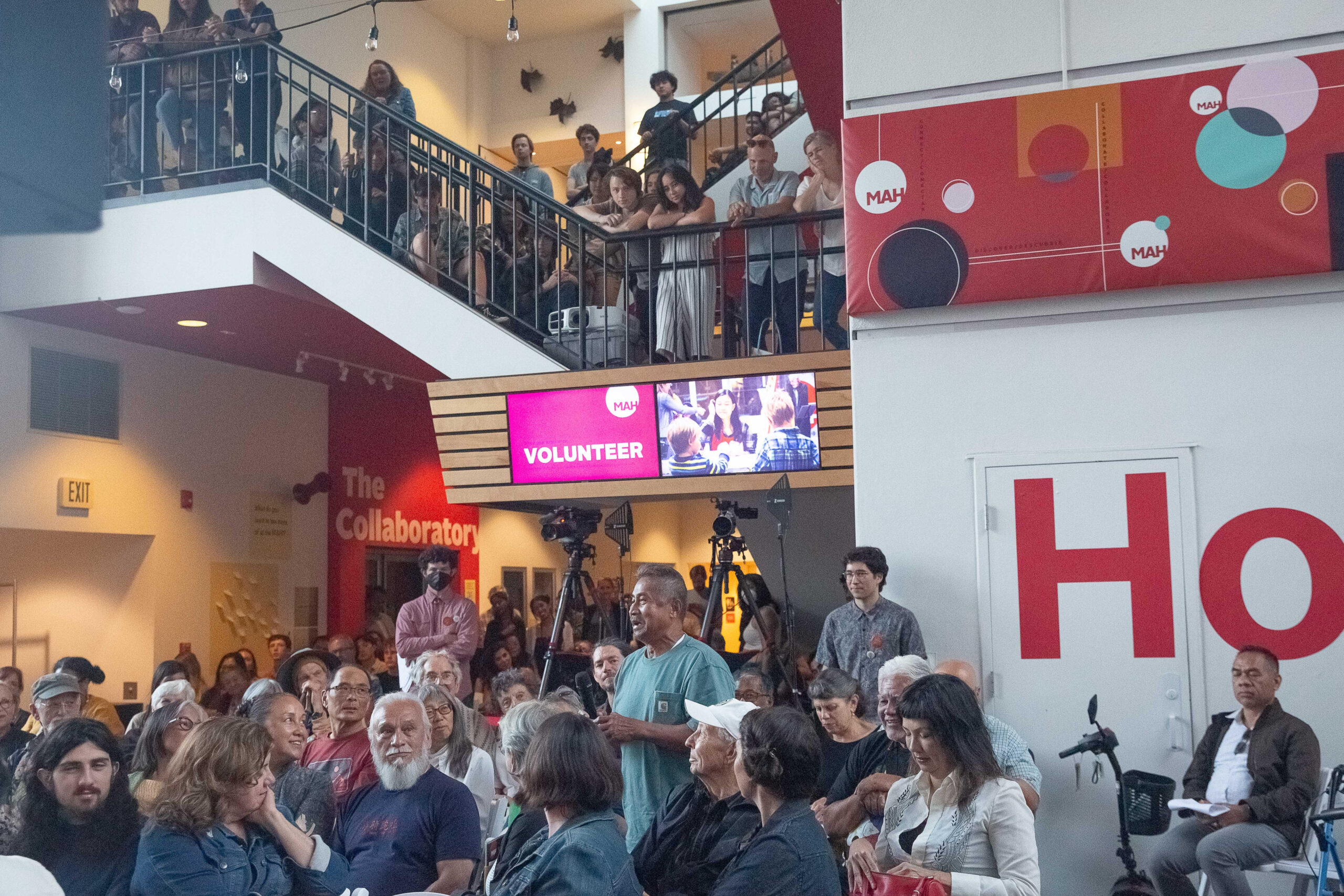
Attendees at the 2024 Night at the Museum "From the Archives: Conversations on Filipino America." Photo by Crystal Birns
In April, the Santa Cruz Museum of Art & History (MAH) marked its 30th anniversary with a gala Red Ball, replete with cocktails, dancing, light installations, live magic, and aura photography. As part of this celebration, the MAH also launched “This is Thirty,” a new exhibition co-sponsored by The Humanities Institute (THI) to share the museum’s history.
It is no surprise that UC Santa Cruz Humanities is helping to mark the museum’s milestone. Over the past ten years, the Humanities Division and THI have worked closely with the MAH on exhibitions, public programming, student fellowships, and research initiatives that connect the university with the broader Santa Cruz community.
“I’m thrilled to continue building this important partnership,” said MAH deputy director Marla Novo. “It brings our community together through public scholarship, local history, and shared experiences. Our collaboration is built on years of trust, knowing each other’s strengths, and leaning into them to create something that makes us all proud.”
Through the partnership, shared projects have incubated and grown, leading to new events, projects and exhibitions, Novo said.
“We communicate well when things get tricky or when things run smoothly,” Novo said. “We celebrate it all. The MAH is grateful for the support of UC Santa Cruz Humanities. I hope this relationship endures and gets deeper as the years pass.”
One of the first major collaborations between the museum and the Humanities Division took place in 2016 with The Kinsey African American Art & History Collection exhibition, which includes paintings, sculptures, photographs, rare books, manuscripts, and letters, featuring works by artists such as Jacob Lawrence, and Romare Bearden, along with documents from Frederick Douglass and Martin Luther King Jr.
The exhibition’s success led to a continuing partnership that expanded into annual public events, exhibitions, research collaborations, and student opportunities. In the last decade, THI has co-sponsored over a dozen exhibitions at the MAH on a range of topics from the history of surfing to pioneering women comic book artists.
One of the most visible collaborations has been Night at the Museum, the public event series co-created by THI to bring UC Santa Cruz scholars, artists, students, and community members together inside the museum galleries for a panel discussion and a linked exhibit, both free to the public.
THI managing director Irena Polić said the series emerged from a shared commitment to connecting humanities research with public engagement. She described Night At The Museum as a way to link humanities and arts in one space, making it open to the public.
“We came up with the title because of the Night At The Museum movies,” Polić said, referencing the Robin Williams comedies, one of them featuring a rampaging T-rex skeleton. “We don’t have any dinosaurs,’’ she joked. “It just seemed kind of cool.”
The first Night at the Museum event The Defender: How the Legendary Black Newspaper Changed America took place in 2016 in connection with The Kinsey African American Art & History Collection exhibition.
Over the years, Night at the Museum has included conversations and exhibitions on local history, migration, literature, speculative futures, and social justice.
In 2023, THI and the MAH presented the California premiere of Resettlement: Chicago Story, a short fictional film and educational website exploring how Japanese Americans rebuilt their lives in the Midwest after their wrongful incarceration during World War II.
The event served as that year’s Day of Remembrance and was co-sponsored by the Watsonville-Santa Cruz Japanese American Citizens League. It included a performance by the Watsonville Taiko Group, a film screening, and a panel discussion featuring project creators and Humanities Dean Jasmine Alinder, who served as the project’s lead academic advisor and content curator.
Alinder, whose scholarship has long focused on the Japanese American experience during World War II, said the relationship between UC Santa Cruz Humanities and the MAH has helped create a space where scholarship and public life intersect.
“Night at the Museum fosters dialogue between humanists at UCSC and the broader Santa Cruz public,” she said. “Here at the Humanities Division, we believe that research and ideas are at their most vibrant when they are co-created in community.”
Alinder added that the collaboration reflects a larger mission shared by both institutions. Last spring, she taught a community-engaged course titled “Public History Workshop” that worked with the MAH to prepare educational materials for local teachers on the history of surfing in Santa Cruz. The class was connected to the MAH exhibition Princes of Surf.
“Humanists at UC Santa Cruz are proud and grateful to stand with our colleagues at the MAH in the study and exploration of the human experience,” Alinder said.
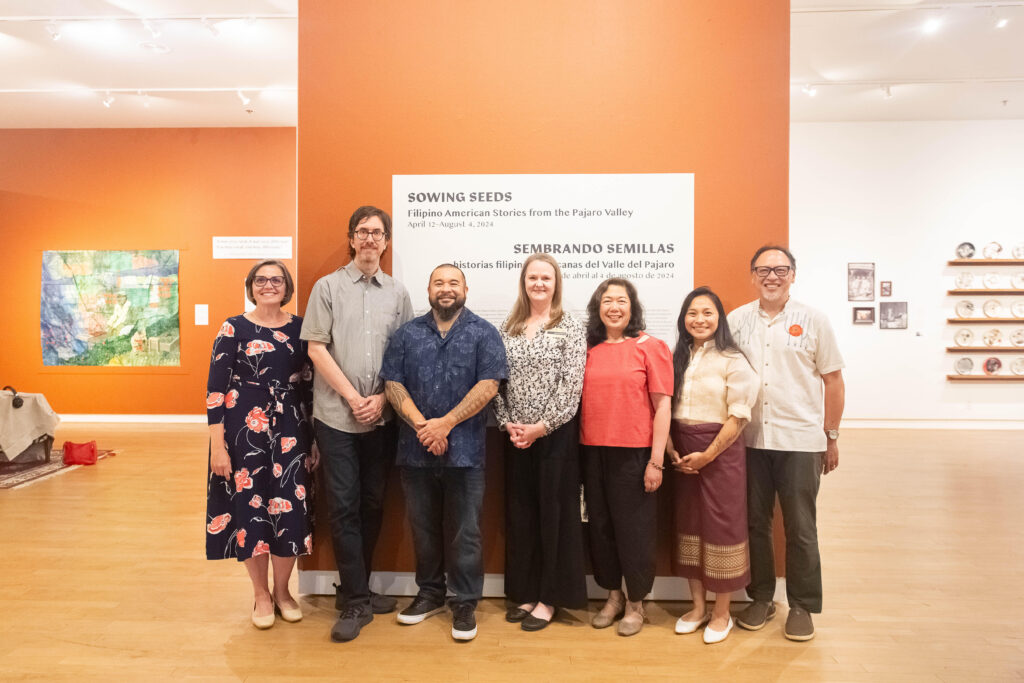
Since 2016, the partnership has expanded into exhibitions and public humanities projects focused on local history, migration, language, literature, and community storytelling. For example, the 2024 Night at the Museum “From the Archives: Conversations on Filipino America” featured Sowing Seeds: Filipino American Stories from the Pajaro Valley, a four month exhibition in the Solari Gallery. The exhibition was led by Watsonville is in the Heart, a public history initiative to preserve and uplift stories of Filipino migration and labor in Watsonville and the greater Pajaro Valley of Central California.
For Saskia Nauenberg Dunkell, THI’s research programs and communications director, one of the strengths of the relationship is the way the university and museum build projects together. The MAH works with THI on grant applications, helps scholars think through the possibilities for an exhibition, while providing a public venue that highlights research fostered by THI.
One current collaboration focuses on Indigenous Oaxacan languages spoken across the Central Coast and within immigrant communities.
“This is a community-led exhibition we are developing in partnership with Senderos to uplift the languages and cultural traditions that Oaxacan communities in Santa Cruz bring to this area,” Dunkell said. “We are planning to share about the history of language on the Central Coast, the range of Indigenous Oaxacan languages spoken here, what is unique about them, and people’s experiences with multilingualism.”
The partnership has also created hands-on opportunities for graduate and undergraduate students.
“We have a team of Ph.D. students and undergraduate students working on community-engaged research for the exhibition,” Dunkell said.
She described the valuable skills students are gaining through their fellowships, including how to translate their research for public audiences and make scholarship accessible.
“That can mean using different terms and explaining the research to people who are outside their academic fields,” Dunkell said. “We want to share this project with all kinds of visitors to the MAH from K-12 school groups to adults with different backgrounds, and ensure the exhibition is accessible and engaging for everyone who sees it.
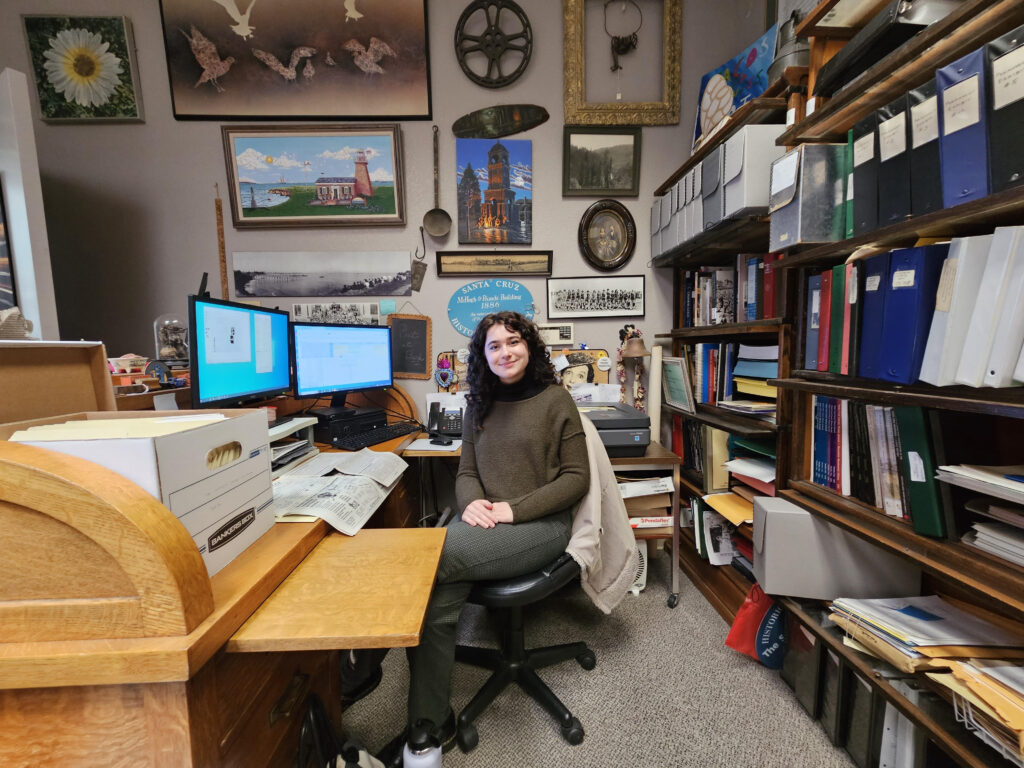
The MAH has also become an important site for experiential learning through both The Humanities Institute and the Humanities Division EXCEL fellowships.
“The MAH team has been amazing mentors to our students,” Dunkell said.
Starting in 2018, Wyatt Young, a History PhD candidate, pursued a yearlong THI Public Fellowship at the museum. Wyatt then worked with two undergraduate students at the Davenport Jail, an extension of the MAH, creating a multilayered mentorship structure.
“This deepened our campus-community collaboration, and we have been thrilled to support more students through these opportunities,” Dunkell said.
As part of THI’s Public Fellows program and the Humanities EXCEL program, dozens of UC Santa Cruz students have worked at the MAH, gaining experience with archives, exhibitions, educational programming, and community engagement. In 2020, Literature PhD student Morgan Gates received a THI fellowship to work on the MAH exhibition Do You Know My Name? sharing stories of Santa Cruz residents from the early 20th century to the present.
In 2022-2023, undergraduate student Rebecca Snyder (History of Art and Visual Culture and Literature) was the Assistant Archives Coordinator and Sara Sotelo (History and Education), worked as the Assistant Education Coordinator.
In a story about their experience, Snyder shared that “Doing the fellowship at [the MAH] is one of the best things I’ve done as an undergraduate.”
Her experience led to a job at the museum after she graduated, and she is one of several humanities students who have been hired for positions at the MAH at the end of their fellowships.
In recent years, these opportunities have grown through the Humanities Division’s EXCEL program. This year, there were four undergraduate fellows at the museum.
Current Humanities EXCEL fellow Kian Hladky works on the museum’s exhibitions and programs team.
“I deeply enjoy collaborating with others to promote the arts and humanities to a wider audience,” Hladky said. “Beyond that, my internship has given me experience working in a small-scale organization that encourages collaboration and community engagement, both of which I would value in a career.”
The collaboration between UCSC Humanities and the MAH has also extended into leadership. Humanities faculty and staff have maintained a steady presence on the museum’s board over the past decade. Alinder currently serves as president of the board, while Polić and former Humanities Dean William Ladusaw previously served in leadership roles.
Last summer, the relationship between the institutions was on full display when THI celebrated its 25th anniversary at the museum with an event featuring speculative fiction conversations and the Amending Worlds exhibition.
As both institutions look ahead, the partnership continues to grow through exhibitions, grants, public programming, and student opportunities. Humanities has helped turn the museum into a place where scholarship, art, students, and community life meet in public.