Campus News
Ancient DNA offers hope for California’s critically endangered black abalone
UC Santa Cruz researchers have, for the first time, sequenced whole genomes from mollusk shells, unlocking 1,500 years of genetic history for a species on the brink
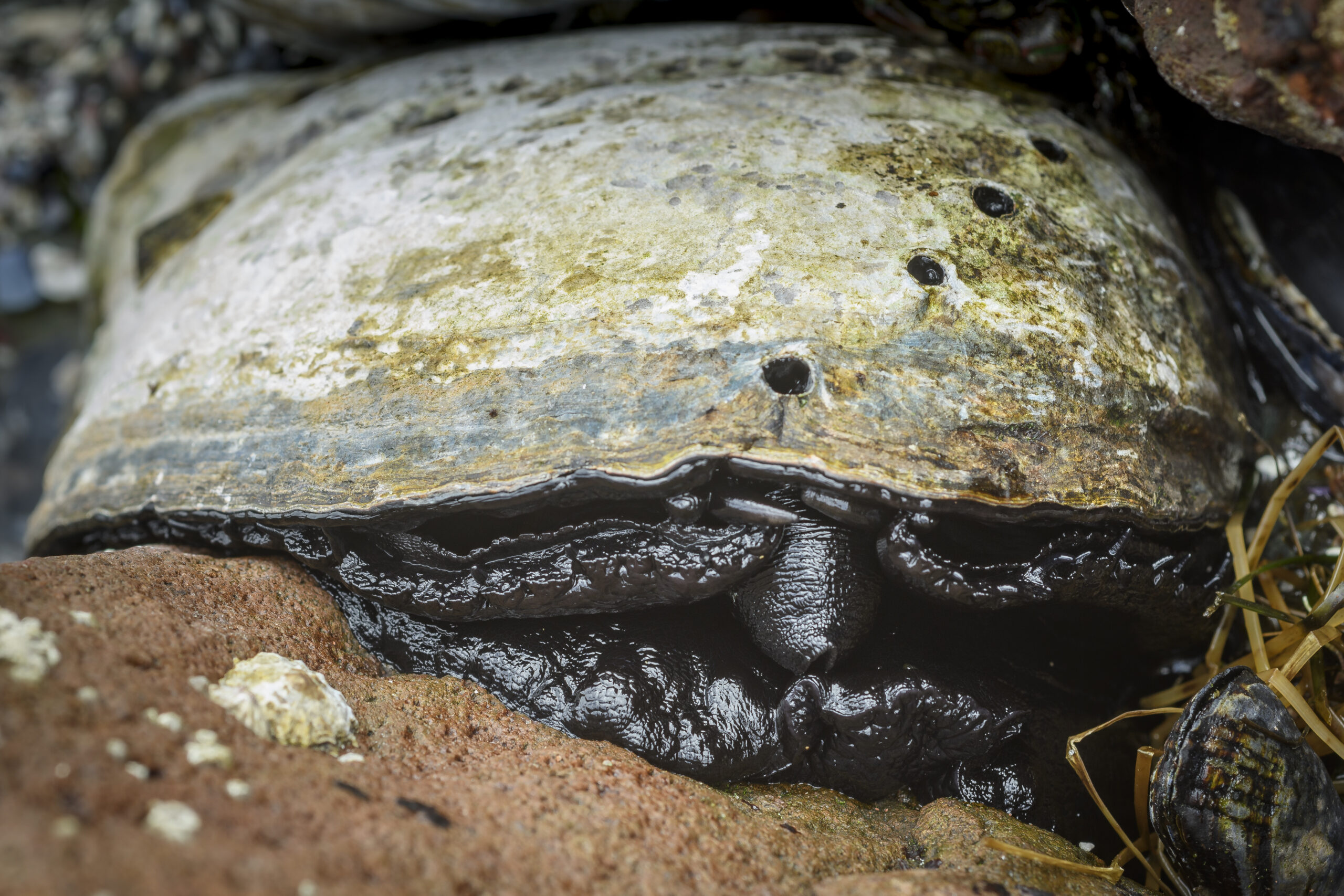
Photo by Michael Ready.
Key takeaways
- A new study is the first to recover full genomes from mollusk shells, opening museum drawers and archaeological sites worldwide as untapped archives of marine biodiversity.
- The team sequenced DNA from more than 50 black abalone shells spanning 1,500 years and found hope for the surviving populations recovering after a devastating disease wiped out about 99% of the species.
- The work points to specific immune genes that may help them fight the disease still circulating today.
Black abalone once carpeted the rocky shores of California by the millions. The large, long-lived sea snails sustained Indigenous peoples along the coast for thousands of years, anchored a thriving 20th-century commercial fishery, and inspired generations of California cooks, divers, and artists.
Then, almost overnight, they vanished.
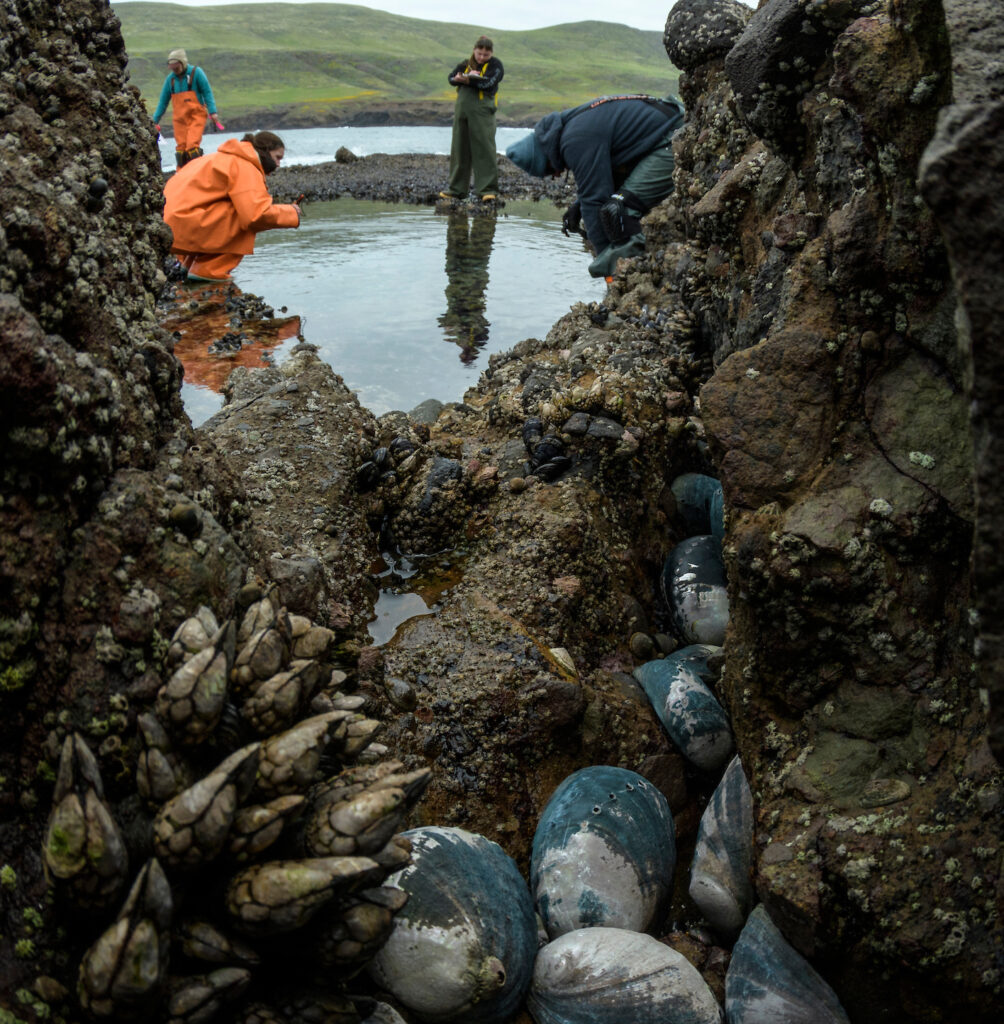
In 1985, a bacterial illness called withering syndrome appeared along the Southern California coast. Within just a few years, it killed roughly 99% of black abalone across their range. Fishing for them has been banned since 1993, and in 2009 it was added to the U.S. Endangered Species List. Today, the critically endangered survivors cling to a handful of intertidal sites along the coast of California and Mexico.
A new study led by researchers at the University of California, Santa Cruz Genomics Institute has now reconstructed what black abalone populations looked like before the collapse, and the answers could change how scientists think about saving them.
Reading DNA locked inside shells
In a study published in Proceedings of the National Academy of Sciences, the team sequenced full genomes from 59 black abalone shells. This included one shell from a 1,500-year-old Indigenous site for dumping shells, known as a shell midden, that yielded an unusually complete genome. No one had ever produced multi-fold whole-genome data from mollusk shells before.
“This is a fun new data type,” said Brock Wooldridge, a former postdoctoral fellow in the UC Santa Cruz Paleogenomics Lab and the study’s lead author. “Museum collections around the world are full of shells, and most archaeological sites along the coast are rich with them. This is a seriously underutilized resource that can provide a window into the past.”
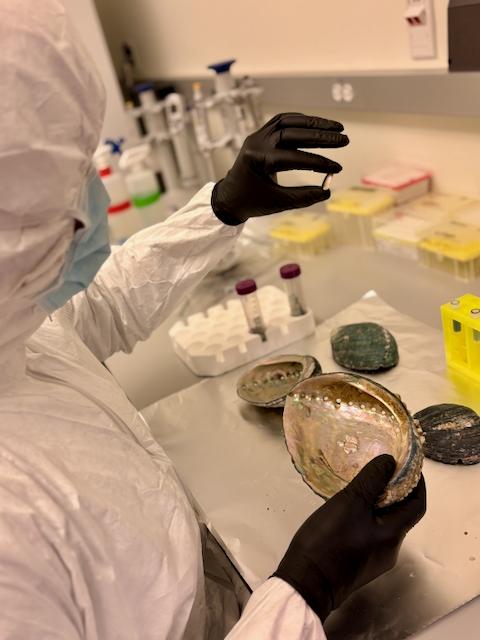
To pull intact DNA out of those shells, the team adapted techniques originally developed to extract ancient DNA from fossil bones. They worked in a dedicated clean lab to avoid contaminating fragile samples with modern DNA, then ground a small piece of each shell into powder and used specialized techniques to recover the tiny, damaged DNA fragments trapped inside.
The shells came from museum collections, archaeological sites, and donations from the Amah Mutsun Tribal Band, whose ancestors harvested abalone for generations.
A surprisingly intact gene pool
When the researchers compared their pre-collapse genomes to genomes from modern survivors, they expected to see classic warning signs of a species in trouble: reduced genetic diversity, mounting inbreeding, and growing isolation between populations. They saw none of that.
Genetic diversity, inbreeding levels, and population structure all looked nearly identical before and after the disease outbreak. The researchers posited that this might be because not enough time had passed since the outbreak caused a “bottleneck” in the population, only 10 abalone generations ago, for the genetic damage to fully surface.
Computer simulations confirmed the pattern of genetic stability the researchers were seeing in the time that has passed since the bottleneck, but they also issued a warning. If the original collapse was as severe in places as surveys suggest, and if populations stagnate rather than rebound, signs of genomic erosion could still emerge in the generations ahead. The encouraging news is that even modest, sustained recovery appears to be enough to head off that future. The window for action is open, in other words, but it will not necessarily stay open forever.
The team also spotted something more encouraging. Genes involved in immune defense showed signs of recent natural selection, hinting that surviving abalone may be evolving resistance to the very disease that nearly wiped them out.
“This is extremely encouraging for the conservation of this species,” Wooldridge said. “Knowing that genomic erosion isn’t a foregone conclusion changes the conversation. It tells us that , if managed correctly, we have a meaningful chance of avoiding the genetic issues that plague other threatened species.”
What it means for recovery
The findings arrive as state and federal agencies begin moving black abalone between sites to help rebuild populations using a strategy known as translocation.
Because today’s abalone still carry most of the genetic variation their ancestors had, managers can move individuals between sites without worrying that they are mixing genetically distinct stocks or eroding local adaptations. The one place where the team recommends caution is Point Conception, a significant headland near Santa Barbara known as a hotspot for marine biodiversity. They found two chromosomal inversions that became more common after the disease bottleneck and differ on each side of this biogeographic boundary, suggesting the inversions may be helping abalone cope with local conditions there. The paper recommends against moving abalone across the boundary in either direction.
The study was supervised by UC Santa Cruz Professors of Ecology and Evolutionary Biology Beth Shapiro and Pete Raimondi, and was supported by a National Science Foundation Ocean Sciences Postdoctoral Fellowship. Shells used in the study were contributed by the Natural History Museum of Los Angeles County, the University of Oregon Museum of Natural and Cultural History, and the Amah Mutsun Tribal Band, whose continued stewardship of black abalone made the work possible.