Technology
UC Santa Cruz’s first student-built satellite deployed from International Space Station
Hundreds of miles above Earth, a small satellite built by University of California, Santa Cruz students deployed from the International Space Station on July 2, 2026, becoming the university’s first student-built satellite to reach space.
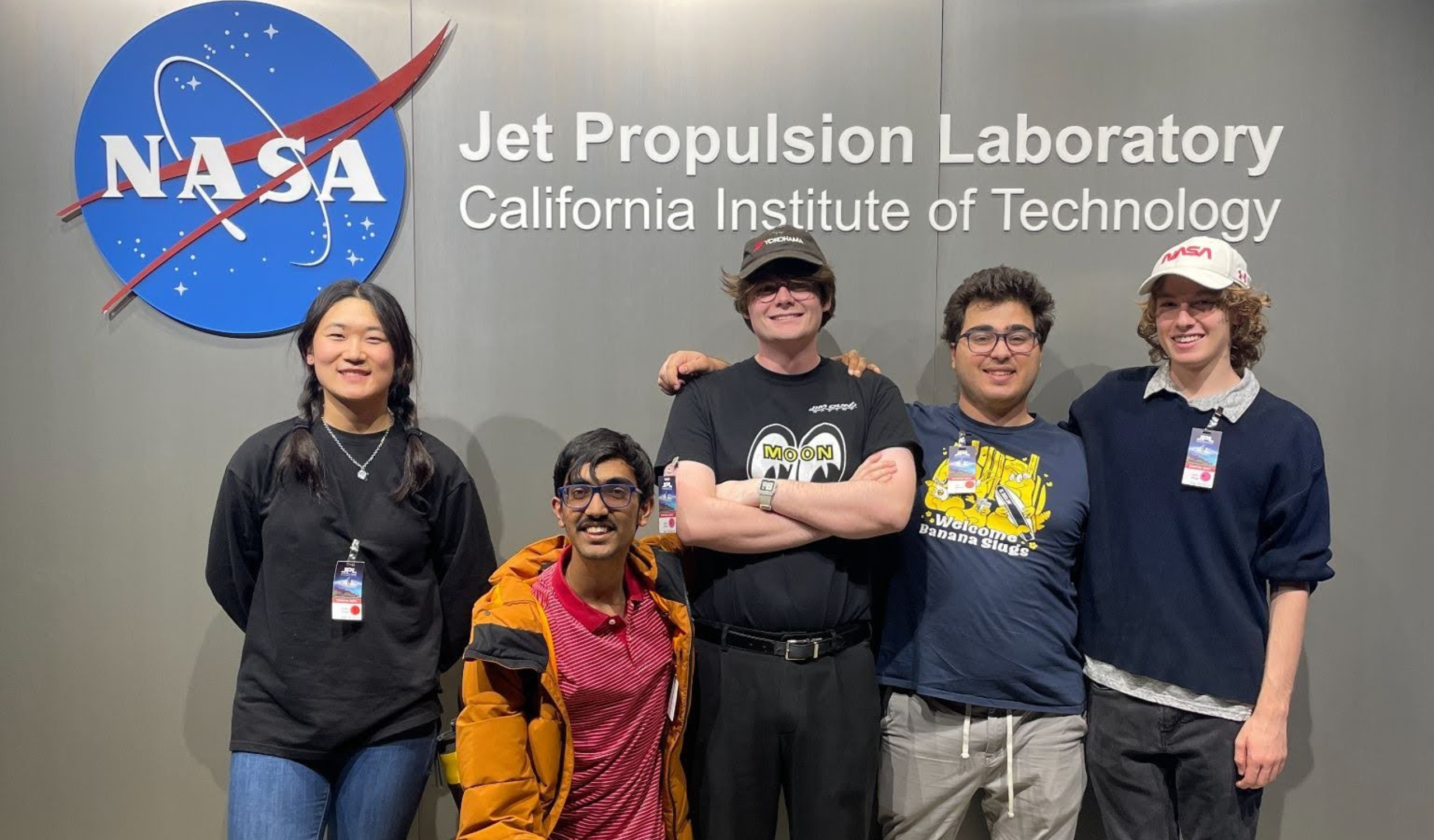
SlugSat visiting NASA Jet Propulsion Laboratory.
Hundreds of miles above Earth, a small satellite built by University of California, Santa Cruz students deployed from the International Space Station on July 2, 2026, becoming the university’s first student-built satellite to reach space.
For members of SlugSat, UC Santa Cruz’s satellite engineering student organization, the successful deployment reflects years of hands-on work designing, building, and testing the satellite.
SlugSat was selected for NASA’s CubeSat Launch Initiative, a competitive program that provides launch opportunities for student-developed CubeSats—small satellites commonly used for research and education.
The milestone marks another step in Baskin Engineering’s growing presence in space research and technology.
Joining NASA’s CubeSat launch initiative
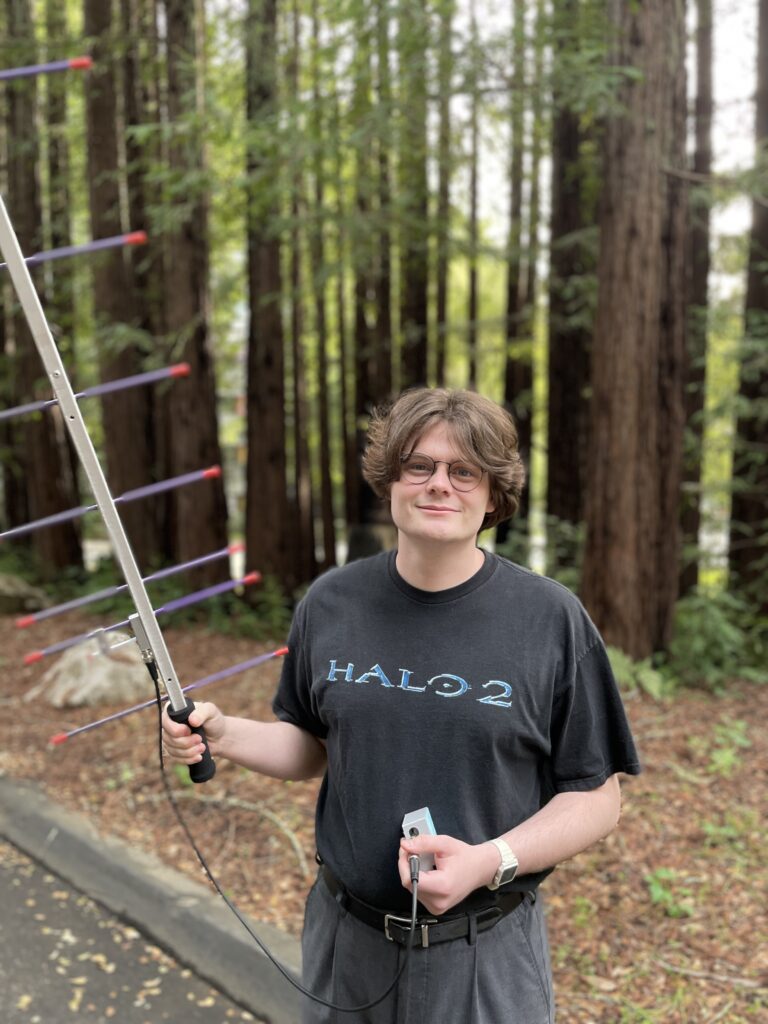
SlugSat is on a mission to prepare the next generation of space industry professionals at UC Santa Cruz.
For three years, the team of 10 students was led by Baskin Engineering alumnus David Uniack (B.S. ‘26, robotics engineering), who joined SlugSat during his first year at UCSC.
SlugSat’s path to space began after Uniack attended the CubeSat Developers Workshop in San Luis Obispo, where he connected with students from Cal Poly Pomona’s Bronco Space CubeSat program. Inspired by the opportunity to build a student satellite, he led UCSC’s application to join NASA’s CubeSat Launch Initiative.
UCSC teamed up with Cal Poly Pomona, Texas State University, Northeastern University, and Columbia University to develop CubeSats using Cal Poly Pomona’s open-source PROVES hardware and software platform.
“Being selected for NASA’s CubeSat Launch Initiative and joining this group of universities was very exciting,” Uniack said. “One of my mantras is to get yourself into situations you can’t easily get yourself out of because it forces you outside of your comfort zone.”
Each university built its own CubeSat while developing a unique payload, allowing students to gain hands-on experience through every phase of a satellite mission, from design and testing to launch and operations.
Turning an idea into a spacecraft
From June 2024 through December 2025, SlugSat transformed its project from a concept into a flight-ready satellite.
Uniack spent his summers working alongside students from the partner universities in Cal Poly Pomona’s Bronco Space laboratory, bringing what he learned back to UC Santa Cruz.
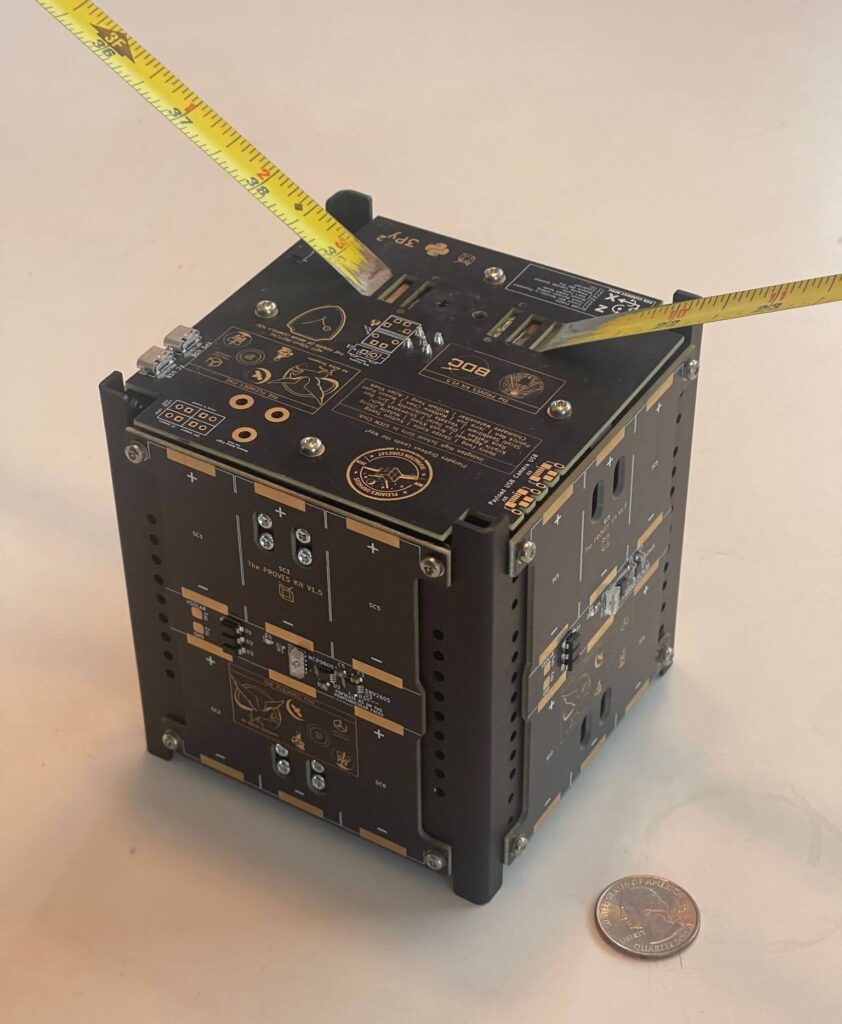
At Slugworks, UC Santa Cruz’s student creatorspace in Baskin Engineering, the team built and tested their satellite using the tools and equipment available to them.
Baskin Engineering courses also gave Uniack the technical foundation to lead the project.
“My electrical engineering courses across the board were incredibly helpful, especially when it came to designing circuits,” Uniack said. “The labs taught me how to test what I was building, and anything involving radio frequency design was directly applicable.”
The team built cable systems and wire harnesses, developed the satellite’s communications system, and integrated the hardware needed to operate in orbit.
Along the way, they gained experience in project management, documentation, and collaborating with external partners, including the Federal Communications Commission, National Oceanic and Atmospheric Administration, and the North American Aerospace Defense Command.
“I went through all the phases of starting a job and feeling like you’re screwing up all the time,” Uniack said. “The most important lessons weren’t technical. This is what it feels like to work in industry, getting things across the finish line and not taking no for an answer.”
With support from Baskin Engineering, SlugSat members also visited NASA’s Jet Propulsion Laboratory and San Francisco-based satellite company Astranis, where they met researchers and industry professionals and explored careers in the space sector.
After months of research, testing, and design refinement, the final assembly came together quickly.
“It was R&D, R&D, R&D, and then once we were ready, we built the satellite in two weeks,” Uniack said. “That’s the miracle of it all.”
Preparing for the journey to space
Before the satellite could launch, SlugSat had to prove it could withstand the demands of spaceflight.
In December 2025, the team traveled to NASA’s Johnson Space Center in Houston for vibration testing, which simulated the forces the spacecraft would experience during launch. They also demonstrated that the satellite could operate properly, communicate without interference, and safely deploy and deorbit.
After completing testing, SlugSat handed the satellite over to Voyager Technologies. The spacecraft was then transported to NASA’s Kennedy Space Center in Florida to begin its journey to the International Space Station.
Watching years of work launch from Earth
On April 11, 2026, the UC Santa Cruz satellite launched aboard NASA’s NG-24 resupply mission.
Team members traveled to Florida to watch the launch alongside their families and collaborators from the partner universities.
“It was maybe the best day of my life,” Uniack said. “I was with all of my friends and family, and the students from all the other universities we worked with. For me, it was a feeling of relief. It was unreal.”
After arriving at the International Space Station, the CubeSat remained aboard until July 2, when it was transferred to a deployer mounted outside the station and released into orbit.
Now orbiting Earth, the satellite is transmitting signals to SlugSat’s ground station. Uniack is monitoring its health, analyzing incoming data, and preparing software updates, operating the mission much like a professional satellite operations team.
A launchpad for the next generation
For SlugSat, deploying its first satellite is only the beginning.
“The club wants to build on this project and participate in NASA’s CubeSat Launch Initiative again,” Uniack said.
Looking back, Uniack said the most meaningful part of the experience wasn’t simply launching a satellite, but the community that formed around the project.
“Life is about the friends you make along the way and identifying opportunities, even if it takes unusual dedication.”