Earth & Space
Anna Tsing and Terrie Williams named to American Academy of Arts & Sciences
The two faculty members are among the 252 leaders in academia, the arts, industry, journalism, philanthropy, policy, research, and science elected this year
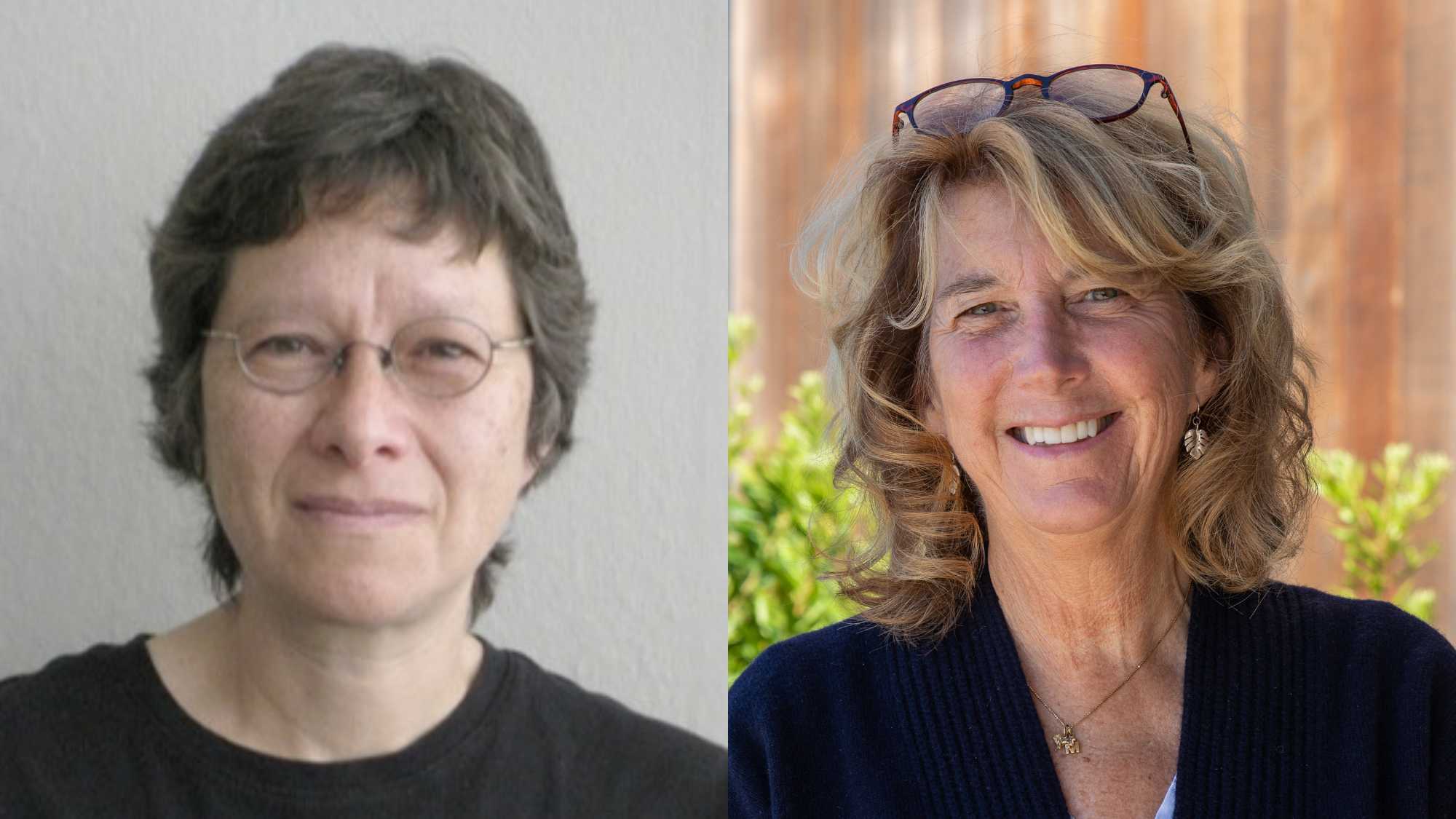
Anna Tsing (left) and Terrie Williams.
Two faculty members at the University of California, Santa Cruz, are among the 252 leaders in academia, the arts, industry, journalism, philanthropy, policy, research, and science elected to the American Academy of Arts & Sciences in 2026.
They are Professor of Anthropology Anna Tsing and Professor of Ecology and Evolutionary Biology Terrie Williams.
“We celebrate the achievement of each new member and the collective breadth and depth of their excellence—this is a fitting commemoration of the nation’s 250th anniversary,” said Academy President Laurie Patton. “The founding of the nation and the Academy are rooted in the inextricable links between a vibrant democracy, the free pursuit of knowledge, and the expansion of the public good.”
Tsing is a longtime scholar of the anthropocene, the current geological epoch defined by humanity’s impact. She takes an interdisciplinary approach to her study of how human activity has transformed Earth’s ecosystems and biodiversity, drawing from the fields of feminist theory, multi-sited ethnography, and more. In 2019, she established UC Santa Cruz’s Southeast Asian Coastal Interactions Initiative (SEACoast), a collaborative hub where social and natural scientists work together to tackle complex environmental problems.
Her prominent book titles include “The Mushroom at the End of the World: On the Possibility of Life in Capitalist Ruins” and “In the Realm of the Diamond Queen: Marginality in an Out-of-the-Way Place.”
Williams is a comparative ecophysiologist who is renowned for her groundbreaking findings on the ecological physiology of large mammals. Her work has transformed our understanding of the ecological significance of large carnivores, unraveling the physiological adaptations crucial for species survival in an ever-changing world shaped by human impacts.
Her research at the Williams NeuroResilience Wildlife Lab has meticulously detailed the intricate relationships between apex predators and their environment. Williams’ innovative micro-technologies have facilitated field measurements of free-ranging animals including Arctic narwhals, sea otters, African lions, seals, and polar bears.
“I am so honored by this award, especially because it combines the two things that I love: the creativity of the arts and the thrill of scientific discovery,” Williams said. “I believe that, together, they make the world a better place for man and nature.”
The Academy, chartered in 1780, was established to recognize accomplished individuals and engage them in addressing the greatest challenges facing the young republic. The first members elected to the Academy include George Washington. The Academy has not wavered in its commitment to recognizing excellence, but its membership has changed through the increasing diversity of its members and the broader array of expertise they possess.