Climate & Sustainability
Leaders in coastal-climate resilience: senior fellows are building a more sustainable future
These fellows share a common commitment to recognizing Indigenous knowledge, giving voice to the communities most affected by climate change, and fostering collaboration among governments to protect natural habitats.
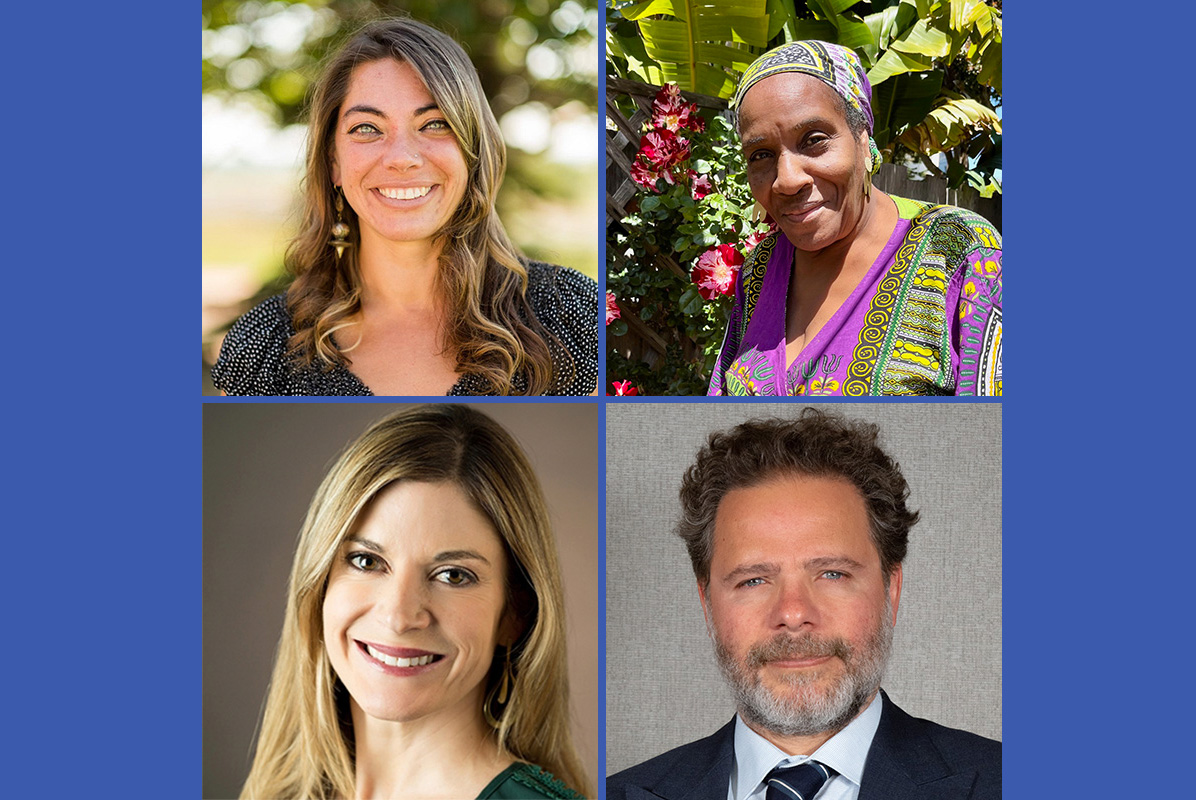
Clockwise: Senior Fellows Heather Tallis, Cynthia Ellis Topsey, Guillermo Franco, and Carter Ingram at the Center for Coastal Climate Resilience.
The final installment on Center for Coastal Climate Resilience (CCCR) fellows at the University of California, Santa Cruz, features the center’s four senior fellows—leaders whose work spans science, policy, finance, and community organizing. CCCR has supported these fellows at various stages of their impressive and wide-ranging careers.
They share a common commitment: building a more sustainable and equitable world—one where Indigenous knowledge is recognized, communities most affected by climate change have a voice in shaping solutions, and governments and organizations collaborate to protect natural habitats.
Hear about the incredible work they’re doing to advance climate resilience and drive solutions for environmental justice.
To learn more about CCCR fellows, read part one and part two of the series.
Heather Tallis
Tallis focuses on novel ways to invest in nature and encourage policy makers to incorporate nature into solutions. Tallis currently works with the California Department of Insurance to examine how cities and governments value and take care of our natural assets, looking specifically at the viability of insuring urban forests in the Golden State.
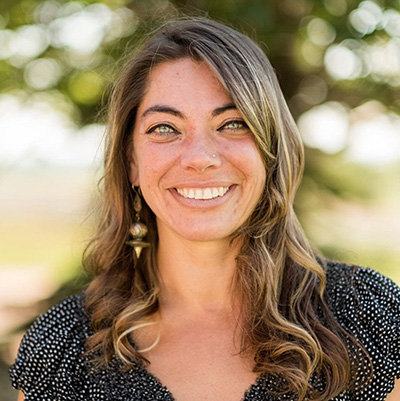
As major storm events, wildfires, and pest outbreaks increasingly wreak havoc on cities throughout California, a catastrophic loss of urban trees and forests has taken place. With so many trees dying in large-scale natural events, cities, and counties throughout the state are striving to increase urban canopy cover and create more green space.
“One of the challenges is that local governments often don’t have funding after a big loss to replant the trees or to maintain ones that are damaged,” Tallis said. “So we have been exploring, together with a wide range of different stakeholders and experts, whether it would be feasible and useful to insure California’s urban forests.”
Tallis has a long career in conservation policy. She served as former President Joe Biden’s policy advisor on nature in the White House Office of Science and Technology Policy, where she drove cross-agency action on nature-based solutions, advanced efforts to account for nature in benefit-cost analyses, and helped establish the National Nature Assessment, which she continues to co-lead today as the United By Nature Initiative.
But her interest in nature dates back to when she was a child during trips to Florida with her grandparents. Their visits to the beach encouraged a young Tallis to consider the vastness of the ocean and the immense amount of life the ocean harbors. Tallis was entranced by one beach in particular, dubbed “Coquina” because of the clams that live in the long stretches of sand by the millions.
“It’s this huge chance to see how much more life is out there all the time around us that we never really stop and pay attention to,” Tallis said. “As a kid, I could just sit and I could watch for hours nothing but the waves coming up and the coquinas digging into the sand.”
Since then, Tallis has built a career around understanding how the natural world works—and how people can better relate to it. Beyond her work in insurance, she currently co-chairs the Economic Futures Summit, an Indigenous-led gathering designed to galvanize sustainability solutions and create new pathways for evolving the economy in the face of climate and nature crises. The event will take place in San Francisco from November 4 to 6.
Ambassador Cynthia Ellis Topsey
Through partnerships with CCCR and the UC Santa Cruz Center for Reimagining Leadership, Ellis Topsey focuses on equipping Indigenous leaders with tools to access financial and institutional resources to support their research and knowledge. Her work with CCCR highlights the importance of recognizing and uplifting communities that have long been environmental stewards.
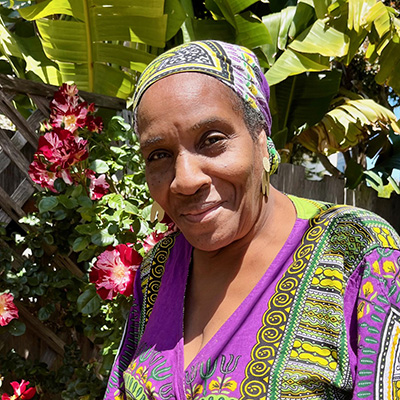
Born to Garifuna parents in a Mayan community in Belize, Ellis Topsey’s mother emphasized the importance of education from a young age. Ellis Topsey left Belize to study at the University of the West Indies, later pursuing a degree in social sciences. Today, Ellis Topsey serves as Ambassador-at-Large for the Garifuna Nation and is the founder of The Godsman Celestino Ellis Center for Garifuna Culture, which promotes the preservation of Garifuna heritage, language, and identity.
As she advanced in her career, Ellis Topsey observed that Indigenous knowledge and traditions were being excluded from global climate discussions and academic research spaces.
“Researchers, including NGOs and college students, were coming from all over the world to Belize,” she said, “but were not authentically engaging with the Indigenous people, the local leaders. We are the boots on the ground.But because we do not have the sophistication, the language, or the knowledge to navigate systems and structures, locally, internationally, regionally, we get left out.”
Her work with CCCR is grounded in empowering Indigenous communities through recognizing their advanced knowledge systems of native regions, which naturally lend themselves to developing climate solutions.
“The main theme, the main thread,” she said, “is how to have the capacity to access financial and other resources so we can be compensated for what we have been doing since time immemorial.”
Her collaboration with CCCR grew out of a conversation with its director, Michael Beck, who recognized the need to authentically include Indigenous voices in climate-resilience research and planning.
“He told me, ‘I’m going to do right by you and your people,’” Ellis Topsey recalled. “Weeks later, I got a letter from the Vice Chancellor of Research at the University of California, Santa Cruz, inviting me to be a fellow for a month.”
Ellis Topsey continues to champion Indigenous representation in climate work. She recently visited for CCCR’s inaugural Communicating Climate Solutions Symposium. She continues to bridge traditional ecological knowledge with scientific and institutional frameworks to ensure that the people most affected by climate change are at the forefront of shaping solutions.
Carter Ingram
An ecologist by training, Ingram has dedicated much of her career to advancing conservation and sustainability. She completed her postdoctoral fellowship at Columbia University’s Earth Institute and earned her M.Sc. and D.Phil. from the University of Oxford’s School of Geography and the Environment.
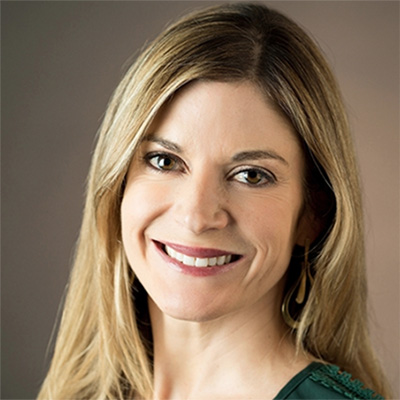
Ingram is currently a Managing Director at Pollination, a nature investment and advisory firm. She collaborates with industry specialists on integrating nature into financial mechanisms and institutions, decision making, and investment opportunities. Ingram said that’s where nature-based solutions can play a role in reducing the risk of climate impacts.
“We’re experiencing increasing impacts and risks from climate change, which is going to continue,” Ingram said. “The cost of responding to climate and nature-related threats is going up and the cost of infrastructure is going to go up, and it’s going to be really expensive for great infrastructure to keep up with climate change.”
In April 2024, CCCR and Pollination co-hosted a two-day gathering that focused on integrating nature into risk reduction, with a particular emphasis on the insurance sector’s role. “Nature-based solutions are effective not just physically, but also financially,” she said. “They’re often cost-effective and provide a host of co-benefits—support for fisheries, carbon sequestration, biodiversity protection. These will become increasingly important as we adapt to a changing climate.”
Guillermo Franco
Franco earned his Ph.D. at Columbia University, where he researched how structures behave during earthquakes. He later joined the university’s Earth Institute, where he continued his research with a focus on how to reduce poverty in the world using science—specifically, how communities can protect themselves from impacts of natural disasters.
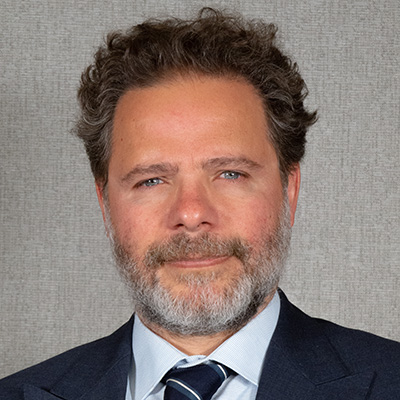
During his research, Franco traveled to Sri Lanka to study how ecosystems had recovered after the 2004 tsunami. That was the first time, he said, that he examined how the structural features of the natural ecosystem can reduce the severity of natural disasters. The realization that nature itself can serve as protective infrastructure for communities would guide the rest of his career.
“That’s exactly why the center’s mission makes so much sense and why it’s so pioneering,” Franco said. “Most people don’t make this connection. And even for those of us who are in the business, it’s a very new concept. So that’s why it’s so important that the center fosters interaction between disciplines.”
Today, Franco serves as Global Head of Catastrophe Risk Research at Guy Carpenter Co., where he studies the connection between ecosystem conservation and financial investment.
“We’re basically saying, if we conserve these natural habitats, we will also save money,” Franco said. “We want nature to be taken care of. The question is, can we make a financial argument for that?”
His recent research explores how risk protection provided by natural assets can be both commercially feasible and economically sensible. He is also developing models to account for the risk-reduction value of ecosystems in financial planning.
“Whenever there’s a marsh, coral reef, or mangrove forest, these ecosystems act as barriers against coastal hazards—waves, flooding, and storm surges,” he said. “Some absorb water like sponges, others block wave energy. They’re serving a purpose: They’re protecting our coastal assets just by existing.”