Sustainability
-
24th Annual Earth Summit
The 24th annual Earth Summit is on May 3, from 12-4pm on Oakes Lower Lawn.
-

Forum captures urgency to use ecosystems now to keep people safe from looming natural disasters
The National Practice Forum on Nature-Based Solutions was held in Irvine on February 4 and 5, and sponsored by UC Santa Cruz’s Center for Coastal Climate Resilience (CCCR). The forum drew over 500 attendees from around the country to discuss how our ecosystems can protect us from natural disasters.
-

Biologist Erika Zavaleta receives Science Division’s Outstanding Faculty Award
The Science Division has announced that Erika Zavaleta, a professor in the Ecology and Evolutionary Biology Department, has won its 2023-24 Outstanding Faculty Award. The annual prize is the division’s highest honor for faculty achievement, recognizing combined excellence in research, teaching, and service.
-

UC Santa Cruz sets fossil-free date
The University of California, Santa Cruz has announced it will reduce fossil fuel emission by 90% by 2045. The date was set based on recommendations from the Decarbonization and Electrification (D&E) team.
-
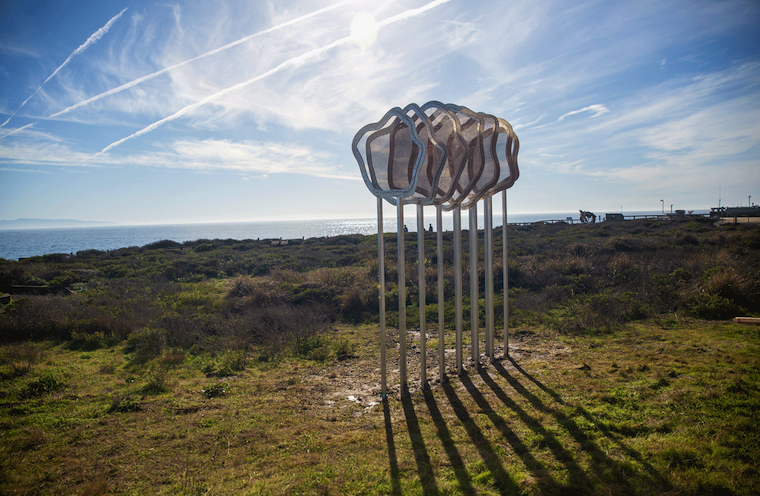
New research and art installation demonstrate the viability of using fog as a water source
In a state known for its droughts, where the southern half recently experienced devastating fires, understanding California’s natural water sources is more important than ever. Three University of California, Santa Cruz professors have teamed up to create a multipart scientific and artistic research study, Art+Fog as a collective,
-
Decarbonization & Electrification Town Hall #4
The Decarbonization & Electrification Initiative will hold its fourth town hall gathering on February 10, 2025.
-
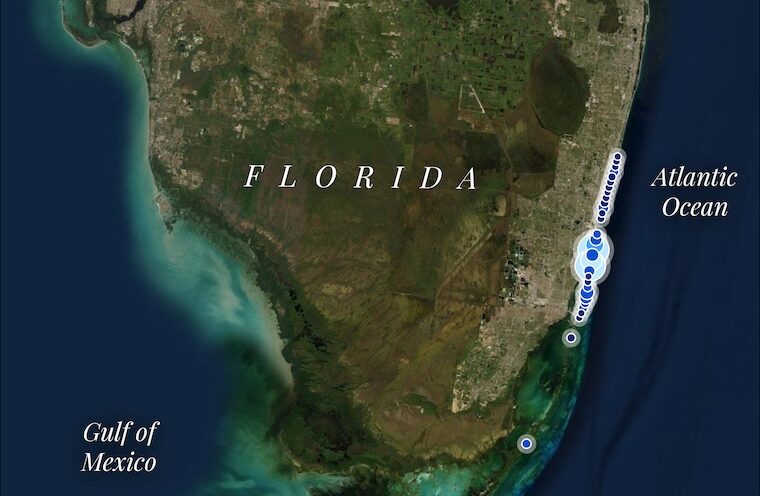
Coral-reef restoration can be cost-effective for saving lives, money
A new study co-led by the Center for Coastal Climate Resilience (CCCR) at UC Santa Cruz shows coral reef restoration in Florida and Puerto Rico could save thousands of lives and prevent hundreds of millions of dollars in damage and economic interruption each year.
-
Scientists collaborate on immersive technology to address climate challenges
The UC Santa Cruz Center for Coastal Climate Resilience (CCCR) and a team of scientists and science communicators at UC San Diego have developed an initiative focused on immersive technology that uses advanced hardware and software to simulate environments and experiences.
-
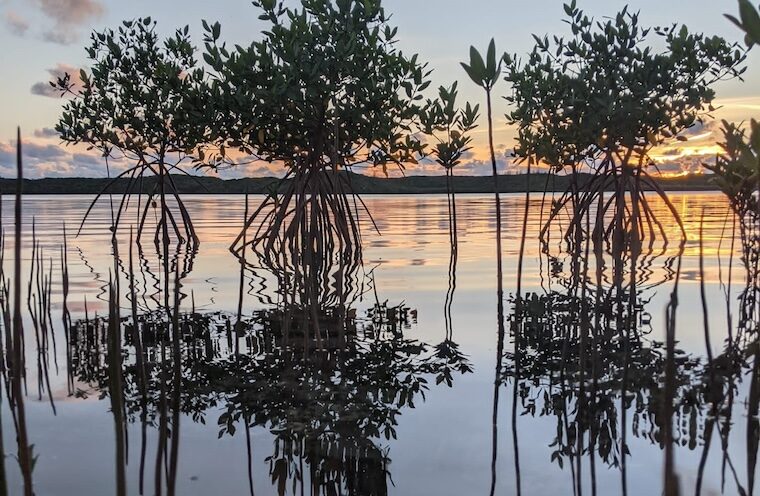
Mangroves save $855 billion in flood protection globally, new study shows
Mangroves have been shown to provide $855 billion in flood protection services worldwide, according to a new study from the Center for Coastal Climate Resilience at UC Santa Cruz. The research is featured in the World Bank’s 2024 edition of The Changing Wealth of Nations.
-

A Justice-Focused Perspective on the Clean Energy Transition
Chris Benner investigates lithium extraction at the Salton Sea, and what it means for community groups and the future of clean energy.
-

New chemical process makes biodiesel production easier, less energy intensive
UC Santa Cruz chemists have discovered a new way to produce biodiesel from waste oil that both simplifies the process and requires relatively mild heat. This discovery has the potential to make the alternative fuel source much more appealing to the massive industrial sectors that are the backbone of the nation’s economy.