Genomics
-
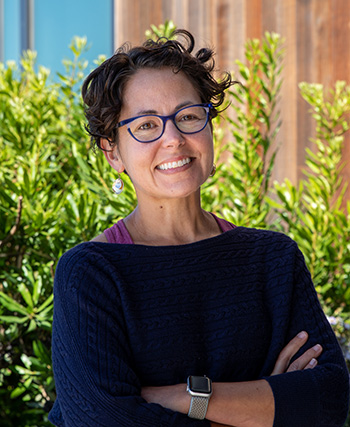
Biologist Beth Shapiro elected to the American Academy of Arts and Sciences
Beth Shapiro, professor of ecology and evolutionary biology at UC Santa Cruz, has been elected to the American Academy of Arts and Sciences, one of the nation’s oldest and most prestigious honorary societies.
-
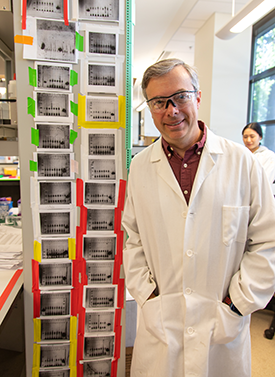
Naming system for transfer RNA fragments will increase research productivity, standardization
UC Santa Cruz Professor of Biomolecular Engineering Todd Lowe and his group created a new naming scheme for tRNA fragments aimed at standardizing research.
-

New program advises UCSC Ph.D. students on their path to entrepreneurship and venture capital
Many student-led innovations never make it out of the lab. A new program at UC Santa Cruz aims to change that by mentoring Ph.D. students in the life sciences on alternative career pathways outside academia: entrepreneurship and venture capital.
-
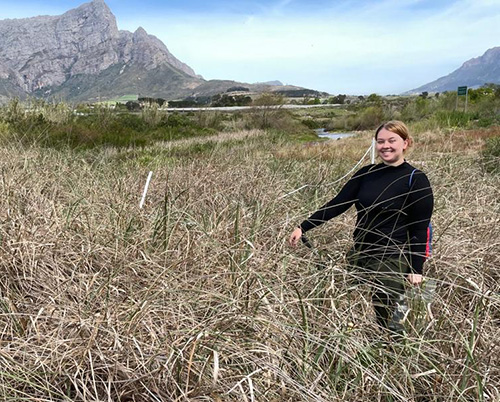
Collaboration with NASA uses eDNA technology to monitor biodiversity
UCSC scientists collected environmental DNA samples in South Africa as part of the BioSCape project.
-

Researcher wins inaugural NHGRI award for DEIA Innovation in the Genomics Workforce
Ann Mc Cartney received the National Human Genome Research Institute’s (NHGRI) inaugural Staff Award for DEIA Innovation in the Genomics Workforce.
-
Researchers produce first-ever toolkit for RNA sequencing analysis using a ‘pantranscriptome’
Researchers at UC Santa Cruz introduce the first-ever method for analyzing RNA sequencing data genome-wide using a “pantranscriptome.”
-

UCSC Genome Browser selected to first-ever Global Core Biodata Resource List
The UCSC Genome Browser is now part of the first list of Global Core Biodata Resources—a collection of 37 resources whose long-term funding and sustainability is critical to life science and biomedical research worldwide.
-
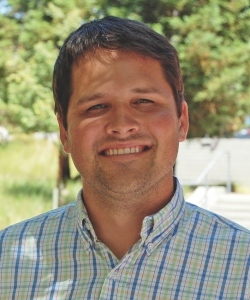
Long-standing genomic mystery about the origins of introns explained in new study
A new study led by scientists at UC Santa Cruz and published in the journal Proceedings of the National Academy of Sciences (PNAS) points to introners, one of several proposed mechanisms for the creation of introns, as an explanation for the origins of most introns across species.
-
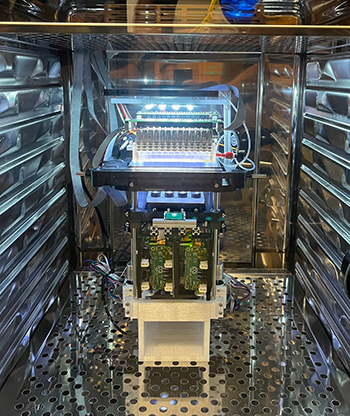
Braingeneers develop novel method to automate the growth of brain tissue organoids on a chip
A team of engineers and scientists at UC Santa Cruz has developed a new method for remote automation of the growth of cerebral organoids – miniature, three-dimensional models of brain tissue grown from stem cells.
-
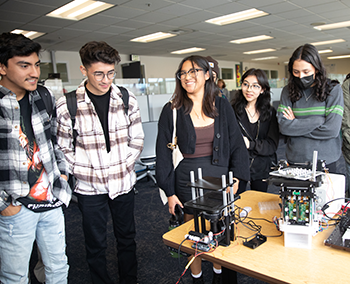
Remote-controlled microscopes bring complex biology education to students worldwide
As detailed in new research, UC Santa Cruz researchers have developed a method for using remote-controlled, internet-connected microscopes to enable students anywhere in the world to participate in designing and carrying out biology experiments.
-
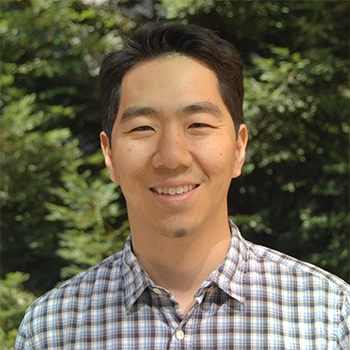
Biomolecular engineering professor wins American Cancer Society award to develop technology for cancer early detection
Assistant Professor of Biomolecular Engineering Daniel Kim won a four-year, $792,000 Research Scholar award from the American Cancer Society to support his work in developing RNA liquid biopsy technology to diagnose cancer early on.
-
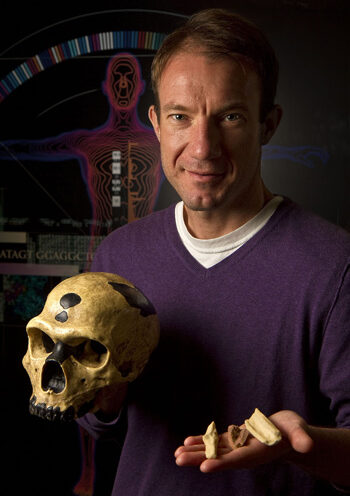
UCSC engineer played crucial role in 2022 Nobel Prize-winning research
UC Santa Cruz Baskin School of Engineering Professor Richard (Ed) Green was a major contributor to the Neanderthal Genome Project , the leader of which, Svante Pääbo, received the 2022 Nobel Prize in Physiology or Medicine.