Genomics
-

Bear DNA study to measure impact of conservation actions on genetic diversity
The National Science Foundation will fund research at UC Santa Cruz that will examine the DNA of brown bears in the lower 48 states, where the iconic beast’s numbers have seen catastrophic declines over the last century.
-

Genomics Institute’s Research Mentoring Internship recognized with ‘Inspiring Programs in STEM’ award
The UC Santa Cruz Genomics Institute’s Research Mentoring Internship program was recognized with the ‘Inspiring Programs in STEM’ award from Insight Into Diversity magazine.
-

Scientists find that small regions of the brain can take micro-naps while the rest of the brain is awake and vice versa
For the first time, scientists have found that sleep can be detected by patterns of neuronal activity just milliseconds long
-

Study offers guidance on state-of-the-art long-read RNA sequencing techniques
A new study evaluates the strengths and weaknesses of the two leading long-read RNA sequencing platforms and offers guidance for the field.
-
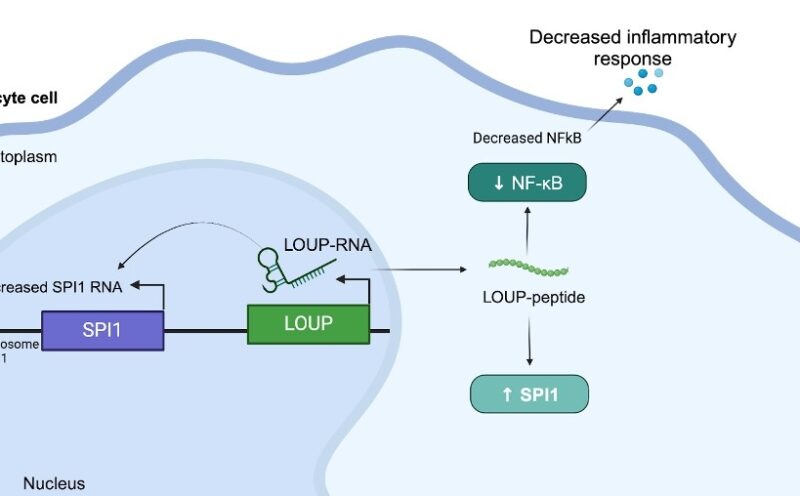
New study discovers tiny target on RNA to short-circuit inflammation
UC Santa Cruz researchers have discovered a peptide in human RNA that regulates inflammation and may provide a new path for treating diseases such as arthritis and lupus. The team used a screening process based on the powerful gene-editing tool CRISPR to shed light on one of the biggest mysteries about our RNA.
-

Championing Native American DNA
Kimberly TallBear, this year’s recipient of the University of California, Santa Cruz Distinguished Humanities Graduate Student Alumni Award, is being honored for her work in championing indigenous rights and protecting Native American DNA from exploitation.
-
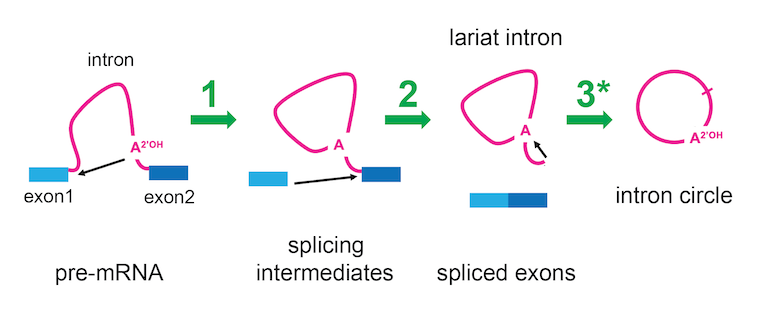
New study discovers cellular activity that hints recycling is in our DNA
Introns are perhaps one of our genome’s biggest mysteries. They are DNA sequences that interrupt the sensible protein-coding information in your genes, and need to be “spliced out.”
-
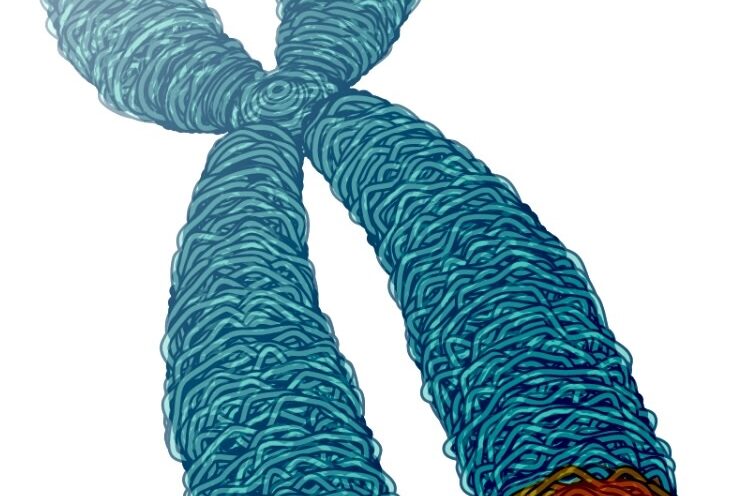
New study finds potential targets at chromosome ends for degenerative disease prevention
Published online today in Science, a new study finds that telomere lengths follow a different pattern than has thus far been understood. Instead of telomere lengths falling under one general range of shortest to longest across all chromosomes, this study finds that different chromosomes have separate end-specific telomere-length distributions.
-

Research on understudied lung cancer drivers may improve treatments
Angela Brooks has been awarded a $2.5 million grant from the National Institutes of Health’s prestigious R01 program to study how gene isoforms impact cancer progression and what treatments might be most effective or lead to drug resistance.
-

Protein designer awarded $2.5M to develop bioluminescent protein for deep tissue imaging
Assistant Professor of Biomolecular Engineering Andy Yeh was awarded a nearly $2.5 million grant from the Chan Zuckerberg Initiative to develop completely artificial enzymes that can produce bioluminescence in the body for deep tissue imaging.
-
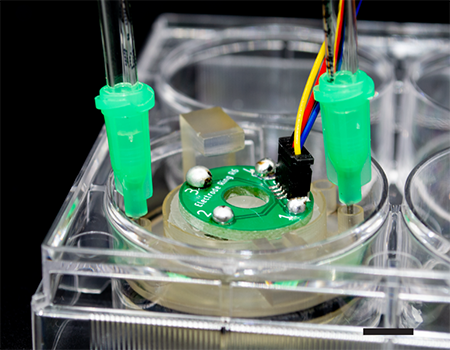
Bioelectronics enable precise control of organoids for better understanding of neuro diseases, neuron circuits
UC Santa Cruz researchers have developed a new plug-and-play bioelectronics system that enables researchers to precisely control neuronal activity in cortical organoids, which will help unlock new discoveries on how brains form neural circuits and the underpinnings of neurodevelopmental and degenerative diseases.
-

Insights from UCSC-made COVID-19 tracking tool will guide the future of studying pathogens in real time
A new paper by a team of UCSC pathogen genomicists offers guidance for the future of web tools for tracking pathogen evolution.