Genomics
-

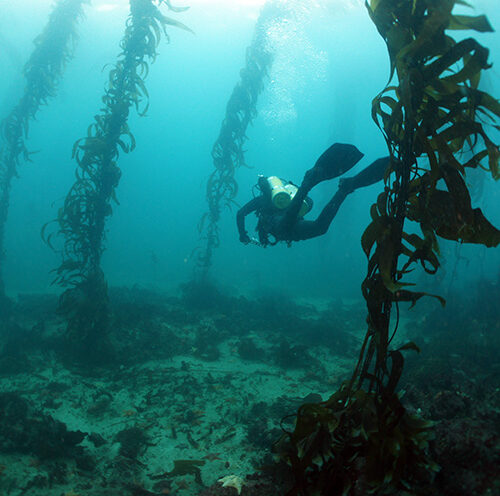
UC Santa Cruz, Monterey Bay Aquarium lead collaboration on kelp conservation
In May 2024, UC Santa Cruz and the Monterey Bay Aquarium convened a workshop aimed at bridging the gap between scientific research and the practical application of evolutionary resilience concepts for kelp.
-

How optogenetics can put the brakes on epilepsy seizures
In what could one day become a new treatment for epilepsy, researchers at UC San Francisco, UC Santa Cruz and UC Berkeley have used pulses of light to prevent seizure-like activity in neurons.
-

Powerful new analyses improve breast cancer risk assessment on a massive scale
A new feature on the BRCA Exchange, a platform which consolidates data on the genes associated with breast cancer, is rolling out a new feature to make cancer risk much easier to assess.
-
Genomics Institute provides seed funds for six multidisciplinary projects
The Genomics Institute has awarded grants of up to $50,000 to six multidisciplinary research projects in the inaugural year of its seed funding program
-
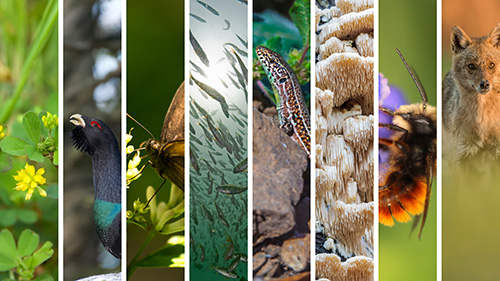
Successful conservation genomics pilot sets the stage to sequence European biodiversity
UC Santa Cruz Assistant Research Scientist Ann Mc Cartney is part of a group of scientists who released a new paper outlining their efforts to promote an inclusive, decentralized and equitable model for the future of large-scale conservation genomics
-
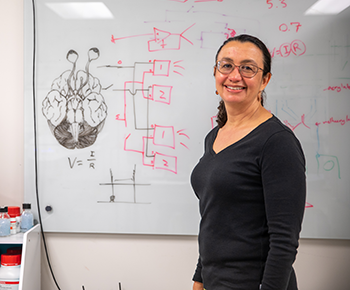
Researchers to investigate genetic roots of autism, look for new treatments
A new award from the California Institute for Regenerative Medicine will support a team of UC Santa Cruz researchers in exploring the genetic underpinnings of autism spectrum disorder.
-

Genomics Institute researcher Melissa Cline to lead efforts to facilitate diagnosis of genetic diseases
Genomics Institute associate research scientist Melissa Cline will serve as the co-lead of the Global Alliance for Genomics and Health’s Genomic Knowledge Standards Work Stream.
-

Genomes in the Wild: A Q&A with Professor Joanna Lynne Kelley on Evolution, Extremes, and Hibernating Bears
At UC Santa Cruz’s Coastal Science Campus, Kelley is uncovering how life endures in extreme environments.
-

Bear DNA study to measure impact of conservation actions on genetic diversity
The National Science Foundation will fund research at UC Santa Cruz that will examine the DNA of brown bears in the lower 48 states, where the iconic beast’s numbers have seen catastrophic declines over the last century.
-

Genomics Institute’s Research Mentoring Internship recognized with ‘Inspiring Programs in STEM’ award
The UC Santa Cruz Genomics Institute’s Research Mentoring Internship program was recognized with the ‘Inspiring Programs in STEM’ award from Insight Into Diversity magazine.
-

Scientists find that small regions of the brain can take micro-naps while the rest of the brain is awake and vice versa
For the first time, scientists have found that sleep can be detected by patterns of neuronal activity just milliseconds long
-

Study offers guidance on state-of-the-art long-read RNA sequencing techniques
A new study evaluates the strengths and weaknesses of the two leading long-read RNA sequencing platforms and offers guidance for the field.