All news
-
UC Santa Cruz advances commitment to social justice with College 10 naming in honor of John R. Lewis
College Ten—an undergraduate residential learning community founded on principles of social justice and community—will be named in honor of the late congressman and civil rights icon John R. Lewis.

-
As launch of James Webb Space Telescope nears, astronomers anticipate new era of discoveries
UCSC astronomers will be among the first to use the powerful new space telescope, and have been involved in the project from the start.

-
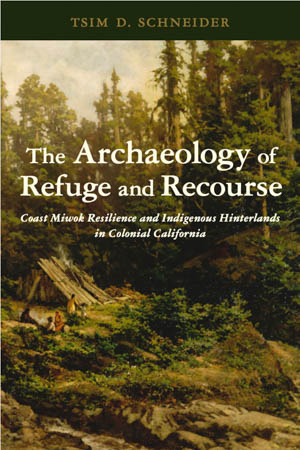
Reclaiming Coast Miwok history through Indigenous interpretations of archaeology
Assistant Professor of Anthropology Tsim Schneider’s latest book gathers and interprets archival and archaeological evidence in new ways that combat the erasure of Indigenous peoples from historical narratives.
-
Seagrass restoration study shows rapid recovery of ecosystem functions
Restored plots of eelgrass in Elkhorn Slough expanded rapidly, providing improved habitat for fish and invertebrates and other benefits of a healthy ecosystem.

-
Emerging ocean conservation leaders set to visit UC Santa Cruz
The Blue Pioneers Program (BPP) Accelerator recently announced its 2021 cohort of international ocean conservation professionals who will visit UC Santa Cruz’s Coastal Science Campus.

-
Astronomers witnessed the spectacular death of a star as it happened
Observations with multiple telescopes yield new insights into the final stages in the evolution of a massive star before it exploded in a core-collapse supernova.

-
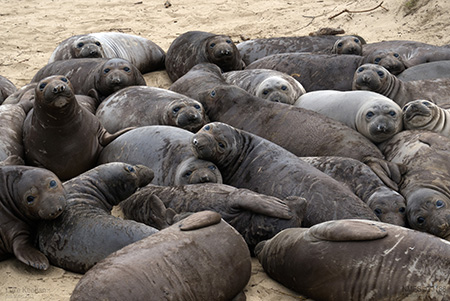
Long-term study of elephant seal reproduction shows population’s resilience
Researchers found that a female elephant seal’s age and experience were more important than ocean conditions in determining the condition of her pup at weaning.
-
Biologist Beth Shapiro’s new book explores how humans have shaped life on Earth
‘Life as We Made It’ explains how our species has been manipulating nature for the past 50,000 years and what the future may hold, depending on how we use new technologies.

-
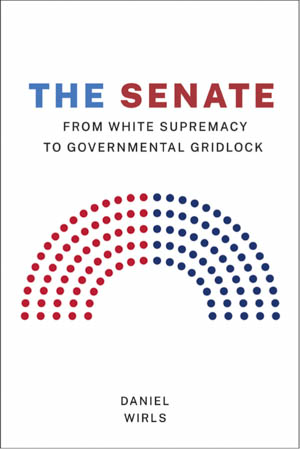
New book shares lessons from history on the case for Senate reform
In his new book, Professor of Politics Daniel Wirls uses historical research and modern-day analysis to argue that features of the Senate undermine effective democratic governance and have contributed to the maintenance of white supremacy.
-
Social Sciences Division convenes for awards ceremony
The Division of Social Sciences gathered on October 14 to present awards recognizing outstanding accomplishments by faculty, staff, researchers, and emeriti faculty.

-
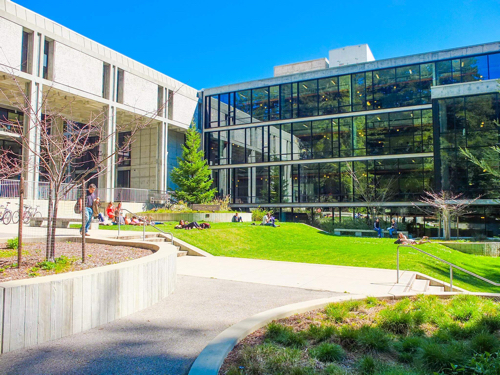
Library invited to join prestigious Association of Research Libraries
The ARL is a nonprofit membership organization of more than 120 libraries and archives at major public and private universities, federal government agencies, and large public institutions in the United States and Canada.
-
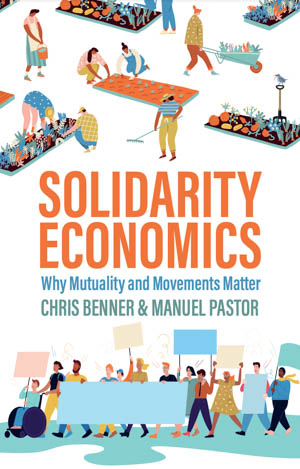
Reimagining our economy for the benefit of all
Faculty members at UC Santa Cruz and the University of Southern California released a new book that offers a road map and conceptual framework for equity-driven economic reform in the United States.
-
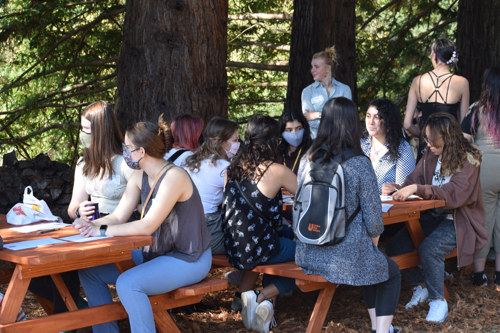
College Scholars Program exposes students to research opportunities
Through the College Scholars Program, students are able to explore the full potential of the university setting, beyond the coursework that might be required in their respective disciplines.
-
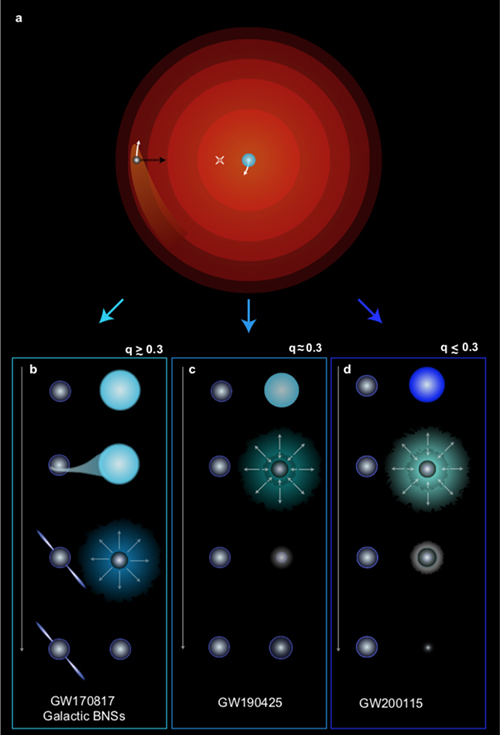
Astrophysicists explain the origin of unusually heavy neutron star binaries
Simulations of supernova explosions of massive stars paired with neutron stars can explain puzzling results from gravitational wave observatories.
-
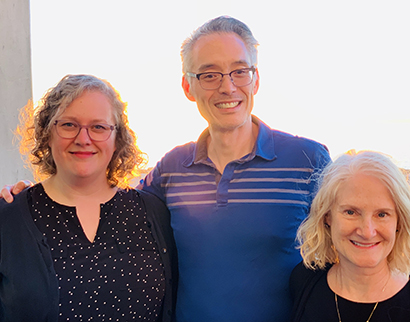
Scientists assemble a biological clock in a test tube to study how it works
The reconstituted biological clock maintains daily cycles for days on end, allowing researchers to study the interactions of its component parts.
-
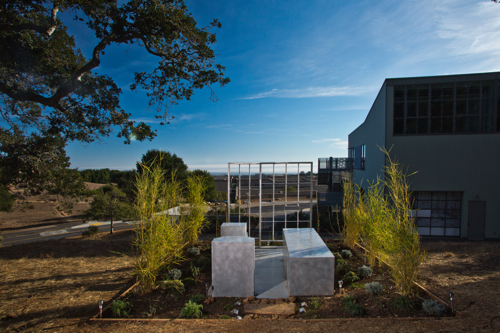
Mellon Foundation award to support UC Santa Cruz’s ‘Visualizing Abolition’ initiative
The Andrew W. Mellon Foundation has awarded a $1,977,000 grant to support ‘Visualizing Abolition,’ the nation’s most ambitious and sustained art and prison abolition initiative.
-
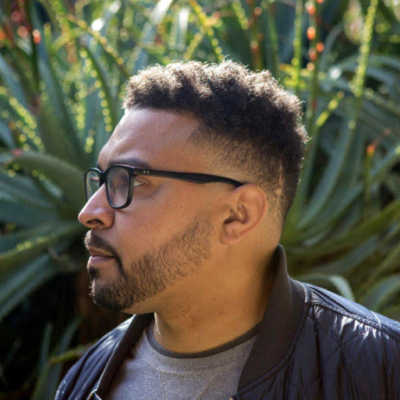
Graduate student studying New Orleans’ Latin American connections
Rafael Delgadillo, a UC Santa Cruz doctoral student in Latin American and Latino Studies, is looking at how New Orleans’ colonial foundations set a tone for its distinctiveness within the United States.
-
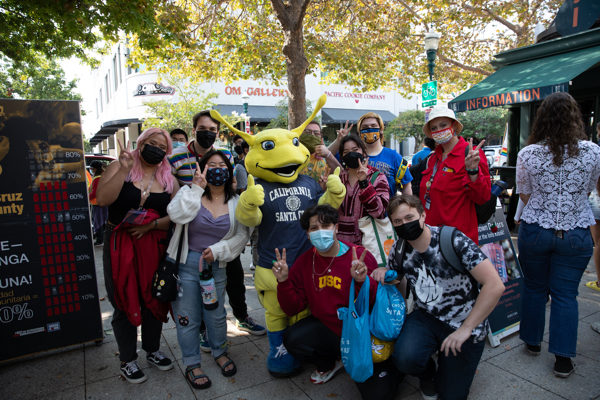
Following approval of Long Range Development Plan, campus invites local leaders to collaborate on framework for sustainable implementation
Campus, city and county leaders signed an agreement earlier in the week that lays the groundwork to start formal discussions about charting a path forward and resolving concerns connected to the 2021 LDRP.
-
Stem cell agency funds research training program at UC Santa Cruz
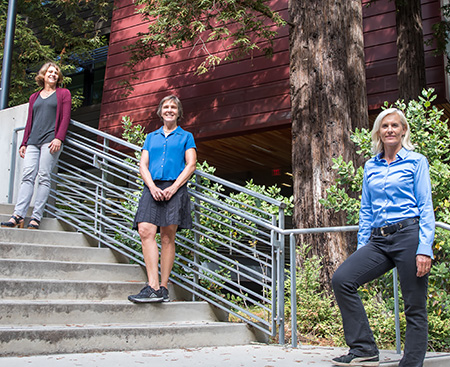
A $4.9 million grant from the California Institute for Regenerative Medicine supports a pre- and postdoctoral training program in systems biology of stem cells at UCSC.
-
Environmental governance expert Sikina Jinnah appointed to Harvard University’s SCoPEx advisory committee
Jinnah was appointed to an independent advisory committee that will make governance recommendations for a proposed experiment intended build understanding of the potential efficacy and risks of stratospheric aerosols relevant to solar geoengineering.

-
NIH funds Center for Live Cell Genomics at UC Santa Cruz
The NIH Centers of Excellence in Genomic Science program has awarded $13.5 million over five years for a new center to advance genomics in biomedical research.

-
New BBQueer Fest dance and arts festival co-produced by UCSC dance professor Gerald Casel
Beginning on September 30, Santa Cruz will host the first annual BBQueer Fest—a four-day dance and arts festival organized by and for QTBIPOC artists and community members.

-
Mellon Foundation grant will support national initiative in Latinx studies
Through a three-year, $5 million grant from The Andrew W. Mellon Foundation, UC Santa Cruz will be part of a national initiative in Latinx studies called “Crossing Latinidades: Emerging Scholars and New Comparative Directions.”

-
In Memoriam: David Kaun
Professor Emeritus of Economics David Kaun, a pioneer faculty member, passed away on Sept. 9. He served in the Economics Department for about 50 years and was also a generous donor to many causes, both at UC Santa Cruz and…