All news
-
Tyler Stovall, renowned history professor and former humanities dean, dies at 67
Stovall was a faculty member of the UC Santa Cruz Humanities Division for 13 years, including three years serving as the chair of the History Department and provost of Stevenson College.

-
Alumna bell hooks—celebrated feminist theorist, cultural critic, artist, and writer—dies at 69
bell hooks was the author of over two dozen books that ranged from the groundbreaking text ‘Ain’t I a Woman? Black Women and Feminism’ to her deeply felt memoir ‘Bone Black: Memories of Girlhood’.

-
In Memoriam: Paul Niebanck (1934-2021)
Paul Niebanck, professor emeritus of environmental studies and founding provost of Rachel Carson College, passed away on November 26, 2021.

-
New study shows plants struggle to keep pace with climate change in human-dominated landscapes
A new global-scale analysis found a mismatch between plant phenology and rising temperatures that was more pronounced in the most human-dominated landscapes, especially crop lands.

-
Stepping up to fight food insecurity
UC Santa Cruz has expanded its annual Second Harvest Holiday Food and Fund Drive to help boost donations—needed now more than ever in the wake of the pandemic, wildfires, and economic turmoil.

-
Holiday gifts that challenge gender stereotypes can support children’s development
Distinguished Professor of Psychology Campbell Leaper explains the issues with gender stereotypes in children’s toys and shares gift-giving tips that may help counteract the effects.

-
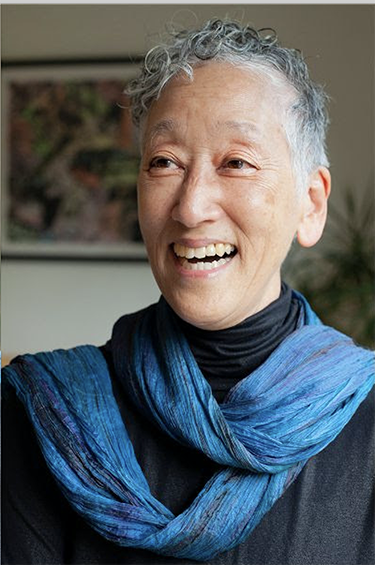
Karen Tei Yamashita receives 2021 Medal for Distinguished Contribution to American Letters
Yamashita used her acceptance speech, in part, to emphasize the significance of this medal being awarded to an Asian-American writer “especially this year, post-pandemic, having weathered the Twitter absurdity, corruption, and mendacity; the brutality of racial profiling; and the provocation…
-
UC Santa Cruz ranked No. 3 green college
Princeton Review evaluates schools based on institutional data as well as a 10-question student survey.

-
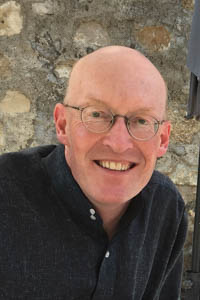
Uncovering the politics behind a pandemic
The latest paper from Politics Professor and Global & Community Health Executive Director Matt Sparke argues that the coronavirus pandemic has exposed, exploited, and exacerbated the vulnerabilities of neoliberal societies around the world.
-
New grant to support Dickens Project programming in year ahead
The programming in 2022 is focused on questions of race and social justice in the 19th century and today, with the summer’s Dickens Universe event broadening its purview by pairing a British novel with an African-American novel.
-
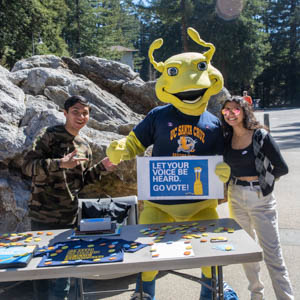
UC Santa Cruz campus voting skyrocketed in 2020
A nationwide study shows student voting at UC Santa Cruz increased dramatically in last year’s presidential election, and these gains came at roughly double the average rate of increase across more than 1,000 college campuses around the country.
-
New program helps to increase number of Latinx teachers
The Latinx Initiative for Future Teachers (LIFT) program enables students to finish a master’s in education and earn credentials for teaching in 12 months.

-
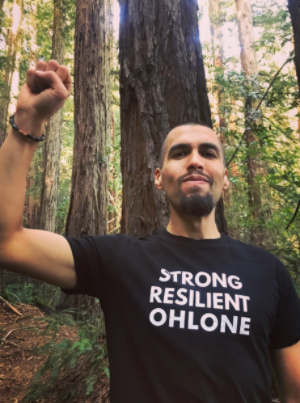
Widening the spectrum of gratitude with IndigeThanx
IndigeThanx, an annual event sponsored by UC Santa Cruz’s American Indian Resource Center and Cowell Coffee Shop, offers an alternative to Thanksgiving.
-
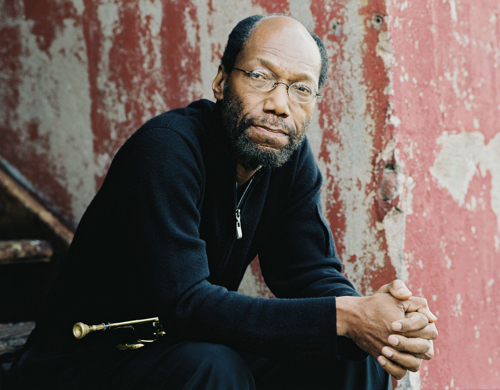
Jazz virtuoso Charles Tolliver to reimagine Coltrane’s iconic ‘Africa/Brass’ on 60th anniversary
UC Santa Cruz will celebrate the 60th anniversary of John Coltrane’s iconic ‘Africa/Brass’ with jazz virtuoso Charles Tolliver joining the UC Santa Cruz Jazz Orchestra and Jazz Choir in a reimagining of the work.
-
$8.8 million federal grant to help teens succeed in college
GEAR UP is designed to increase the number of low-income students who are prepared to enter and succeed in postsecondary education.

-
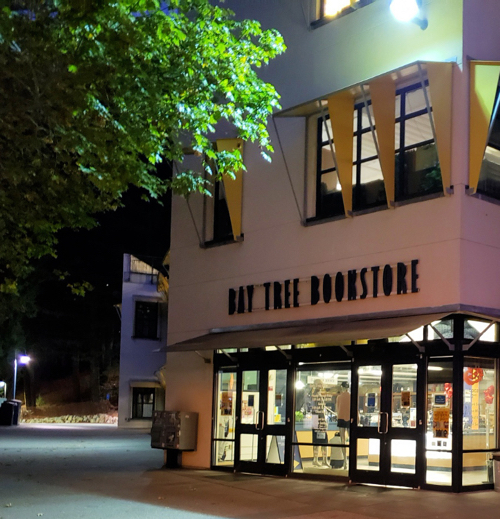
The Bay Tree Bookstore partners with Akademos to launch online textbook, course materials platform
UCSC’s Bay Tree Bookstore will begin transitioning in December 2021 to an online bookstore platform that enables digital and hard-cover textbook purchases and rentals.
-
Exhibit showcases remarkable lives of everyday Santa Cruz residents
Sponsored by The Humanities Institute and curated by THI’s Summer Public Fellow Morgan Gates, ‘Do You Know My Name?’ highlights the stories of everyday Santa Cruzans throughout the region’s history who were neither rich nor famous but whose lives are…

-
National award recognizes economics professor’s research for revealing outsized pandemic impacts on minority-owned businesses
Economics Professor Robert Fairlie recently received the Bradford-Osborne Research Award for a paper he released in August 2020 that showed minority-owned businesses were affected by pandemic-related closures at higher rates.

-
Award-winning poet Gary Young to read at 12th annual Morton Marcus memorial event
Gary Young has written powerful, richly detailed verses often inspired by the bounty of the natural world. And as with most great poetry, Young’s work is great on the page, but truly comes to life when it is read aloud.

-
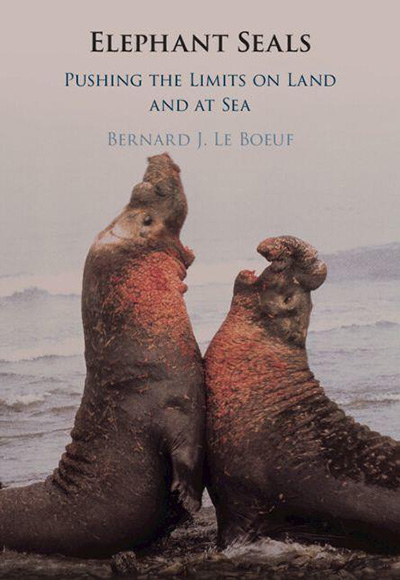
New book chronicles more than 50 years of elephant seal research at Año Nuevo Reserve
Professor Emeritus Burney Le Boeuf summarizes the findings of the UC Santa Cruz elephant seal research program, one of the longest running studies of any animal
-
UCSC astronomers help shape influential report on national priorities for their field
The ‘Astro2020’ Decadal Survey on Astronomy and Astrophysics identifies the most compelling science goals and provides recommendations for funding agencies.

-
Talk to focus on subpar treatment of Native women with tuberculosis
Caitlin Keliiaa, a historian and assistant professor, will be presenting her talk, “Settler Colonialism is a Sickness: How Federal Indian Health Failed Native Women,” a discussion on the young Native women who contracted TB, but received subpar treatment—or no help…

-
Talent Search grant extension to help more East San Jose teens achieve college dreams
Hundreds of low-income teens in East San Jose will continue to receive extra help to achieve their college dreams after the federal government again funded a grant to UC Santa Cruz.

-
Costumes get lead role
New gift from alumnus Jim Gunderson (Rachel Carson ’77, philosophy) ensures students have the opportunity to step into costumes that enrich their experience and enhance their performances.

-
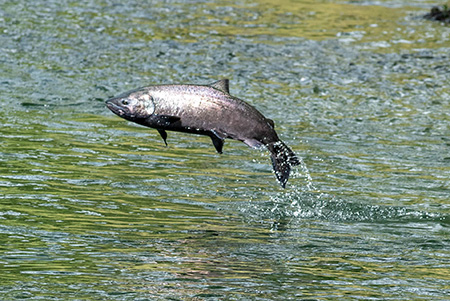
Survivor salmon that withstand drought and ocean warming provide a lifeline for California Chinook
Late migration of outgoing juvenile fish is a crucial life history strategy for survival of spring-run Chinook salmon during drought years.
-
Data-driven animations of marine mammals combine biology, art, and computation
New tools for data visualization can transform data from animal-borne tags into cinematic and informative animations of marine mammal behavior.
