All news
-
DOE supports UCSC ‘spin chemistry’ research with $1.2 million grant
Chemistry Professor Yuan Ping leads a project to develop computational tools for spin dynamics applications in chemistry and materials science.

-
Leaders in health, banking elected to join UC Santa Cruz Foundation Board of Trustees
The UC Santa Cruz Foundation Board of Trustees has elected as new members pharmaceutical and biotherapeutic entrepreneur Greg Reyes, of San Diego, (Kresge ’76, biology) and business banking leader Janet Buck, of Laguna Niguel.

-
ASPIRE program launches to aid conservation in a changing climate
A new program out of the UC Santa Cruz Genomics Institute involves students in an effort to measure changes in biodiversity and ultimately prevent them.

-
Alternate reality game launching Fall ‘22 will measure resilience of first-year students
“LUX,” a non-traditional research project to measure the resilience of its players, will officially launch this fall, recruiting participants from the incoming first-year class..

-
California budget supports UCSC in building additional housing for hundreds of students
California lawmakers have awarded $89 million to UC Santa Cruz in the 2022-23 state budget, funding that will help to significantly increase student housing at Kresge College.

-
New study dives deep into the sustainability of an alternative aquaculture feed ingredient
Researchers at UC Santa Cruz developed a new life cycle sustainability assessment documenting the environmental benefits and impacts of using the marine microalga Schizochytrium sp. to replace fish oil as an ingredient in aquaculture feed.

-
Narwhals show physiological disruption in response to seismic survey ship noise
Scientists deployed monitoring devices on narwhals to record heart rates, breathing, and diving behavior during seismic air gun pulses from a ship in the fjords of Greenland.

-
The Humanities Division honors faculty, alumni, and students at the 2021-22 Spring Awards
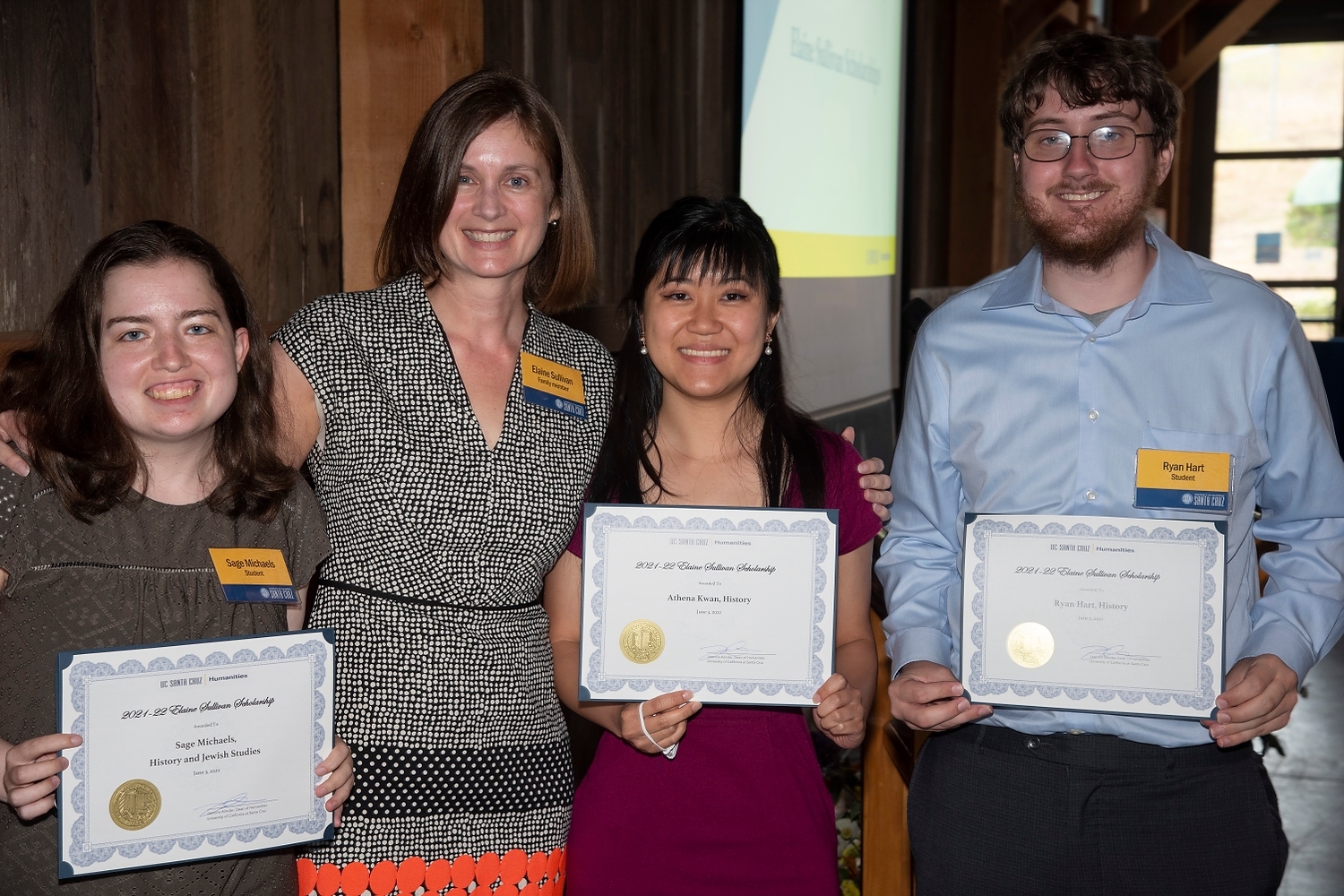
UC Santa Cruz’s Humanities Division marked the end of the school year with their Spring Awards, a ceremony that celebrates the achievements of students, instructors, and alumni.
-
UCSC scholars join researchers statewide on a massive genomic study of California’s biodiversity
The California Conservation Genomics Project (CCGP) is a state-funded initiative with a single goal: to produce the most comprehensive, multispecies genomic dataset ever assembled to help manage regional biodiversity.

-
California approves $5 million to fund diversity in science and technology education
Cal-Bridge Program brings together the three levels of the California higher education system to diversify the California public university faculty and tech workforce.

-
Two from UC Santa Cruz awarded Fulbright grants
Two PhD candidates at UC Santa Cruz have been offered prestigious Fulbright U.S. Student Program grants for the 2022-2023 academic year.

-
Adapted machine learning models will allow for better understanding of federal surveys
With the support of a three-year, $337,000 grant from the National Science Foundation, Assistant Professor of Statistics Paul Parker will develop statistical and machine learning methods to best suit the analysis of complex surveys produced by federal statistics agencies.

-
~$6M NSF grant for cyber-physical systems project will enable engineers to explore the next generation of transportation systems
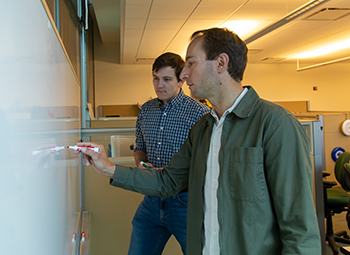
With the support of a nearly $6 million grant from the National Science Foundation (NSF), researchers at UC Santa Cruz will lead a five year, multi-institutional project to explore a new vision of engineering cyber-physical systems.
-
Destruction and recovery of kelp forests driven by changes in sea urchin behavior
A long-term study of kelp forest dynamics on California’s Central Coast highlights the critical role of sea urchin behavior, not just the size of the urchin population.

-
Autistic adults have become increasingly visible in media, books, television, and more in the past decade, but challenges with representation persist
Researchers documented a shift toward more numerical representation for adults in popular portrayals of autism, which have historically focused on children.

-
UC Santa Cruz celebrates innovative and dedicated teachers
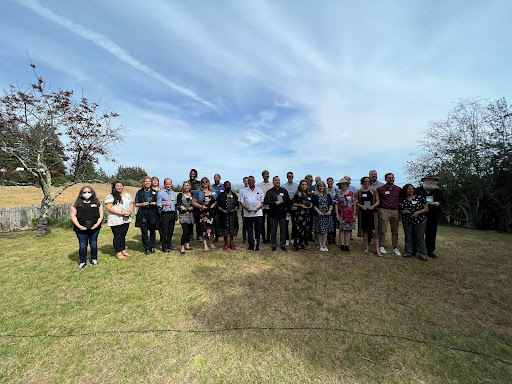
The Academic Senate’s Committee on Teaching (COT) in collaboration with Chancellor Larive and CP/EVC Kletzer, Cruz celebrated UCSC’s innovative and dedicated teachers with a gathering at the Cowell Provost House in early June.
-
These red flags can let you know when you’re in an online echo chamber
Researchers at UC Santa Cruz have identified specific elements of tone and style in online speech that are linked to hyperpartisan echo chambers. These language markers could also prove useful for flagging spaces where disinformation may be likely to emerge.

-
Study finds chaos is more common in ecological systems than previously thought
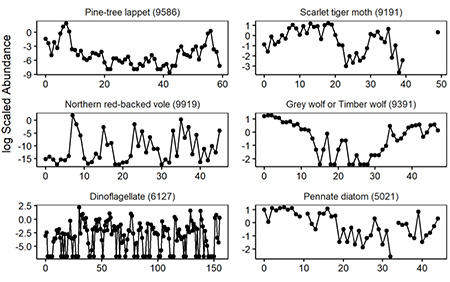
The idea that chaos is rare in natural populations may be due to methodological and data limitations, rather than the inherent stability of ecosystems.
-
The team behind a tree of 10 million Covid sequences
10 million sequences of COVID-19’s genomic code have now been organized into a phylogenetic tree in the UC Santa Cruz SARS-CoV-2 Browser, which is the largest tree of genomic sequences of a single species ever assembled.

-
Study shows mangrove and reef restoration yield positive returns on investment for flood protection
A robust analysis demonstrates that nature-based solutions to reduce the damage caused by coastal flooding are cost-effective.

-
Polar bears in Southeast Greenland shed light on the species’ future in a warming Arctic
The most genetically isolated population of polar bears on the planet, they have limited access to sea ice and use ice from Greenland’s glaciers to survive.

-
100,000-year-old polar bear genome reveals ancient hybridization with brown bears
Scientists found that all brown bears today have some polar bear ancestry due to genetic admixture that occurred during a warm interglacial period more than 100,000 years ago.

-
Grant funding will support university-community partnership on inclusive economic development in neighboring city of Salinas
UCSC’s Institute for Social Transformation will partner with the Salinas Inclusive Economic Development Initiative in an effort to reduce economic inequality and improve financial stability and quality of life for local families.

-
Microbiologist Jacqueline Kimmey named Pew Scholar in the Biomedical Sciences
Kimmey’s lab is investigating how susceptibility to infections is influenced by the daily biological cycles known as circadian rhythms.

-
Hunting in darkness, elephant seals use sensitive whiskers to find prey
Researchers used miniature video cameras to study how free-ranging elephant seals use their whiskers to track down prey in the darkness of the deep ocean.

-
Simulations reveal hydrodynamics of planetary engulfment by expanding star
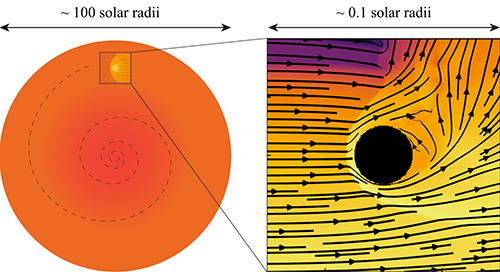
A new study using hydrodynamical simulations reveals the forces acting on a planet when it is swallowed by an expanding star, as will eventually happen to the inner planets of our solar system when the sun becomes a red giant.