All news
-
NSF award will support project to promote reproducibility in computer science
With the support of a three-year, $900,000 grant from the NSF, Carlos Maltzahn will participate in collaborative research to increase the reproducibility of computer science research.

-
JWST makes first unequivocal detection of carbon dioxide in an exoplanet atmosphere
UCSC astronomer Natalie Batalha leads a team that detected carbon dioxide in the atmosphere of the exoplanet WASP-39b using the James Webb Space Telescope.

-
Political parties use gerrymandering to counteract shifting voter preferences in key battleground states
Research that focused on battleground states suggests that whichever party controls the redistricting process in the state legislature engineers an 11 percentage point increase in its probability of winning a U.S. House race in the next election. And these advantages…

-
UCSC’s Ricardo Sanfelice appointed inaugural director of CITRIS Aviation
Professor of Electrical and Computer Engineering Ricardo Sanfelice was appointed the as the inaugural director of the CITRIS Aviation initiative.

-
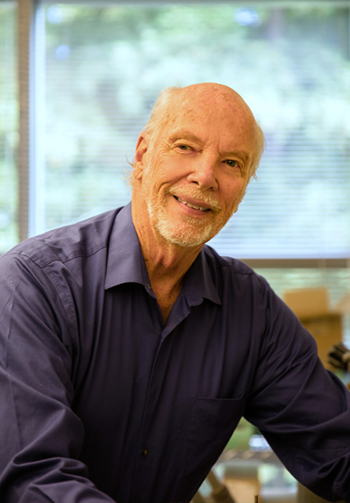
From concept to commercialization: how UCSC researchers revolutionized DNA sequencing
More than a quarter century since the first patents were filed, the UCSC researchers who pioneered nanopore sequencing reflect on the impact of their invention
-
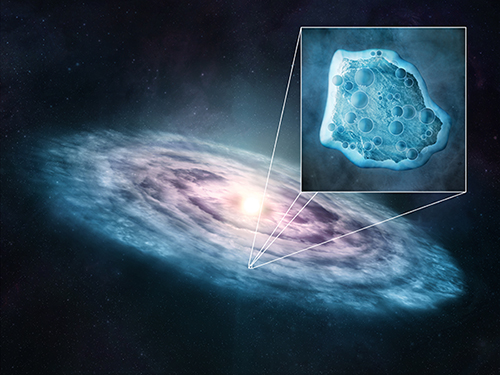
Missing carbon monoxide in planetary disks was hiding in the ice
In planetary disks, carbon monoxide is lurking in large chunks of ice, solving the decade-old question, ‘Where is the CO?’
-
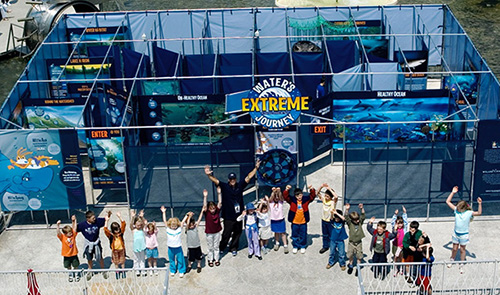
‘Water’s Extreme Journey,’ a new exhibit at the Seymour Center, opens in September
A new exhibit opening in September at the Seymour Marine Discovery Center features a maze and interactive activities highlighting the challenges of keeping our water clean.
-
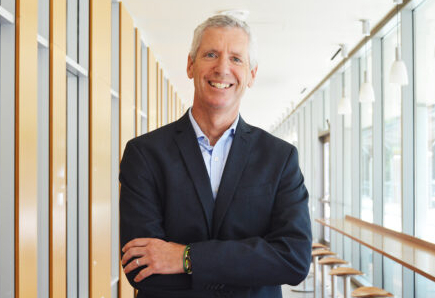
Economics Professor Robert Fairlie takes home the Bradford-Osborne Research Award for the second year in a row
The annual award recognizes the best peer-reviewed paper on diversity and entrepreneurship, and Fairlie was honored for his years-long research on the lack of access to capital for Black-owned startups compared to white-owned startups.
-
Biomolecular engineering professor awarded $1.9M grant to understand and engineer pluripotent stem cells
UC Santa Cruz Assistant Professor Ali Shariati and his lab will investigate the molecular feedback mechanisms responsible for the coordination of embryonic stem cell division and differentiation to develop novel strategies for their use in regenerative medicine.

-
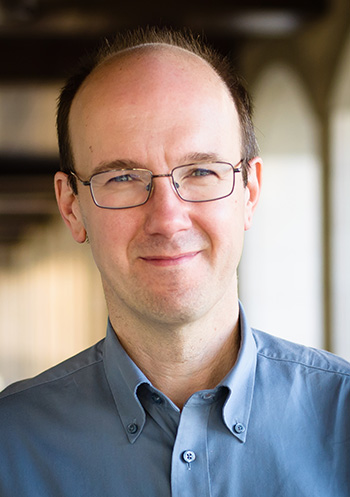
Astrophysicist Bruce Macintosh appointed director of UC Observatories
UC President Michael Drake has appointed Bruce Macintosh director of UC Observatories, an astronomical research unit headquartered at UC Santa Cruz and serving nine UC campuses.
-
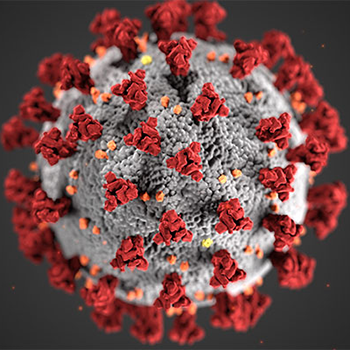
New study shows COVID-19 genomic recombination is uncommon but disproportionately occurs in spike protein region
An analysis of millions of SARS-CoV-2 genomes finds that recombination of the virus is uncommon, but when it occurs, it is most often in the spike protein region, the area which allows the virus to attach to and infect host…
-
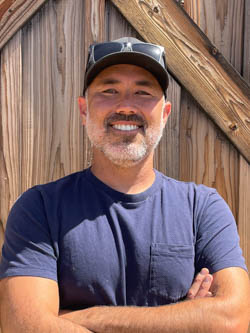
Envisioning food systems change with new Center for Agroecology Executive Director Darryl Wong
The UC Santa Cruz news team interviewed the Center for Agroecology’s new executive director, Darryl Wong, to learn more about the center’s goals for the future and the perspective he’ll bring to the role.
-
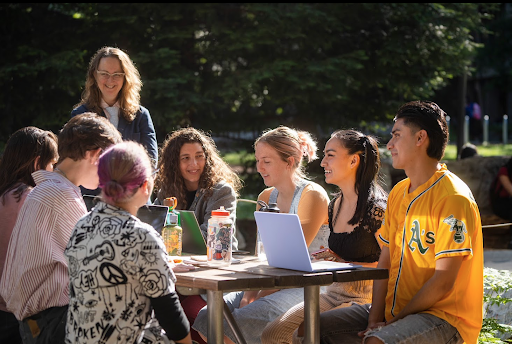
Incoming UC Santa Cruz class exemplifies academic excellence and diversity
UC Santa Cruz anticipates welcoming approximately 5,100 new Banana Slugs this fall, concluding an admissions cycle that reflected increased interest in the campus. Campus leaders are carefully managing student enrollment and working to provide more on-campus housing for students because…
-
Young alum creates bequest to empower future generations
Alumna Cassi Janakos, co-founder of a company offering corporate lactation programs, created an endowment for the UC Santa Cruz Feminist Studies Department with the aim of empowering other women as leaders and innovators

-
Locally supportive climates may do little to aid mental health for LGBTQ+ youth amidst broader societal stigma
New research shows little difference in mental health outcomes for LGBTQ+ youth between some of California’s most and least supportive communities for sexual and gender diversity. The findings also indicate factors that may contribute to this trend.

-
With a focus on student success and research impact, UC President Michael V. Drake visits UC Santa Cruz
The daylong visit included meetings with faculty, staff, and students to learn more about research, teaching, and learning at UC Santa Cruz—and the important work that supports the university’s mission as a Hispanic-Serving research university centered on student success.
-
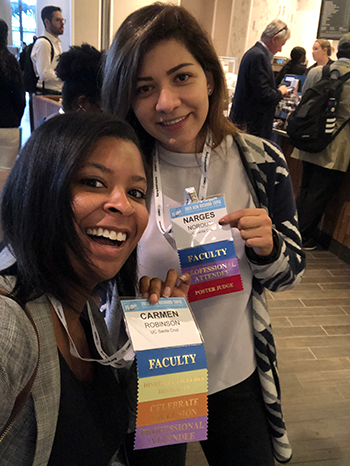
New research explores opportunities for eliminating equity gaps in computer science gateway courses
New research shows how addressing “gateways within gateway courses,” specific factors that hold able students back from success in introductory courses, may provide a path forward for closing equity gaps for students pursuing engineering degrees.
-
UCSC student named one of 50 top hackers of 2022
Rising second-year computer science: computer game design student Mansi Saini has been recognized by Major League Hacking for outstanding contributions to the hackathon community.

-
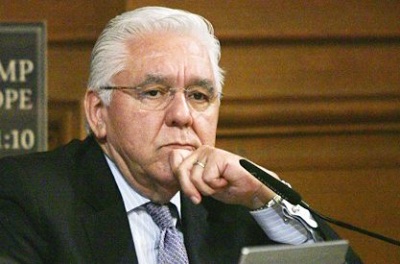
As alumni regent, Art Torres advocated for access, diversity in higher education
Art Torres (Stevenson, ’68, government) worked to support the University of California in advancing the diversity of its student body while serving a two-year term as the alumni representative on the UC Board of Regents.
-
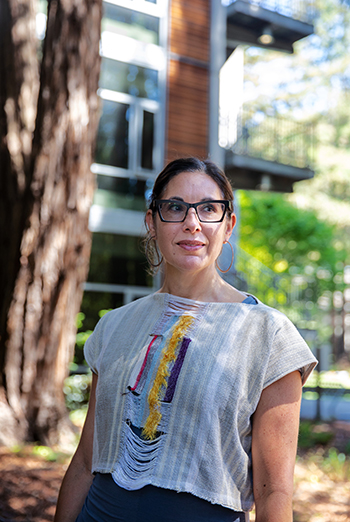
New book traces the scientific and technological development of militarized border
In her new book, Professor of Feminist Studies and Critical Race and Ethnic Studies Felicity Amaya Schaeffer draws stunning connections between indigenous ways of life and relationships to the land with modern-day, militaristic border surveillance technologies.
-
Data from elephant seals reveal new features of marine heatwave ‘the Blob’
Instruments carried by migrating elephant seals measured deep warm-water anomalies that lasted much longer than the surface warming.

-
UC Santa Cruz teams with TiE Global to help entrepreneurs bring their ideas to life
UC Santa Cruz and TiE Global are establishing the Destination Silicon Valley program to leverage the Silicon Valley presence of both organizations and create new learning opportunities for university-based entrepreneurs from across the world, including University of California students and…

-
Measuring the universe with star-shattering explosions
An international team of scientists has analyzed archive data for powerful cosmic explosions from the deaths of stars and found a new way to measure distances in the distant universe.

-
Hallmark cancer gene regulates RNA ‘dark matter’
A new study finds that a key genetic mutation that occurs early on in cancer alters RNA “dark matter” and causes the release of previously unknown RNA biomarkers for cancer early detection.

-
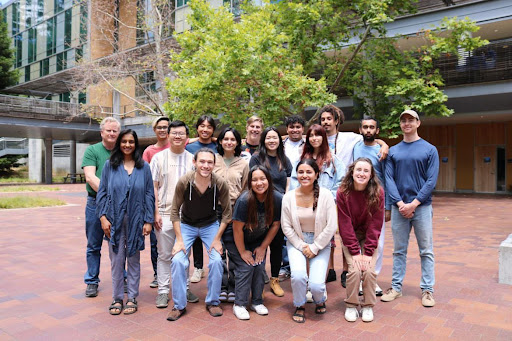
UCSC iGEM developing yeast-based type 2 diabetes medication for 2022 international competition
14 UCSC undergraduates are addressing access and cost of Type 2 diabetes medications by creating an alternative, yeast-based treatment that will be presented at the 2022 iGEM Jamboree in Paris.
-
UC Santa Cruz’s new Department of Performance, Play & Design redefines the art of storytelling for the modern era
Earlier this year, the Department of Theater Arts and the Art & Design: Games + Playable Media Program (AGPM) within UC Santa Cruz’s Division of the Arts fused to become the the Department of Performance, Play & Design (PPD). It…
