Office of Research
-

Improved nutrition, sanitation linked to beneficial changes in child stress and epigenetic programming
A new study led by a global-health researcher at UC Santa Cruz provides some of the clearest and most comprehensive evidence to date on what is known about stress physiology and “epigenetic programming.”
-

Three UC Santa Cruz faculty members elected to the American Academy of Arts and Sciences
Three professors at the University of California, Santa Cruz were elected to the American Academy of Arts and Sciences, one of the nation’s oldest and most prestigious honorary societies.
-
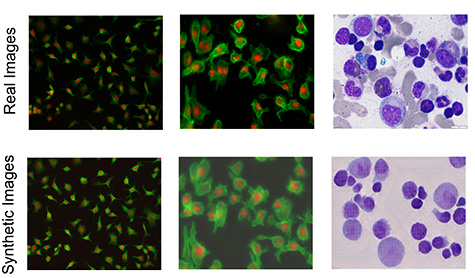
UC Santa Cruz researchers’ tool creates ‘synthetic’ images of cells for enhanced microscopy analysis
UC Santa Cruz researchers have developed a method to use an image generation AI model to create realistic images of single cells, which are then used as “synthetic data” to train an AI model to better carry out single cell-segmentation.
-
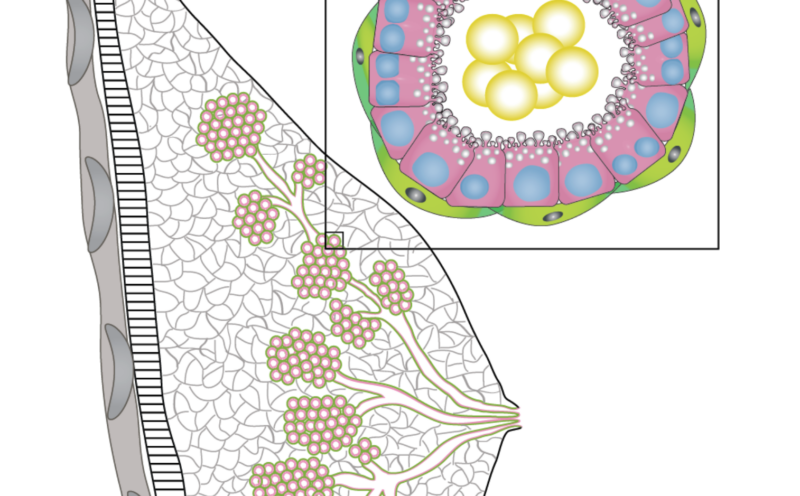
UC Santa Cruz scientists reveal new path to increasing lactation for nursing mothers
Scientists at UC Santa Cruz have discovered a cellular process in the breast that can increase milk production by pregnant women, revealing a potential path to addressing lactation insufficiency syndrome—the inability of a nursing mother to produce sufficient milk to meet their infant’s nutritional needs.
-

UC Santa Cruz researchers receive grants for early-stage technology innovations and climate action solutions
Eight UC Santa Cruz research teams focusing on some of the most pressing issues of our time, such as cancer detection, data encryption, and climate change, received more than $350,000 in awards as part of this year’s Innovation Catalyst Grant program, administered by the university’s Innovation & Business Engagement Hub.
-

New grant supports UC Santa Cruz-led multi-UC campus effort to build network of open source program offices
A $1.85 million grant from the Sloan Foundation will serve to institutionalize the OSPO approach in the UC system by creating coordinated activities that support local campus OSPOs and building a network that can leverage multi-campus efforts.
-
Power Outage Continues on Residential Campus
As reported earlier this morning, a power outage continues to impact most areas of the UC Santa Cruz residential campus. There is no estimate at this time from PG&E when power will be restored.
-

Humanities program provides rewarding research experience—and also crucial career prep
Employing Humanities–funded undergraduate students have begun working with faculty in paid research opportunities that connect their classroom curriculum with hands-on training.
-
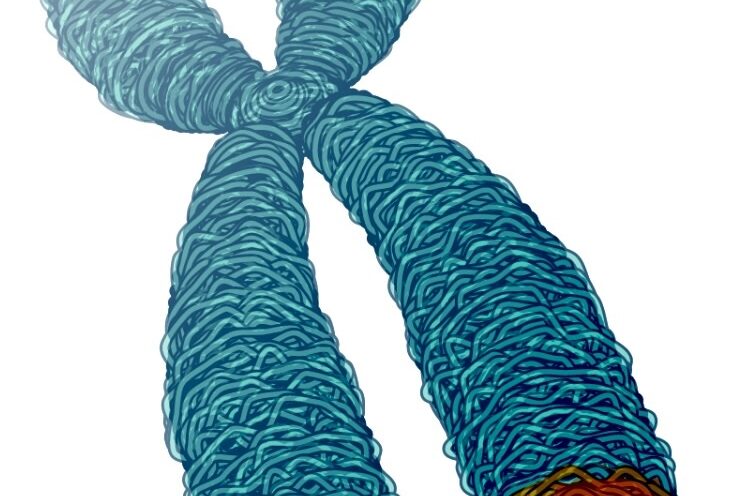
New study finds potential targets at chromosome ends for degenerative disease prevention
Published online today in Science, a new study finds that telomere lengths follow a different pattern than has thus far been understood. Instead of telomere lengths falling under one general range of shortest to longest across all chromosomes, this study finds that different chromosomes have separate end-specific telomere-length distributions.
-

UC Santa Cruz researchers value salt marsh restoration as a crucial tool in flood risk reduction and climate resilience in the San Francisco Bay
Salt marsh restoration can mitigate flood risk and bolster community resilience to climate change in our local waterways, according to a recent study published in Nature by a postdoctoral fellow with UC Santa Cruz’s Center for Coastal Climate Resilience (CCCR).
-

Scientists discover first nitrogen-fixing organelle
In two recent papers, an international team led by UC Santa Cruz scientists describe the first known nitrogen-fixing organelle within a eukaryotic cell. The organelle is the fourth example in history of primary endosymbiosis — the process by which a prokaryotic cell is engulfed by a eukaryotic cell and evolves beyond symbiosis into an organelle.
-

New diagnostic tool achieves accuracy of PCR tests with faster and simpler nanopore system
A new diagnostic tool developed by UCSC’s Holger Schmidt and his collaborators can test for SARS-CoV-2 and Zika virus with the same or better accuracy as high-precision PCR tests in a matter of hours.