Office of Research
-

Ocean scientist Phoebe Lam leads Pacific Ocean research cruise
Lam is one of three chief scientists on the U.S. GEOTRACES GP15 cruise to sample the Pacific Ocean from Alaska to Tahiti.
-

Decisive sea otters distinguish differences by touch
Research at Long Marine Laboratory reveals the sensitivity of sea otters’ paws and whiskers, as well as their ability to process tactile information rapidly.
-

NSF funds UC Santa Cruz study of tech in agriculture
Researchers at UC Santa Cruz are leading a new, NSF-funded, multi-campus initiative to explore the intersection of agriculture, food, and technology.
-
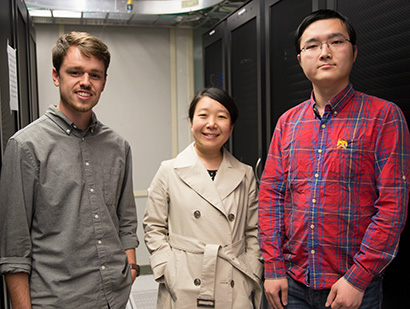
Quantum information science on the verge of a technological revolution
Theorist Yuan Ping is developing computational methods to guide the design of new materials for quantum computing and other quantum information technologies.
-

Data science researchers to tackle privacy challenges in genomics
Computer scientist Abhradeep Guha Thakurta has won NSF funding to investigate ways to protect the privacy of individuals while allowing access to large genomic data sets.
-

Very few sexually active gay and bisexual men use prophylactic drug to prevent HIV transmission, study finds
Only 4 percent of sexually active gay and bisexual men in the United States use Truvada, a highly effective medication used to prevent the transmission of HIV, according to the results of a first-of-its-kind study.
-

NSF funds powerful new supercomputer for UC Santa Cruz researchers
The new high-performance computer system will support research in theoretical astrophysics, climate science, materials science, and other fields.
-
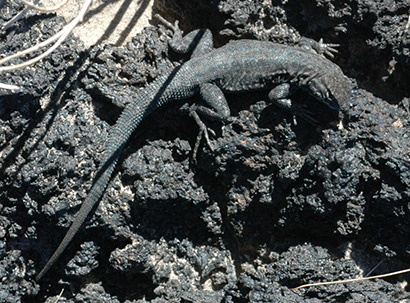
Adaptable lizards illustrate key evolutionary process proposed a century ago
The ‘Baldwin effect’ has now been demonstrated at the genetic level in a population of dark-colored lizards adapted to live on a lava flow in the desert.
-
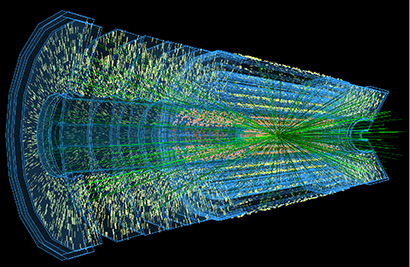
UC Santa Cruz helps address massive data demands from Large Hadron Collider as part of $25 million NSF project
Computer scientist Carlos Maltzahn will work with Princeton University on an NSF-funded project to establish the Institute for Research and Innovation in Software for High Energy Physics.
-
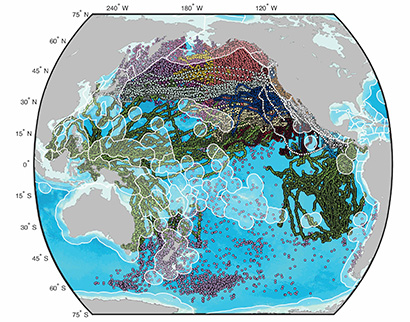
Tracking marine migrations across geopolitical boundaries aids conservation
By tracking migratory marine species, scientists reveal movements through different countries’ waters and in the open ocean beyond areas of national jurisdiction.
-
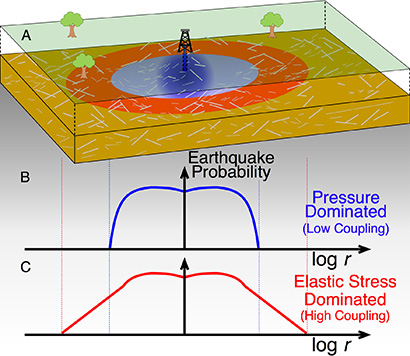
Injection wells can induce earthquakes miles away from the well
A study of earthquakes induced by injecting fluids deep underground has revealed surprising patterns, suggesting that current recommendations for hydraulic fracturing, wastewater disposal, and geothermal wells may need to be revised.
-

LHC scientists detect Higgs bosons decaying into bottom quarks
UC Santa Cruz physicists made important contributions to the discovery, which confirms the fate of the vast majority of all Higgs bosons produced in the LHC.