Office of Research
-
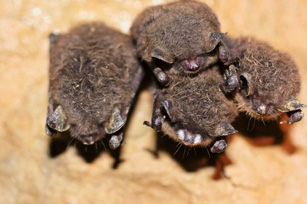
Fat bats withstand the effects of white-nose syndrome, study finds
New findings explain how some populations of little brown bats are persisting, even after initial population declines caused by the debilitating fungal disease.
-

Art professor to screen new documentary film at Museum of Modern Art
UC Santa Cruz art professor and multimedia artist Elizabeth Stephens and her artistic collaborator Annie Sprinkle will present their latest film at the Museum of Modern Art in New York.
-
Diverse scents of woodland star wildflowers driven by coevolution with pollinators
Scientists found a surprising diversity of floral scent compounds produced by different species of woodland stars and even by populations of the same species in different locations.
-
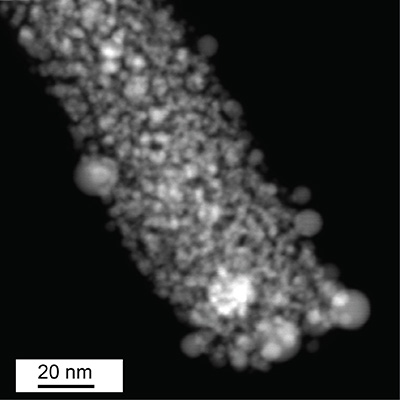
Novel electrocatalyst outperforms platinum in alkaline hydrogen production
A ruthenium-based catalyst developed at UC Santa Cruz has potential applications in sustainable hydrogen production for clean energy and in industrial processes.
-
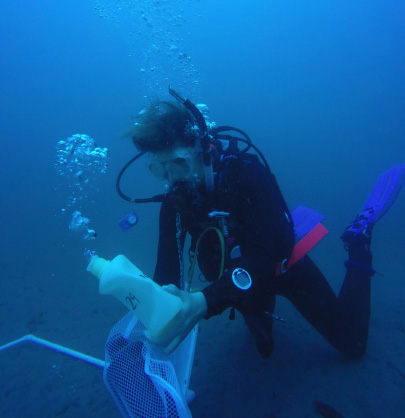
Study of brine discharge from desalination plant finds good news and bad news
Brine discharged from the Carlsbad Desalination Plant raises offshore salinity levels more than permitted, but researchers found no direct local impacts on sea life.
-

Why beaked whales return to Navy sonar range despite frequent disturbance
A new study using underwater robots reveals dense patches of deep-sea squid attract beaked whales to a Navy sonar test range off Southern California.
-
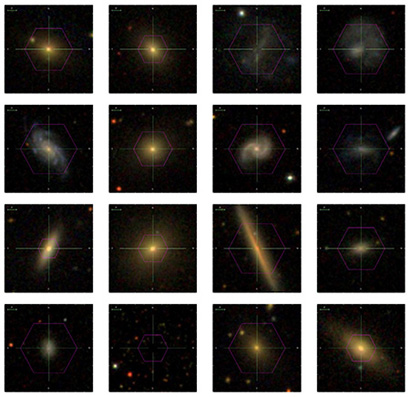
MaNGA data release includes detailed maps of thousands of nearby galaxies
Major data release from Sloan Digital Sky Survey includes galaxy maps, new data access and visualization tools, and a huge ‘stellar library’.
-

Waves in Saturn’s rings give precise measurement of planet’s rotation rate
Saturn’s ring system acts as a sensitive seismograph, enabling scientists to measure the giant planet’s vibrations and determine its rotation rate.
-
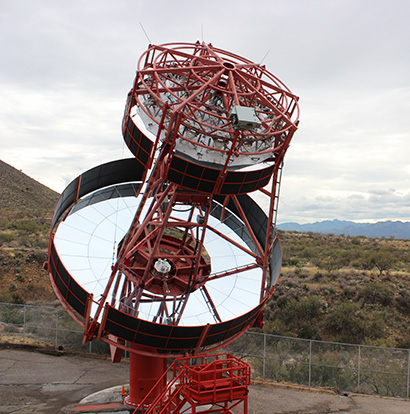
Scientists to inaugurate a new type of gamma ray telescope at Whipple Observatory
The prototype Schwarzschild-Couder Telescope (pSCT) is designed as a pathfinder telescope for the Cherenkov Telescope Array.
-

Idled farmland presents habitat restoration opportunities in San Joaquin Desert
Land no longer suitable for agriculture could be reclaimed as habitat for dozens of endangered species, according to a new analysis.
-
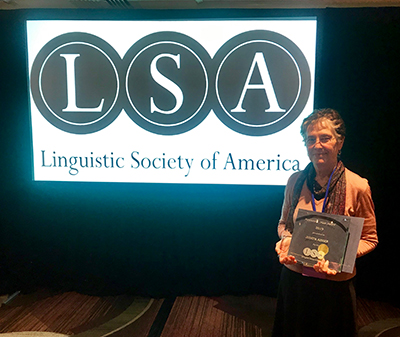
Professor honored by Linguistic Society of America for decades of work on endangered languages
UC Santa Cruz emeritus professor of linguistics Judith Aissen was awarded the prestigious Kenneth L. Hale Award last week in New York City at the 2019 Annual Meeting of the Linguistic Society of America (LSA). The LSA is the major professional society in the United States that is dedicated to the scientific study of language.
-
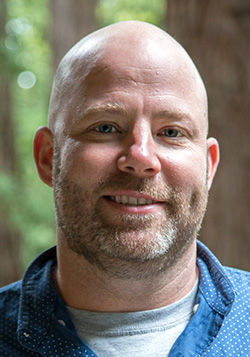
Biologist Jeremy Sanford awarded prestigious $1.85 million grant from NIH
MIRA grant funds Sanford to extend his studies of the mechanisms of RNA processing and RNA-binding proteins, which are involved in inherited diseases and cancer.