Office of Research
-

Better protection from the flu could be on the horizon
Biomolecular engineer Rebecca DuBois is collaborating on a large multi-institutional NIH project to create a universal vaccine for influenza.
-

Arts professor’s anthology named one of ‘Best Art Books of the Decade’
‘Chicano and Chicana Art: A Critical Anthology’–a diverse collection of essays edited by UCSC history of art and visual culture professor Jennifer González–has been named one of the “Best Art Books of the Decade” by ArtNews.
-
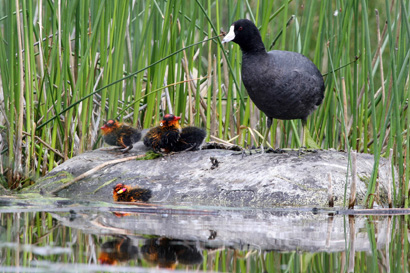
The mysterious case of the ornamented coot chicks has a surprising explanation
The bright colors of the chicks of American coots help their parents choose favorites, according to a new study.
-
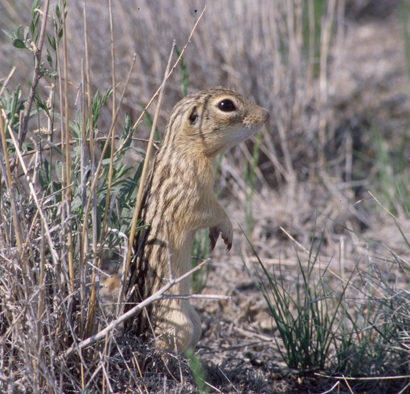
How genetics and social games drive evolution of mating systems in mammals
From monogamy to promiscuity, a new model explains the evolution of diverse mating systems based on the conflict between cooperative and competitive behaviors.
-

Structural analysis reveals an unexpected mechanism for a cancer drug
Palbociclib is clinically approved for treating breast cancer, but it doesn’t work the way scientists thought it did.
-

California’s sea otter population could triple by recolonizing San Francisco Bay
A new study highlights the importance of estuaries as prime habitat for the endangered southern sea otter.
-

UC Santa Cruz establishes new Center for the Middle East and North Africa
A new interdisciplinary Center for the Middle East and North Africa, directed by associate professor of history Jennifer Derr, will focus on the culture, history, and politics of the region.
-

Island ‘soundscapes’ show potential for evaluating recovery of nesting seabirds
Conservation biologists are taking a holistic approach to acoustic monitoring for evaluating the effectiveness of restoration efforts.
-

Composition of gas giant planets not determined by host star, study finds
Research led by astronomers at UC Santa Cruz and Carnegie Institution for Science has implications for understanding how planets form.
-
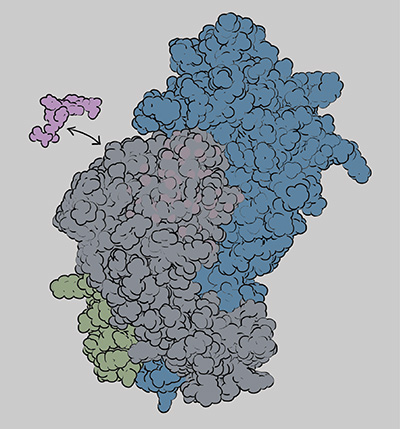
Study reveals dynamics of crucial immune system proteins
New findings show how a key part of the immune system functions and suggest potential applications in disease diagnostics and therapeutics .
-

UC Santa Cruz researchers funded to develop new technology for monitoring toxic algae
As the frequency and severity of harmful algal blooms increases along the California coast, ocean scientist Raphael Kudela is working to improve the technology for monitoring them.
-

Fish in California estuaries are evolving as climate change alters their habitat
Comparison of current stickleback populations with fish collected in the 1970s shows the populations are evolving as California’s climate becomes hotter and drier.