Office of Research
-
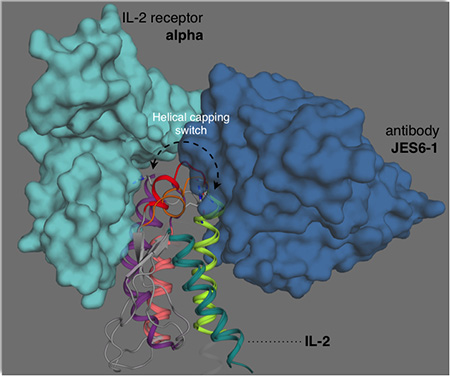
New understanding of immune modulator interleukin-2 guides drug discovery
A new study shows how IL-2’s flexible structure governs its effects on the immune system, providing crucial information for harnessing its therapeutic potential.
-

Study shows widely used machine learning methods don’t work as claimed
Researchers demonstrated the mathematical impossibility of representing social networks and other complex networks using popular methods of ‘low-dimensional embeddings’.
-
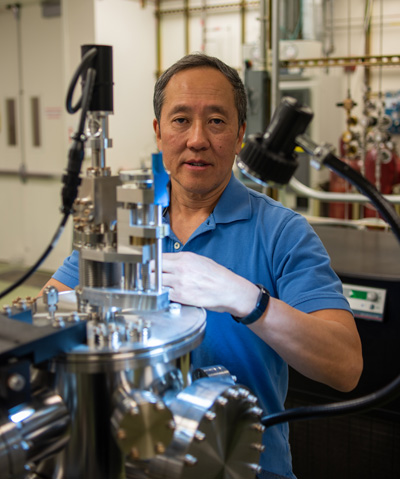
UCSC thin-film expertise to help develop NASA’s next generation of space telescopes
Engineer Nobuhiko Kobayashi’s expertise in thin-film technology could improve the performance of NASA’s next generation of space telescopes.
-
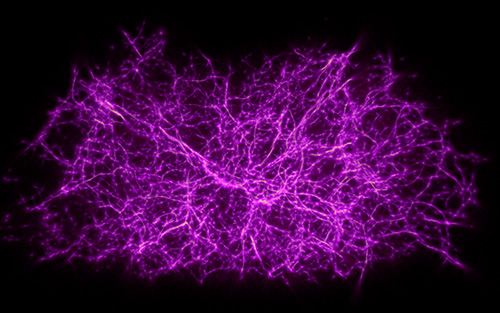
Astronomers use slime mold model to reveal dark threads of the cosmic web
The problem-solving prowess of a simple slime mold has been harnessed to trace the large-scale structure of the universe.
-

Research shows mangrove conservation can pay for itself in flood protection
A new global study shows that mangroves provide billions of dollars worth of flood risk reduction benefits every year.
-

Elaine Sullivan uses 3D technologies to peel away the layers of history
A new “born-digital” publication by UC Santa Cruz associate history professor Elaine Sullivan takes a fresh look at the ancient Egyptian burial site of Saqqara to demonstrate how it has evolved over more than 2,500 years.
-
Engineer Heiner Litz wins NSF CAREER Award for data storage research
Heiner Litz, assistant professor of computer science and engineering, has received a Faculty Early Career Development (CAREER) Award from the National Science Foundation (NSF).
-

UC Santa Cruz leads collaboration to speed wound healing with a novel smart bandage
With up to $16 million in funding from DARPA, UC Santa Cruz engineers will work with doctors and scientists at UC Davis and Tufts University to develop bioelectronic intelligent control of wound regeneration.
-

Heising-Simons Foundation supports exoplanet imaging projects at UC Santa Cruz
Three new grants totaling $2.4 million will fund work at UCSC on new instruments and technologies to support research on planets beyond our solar system.
-
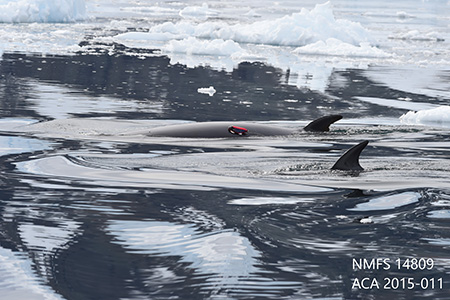
Researchers get a ‘whale’s-eye view’ of Antarctic sea ice
Cameras attached to a rare species of Antarctic whale are giving scientists an unprecedented view of how the whales survive in their sea ice habitat.
-

Art professor’s exhibition in Spain addresses algae and climate change
UC Santa Cruz art professor Jennifer Parker believes that algae are an “unsung hero of the planet”–noting that these photosynthetic organisms produce one half of the total global oxygen, while absorbing one third of the carbon dioxide produced worldwide…
-

Molecular switch mechanism explains how mutations shorten biological clocks
Understanding the molecular mechanisms of our internal clocks may enable the development of therapies for sleep disorders and other effects of clock disruption.