Office of Research
-

New analysis shows potential for ‘solar canals’ in California
UC Santa Cruz researchers and their partners published a new study that suggests covering California’s water delivery canals with solar panels could be an economically viable means of advancing renewable energy and water conservation.
-

For migrating elephant seals, ‘lightscapes of fear’ shape feeding, resting strategies
A new tracking study shows how elephant seals balance predator avoidance and the need to feed, shifting strategies as their body condition improves during a 7-month foraging migration.
-

Low-temperature supercapacitors could power missions to moon and Mars
UCSC researchers developed 3D-printed porous carbon aerogels for electrodes in ultralow-temperature supercapacitors, which could reduce heating needs for future space and polar missions.
-
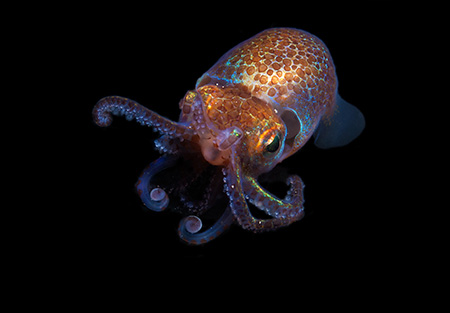
A little squid and its glowing bacteria yield new clues to symbiotic relationships
A small molecule produced by bioluminescent bacteria as they colonize the light organ of the Hawaiian bobtail squid may play a key role in establishing the symbiosis.
-
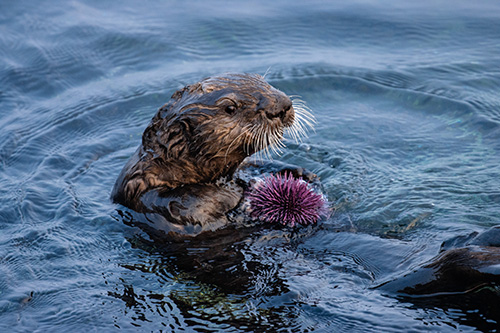
Sea otters maintain remnants of healthy kelp forest amid sea urchin barrens
While kelp forests have declined dramatically along the California coast, sea otters in Monterey Bay are maintaining patches of healthy kelp forest, according to a new study.
-

Return to Rat Island: Conservation strategy leads to ecosystem rebound
Hawadax Island’s birds and seashore ecosystem have returned to a natural balance after the removal of invasive rodents.
-
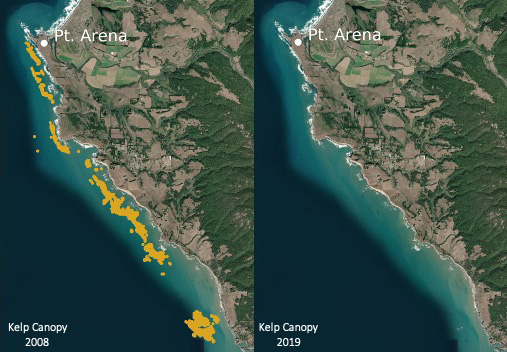
The collapse of Northern California kelp forests will be hard to reverse
Most of Northern California’s kelp forest ecosystem is gone, replaced by widespread ‘urchin barrens’ that may persist long into the future, according to a new study.
-

UCSC leads multicampus initiative on coastal resilience and climate adaptation
A UC-funded initiative will bring together researchers at the Santa Cruz, Santa Barbara, and San Diego campuses to address pressing issues for California’s coastal communities.
-

Girl activists are more visible than ever. Is this progress?
In the past decade, there’s been an explosion in media coverage of girl activists. Professor Jessica Taft, a leading expert in youth activism, sees opportunity in this visibility, but her research has also identified many troubling trends in how girl activists are portrayed.
-
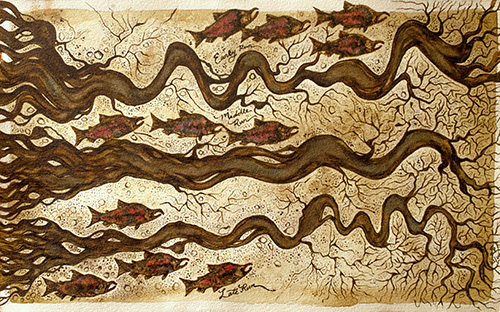
Scientists describe ‘hidden biodiversity crisis’ as variation within species is lost
Many of the benefits people receive from nature depend on diversity within species, but this intraspecific variation is poorly understood and declining rapidly.
-

LASER talk to feature research by UCSC deans of the humanities and social sciences
The event will feature research presentations by Jasmine Alinder, Dean of the Humanities (“Representing Japanese American Incarceration”), and Katharyne Mitchell, Dean of the Social Sciences (“Sanctuary Space and Insurgent Memory”).
-

Computer scientist Yang Liu wins $1M grant for research on fairness in AI
Liu’s research aims to achieve more equitable outcomes from decision-making tools based on automated machine-learning algorithms.