Office of Research
-
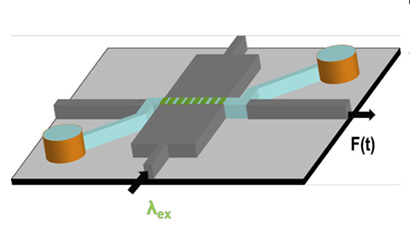
Ultrasensitive antigen test detects SARS-CoV-2 and influenza viruses
Novel chip-based diagnostic technology can detect individual viral antigens in nasal swab samples to identify the viruses that cause COVID-19 and flu with a single test.
-

New tools enable rapid analysis of coronavirus sequences and tracking of variants
Developed by the UC Santa Cruz Genomics Institute, UShER allows researchers to quickly see how a new viral sequence is related to all other variants of SARS-CoV-2, crucial information for tracking transmission dynamics.
-
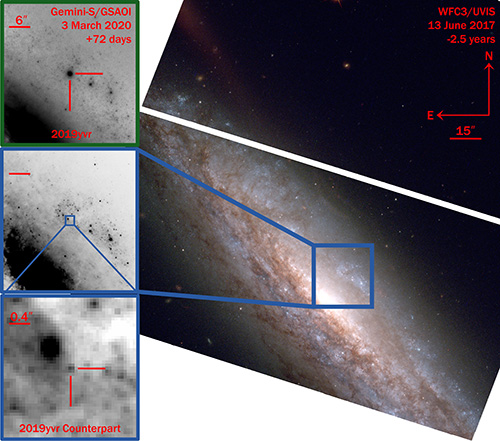
Temperamental supernova appeared strangely cool before exploding
A curiously yellow star has caused astrophysicists to reevaluate the possible pathways that can lead to the explosion of a massive star as a supernova.
-
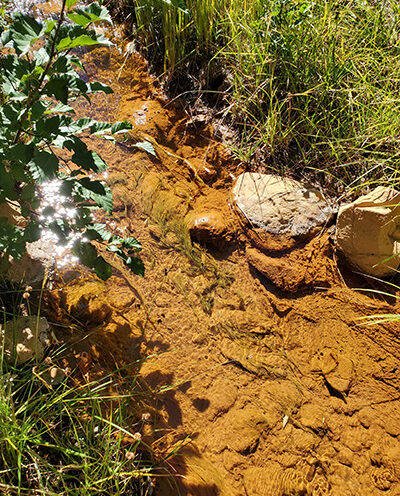
Long-term monitoring shows successful restoration of mining-polluted streams
Despite differences in aquatic life and toxic metals in streams across a broad region of the western United States, scientists found common responses to cleanup of acid mine drainage.
-
Project to read genomes of all 70,000 vertebrate species reports first discoveries
A bold project to read the complete genetic sequences of every known vertebrate species has reached its first milestone, publishing new methods and the first 25 high-quality genomes.
-

Fellowship win supports doctoral candidate’s research on national security policy
Cesar Estrella, a Ph.D. candidate in Latin American and Latino studies, won an American Council of Learned Societies fellowship to support his study of the ideologies that drive U.S. national security policy.
-
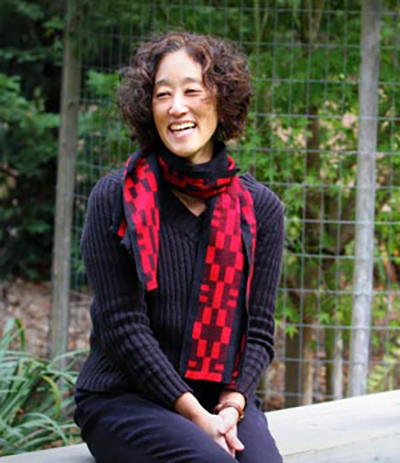
2021-22 Dickson Emeritus awards support faculty research in history, literature, and psychology
Karen Yamashita, professor emerita of literature; Dana Frank, research professor in history; and Thomas Pettigrew, research professor in psychology, were each awarded Edward A. Dickson Emeritus Professorships in recognition of their outstanding achievements in scholarship and teaching.
-

Three UCSC professors elected to American Academy of Arts and Sciences
Angela Davis, distinguished professor emerita of history of consciousness and feminist studies; James Estes, professor emeritus of ecology and evolutionary biology; and Barbara Rogoff, distinguished professor of psychology, are among the newly elected fellows of the American Academy of Arts and Sciences.
-
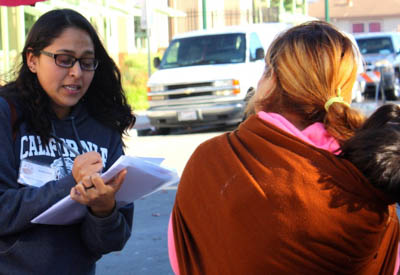
UC Santa Cruz and United Way partner to empower youth through research in local communities
A research partnership between UC Santa Cruz and United Way of Santa Cruz County will offer local youth and UCSC undergraduates new leadership platforms and support college-readiness and success.
-
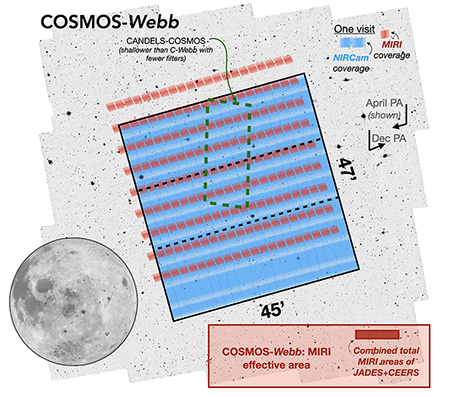
James Webb Space Telescope program aims to map the earliest structures of the universe
COSMOS-Webb is slated to be the largest program in JWST’s first year of operation.
-
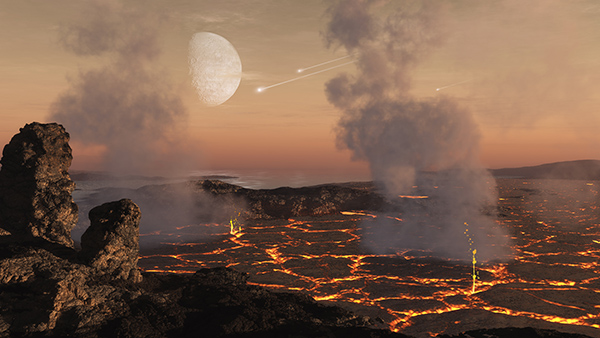
Baked meteorites yield clues to planetary atmospheres
The gases released from meteorite samples heated in a high-temperature furnace can tell scientists about the initial composition of the atmospheres of rocky exoplanets.
-

Coral reefs prevent more than $5.3 billion in potential flood damage for U.S. property owners
A new study reveals how valuable coral reefs are in protecting people, structures, and economic activity in the United States from coastal flooding during storms.