Office of Research
-

Economics Professor Rob Fairlie testifies before committee in U.S. House of Representatives to share research on Paycheck Protection Program
Fairlie testified on his latest research, which showed that changes to the Paycheck Protection Program in 2021 helped to improve racial equity in loan distribution.
-

UC Santa Cruz lecturer and alumna contributes to IPCC’s 2022 report on global climate change
Pam Rittelmeyer, a lecturer in the Department of Environmental Studies and College Nine, is a contributing author on the latest report from the Intergovernmental Panel on Climate Change (IPCC).
-
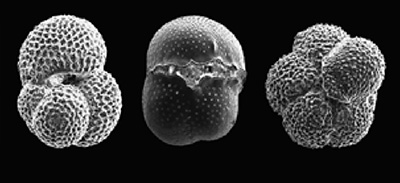
Effects of ancient carbon releases suggest possible scenarios for future climate
New findings reveal a precursor event before the Paleocene-Eocene Thermal Maximum, giving scientists a fresh perspective on future global climate scenarios.
-
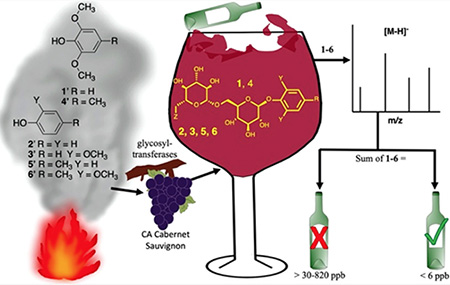
Chemical analysis reveals effects of wildfire smoke on grapes and wines
A new study provides practical guidelines for using biomarkers to identify ‘smoke taint’ in grapes and wines affected by the smoke from wildfires.
-
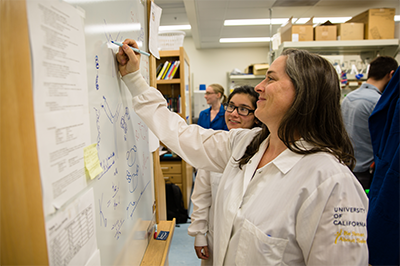
New study confirms bioengineered RSV protein vaccine evokes protective immune response
Two UC Santa Cruz researchers just marked a major milestone in their effort to create an effective vaccine for respiratory syncytial virus (RSV), which can cause severe respiratory disease in children and the elderly.
-

California Sea Grant funds graduate research fellows at UCSC
California Sea Grant has awarded funding to four UC Santa Cruz graduate students for marine science research projects that address the agency’s priority themes of resilient coastal communities and economies, sustainable fisheries, and healthy coastal ecosystems.
-
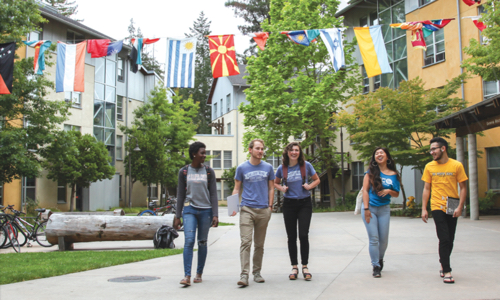
UC Santa Cruz to implement strategic plan for internationalization
UC Santa Cruz is advancing comprehensive internationalization to ensure that the members of the campus community are prepared and encouraged to study, teach, conduct research, and work in a global context, and that institutional policies, programs, and initiatives are aligned to achieve this shared goal.
-
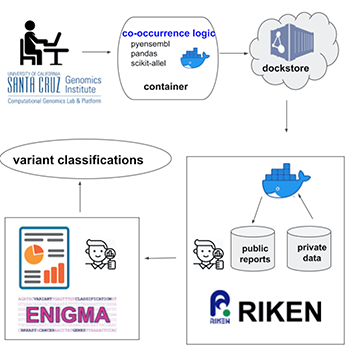
New responsible data sharing technique will enable better understanding of disease-causing genetic variants
Scientists may better understand and test for the genetic variations that cause cancer and other heritable diseases through the application of a novel strategy for securely sharing and analyzing genomic data developed at the UC Santa Cruz Genomics Institute.
-

Younger Lagoon study tells a tale of two fishes
Research at UCSC’s Younger Lagoon shows that the state of estuary waters, not competition from another fish species, is the most important predictor of populations of an endangered fish.
-

Elephant seals’ map sense tells them when to head ‘home’
Researchers found that female elephant seals know their distance from the breeding beach and allocate extra time to get back if they have farther to travel.
-

A slow-motion section of the San Andreas Fault may not be so harmless after all
A study of rocks drilled from nearly 2 miles under the surface suggests that the central section of the San Andreas fault has hosted many major earthquakes, including some that could have been fairly recent.
-

UC Santa Cruz joins Social Science Research Council
The campus is now a member of the Social Science Research Council’s College and University Fund for the Social Sciences, which will offer new opportunities for UC Santa Cruz to help shape research priorities across the field.