Office of Research
-

Younger Lagoon study tells a tale of two fishes
Research at UCSC’s Younger Lagoon shows that the state of estuary waters, not competition from another fish species, is the most important predictor of populations of an endangered fish.
-

Elephant seals’ map sense tells them when to head ‘home’
Researchers found that female elephant seals know their distance from the breeding beach and allocate extra time to get back if they have farther to travel.
-

A slow-motion section of the San Andreas Fault may not be so harmless after all
A study of rocks drilled from nearly 2 miles under the surface suggests that the central section of the San Andreas fault has hosted many major earthquakes, including some that could have been fairly recent.
-

UC Santa Cruz joins Social Science Research Council
The campus is now a member of the Social Science Research Council’s College and University Fund for the Social Sciences, which will offer new opportunities for UC Santa Cruz to help shape research priorities across the field.
-
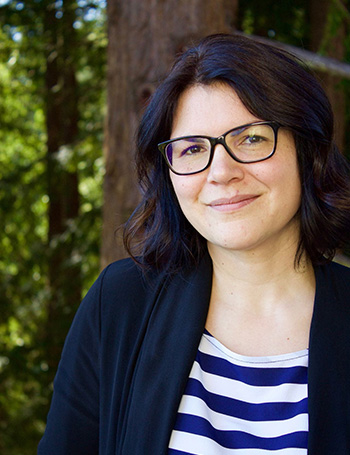
Ocean scientist Claudie Beaulieu wins NSF CAREER Award
Claudie Beaulieu, assistant professor of ocean sciences, has received a Faculty Early Career Development (CAREER) Award from the National Science Foundation (NSF) to support her work using data science to study climate variability and climate change.
-

A surprising heat source is melting the Greenland Ice Sheet from the bottom up
Researchers have observed extremely high rates of melting at the bottom of the Greenland Ice Sheet, caused by huge quantities of meltwater descending from the surface to the base.
-

Easy aluminum nanoparticles for rapid, efficient hydrogen generation from water
UCSC chemists developed a simple method to make aluminum nanoparticles that split water and generate hydrogen gas rapidly under ambient conditions.
-

‘Abolition. Feminism. Now.’ earns national praise
The book, authored by Professor Emerita Angela Y. Davis and Associate Professor Gina Dent, is garnering national attention for its pathbreaking examination of abolition and feminism in the 21st century.
-

Tilting of Earth’s crust governed the flow of ancient megafloods
Study provides a new perspective on Washington state’s Channeled Scablands, carved by the Missoula megafloods at the end of the last ice age.
-
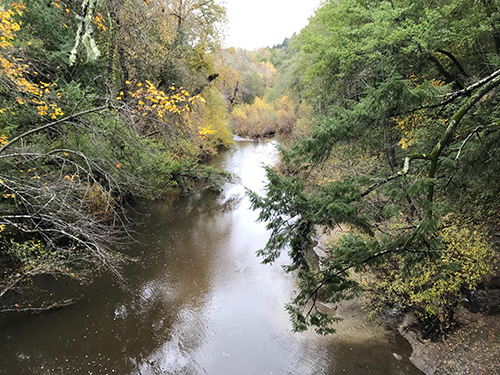
San Lorenzo River was transformed by early logging in the Santa Cruz Mountains
The San Lorenzo River cut a deep channel and abandoned its floodplain in the Felton area around the time of intensive clearcutting in the surrounding mountains, according to a study by UCSC researchers.
-

First nationwide study of scams targeting immigrants shows local social context may help or hinder reporting
Assistant Professor of Sociology Juan Manuel Pedroza’s latest research offers insights that may help improve access to justice for vulnerable communities.
-
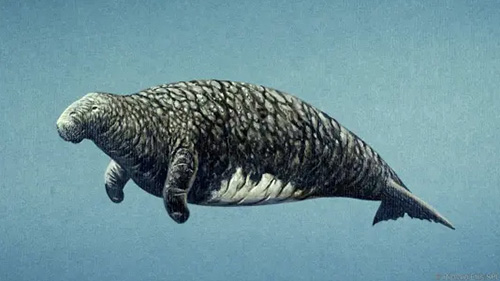
Genome of extinct Steller’s sea cow reveals surprising link to human skin disease
Analysis of ancient DNA from sea cow bones finds genes that may have played a role in adaptation to cold marine environment and yields evidence of a long population decline.