Office of Research
-

Two from UC Santa Cruz awarded Fulbright grants
Two PhD candidates at UC Santa Cruz have been offered prestigious Fulbright U.S. Student Program grants for the 2022-2023 academic year.
-

Destruction and recovery of kelp forests driven by changes in sea urchin behavior
A long-term study of kelp forest dynamics on California’s Central Coast highlights the critical role of sea urchin behavior, not just the size of the urchin population.
-

Autistic adults have become increasingly visible in media, books, television, and more in the past decade, but challenges with representation persist
Researchers documented a shift toward more numerical representation for adults in popular portrayals of autism, which have historically focused on children.
-

These red flags can let you know when you’re in an online echo chamber
Researchers at UC Santa Cruz have identified specific elements of tone and style in online speech that are linked to hyperpartisan echo chambers. These language markers could also prove useful for flagging spaces where disinformation may be likely to emerge.
-
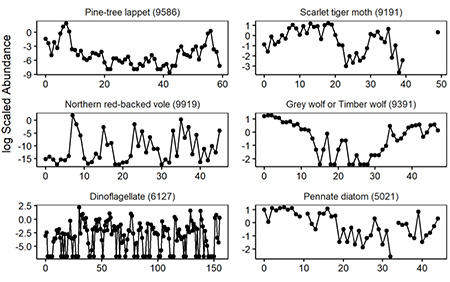
Study finds chaos is more common in ecological systems than previously thought
The idea that chaos is rare in natural populations may be due to methodological and data limitations, rather than the inherent stability of ecosystems.
-

Reefense project aims to meld biology and engineering in novel structures for coastal protection
UCSC scientists are part of a DARPA-funded team to develop innovative solutions for coral reef restoration in Florida and the Caribbean to protect coastal infrastructure.
-
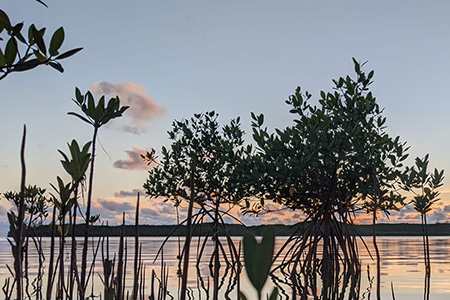
Study shows mangrove and reef restoration yield positive returns on investment for flood protection
A robust analysis demonstrates that nature-based solutions to reduce the damage caused by coastal flooding are cost-effective.
-

Polar bears in Southeast Greenland shed light on the species’ future in a warming Arctic
The most genetically isolated population of polar bears on the planet, they have limited access to sea ice and use ice from Greenland’s glaciers to survive.
-
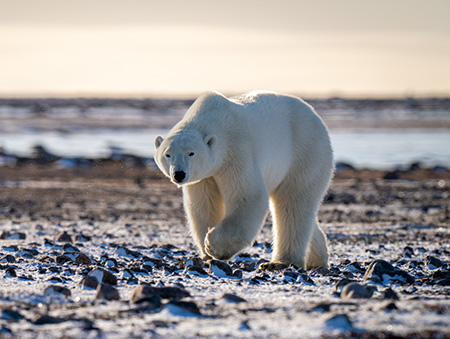
100,000-year-old polar bear genome reveals ancient hybridization with brown bears
Scientists found that all brown bears today have some polar bear ancestry due to genetic admixture that occurred during a warm interglacial period more than 100,000 years ago.
-

Microbiologist Jacqueline Kimmey named Pew Scholar in the Biomedical Sciences
Kimmey’s lab is investigating how susceptibility to infections is influenced by the daily biological cycles known as circadian rhythms.
-

Hunting in darkness, elephant seals use sensitive whiskers to find prey
Researchers used miniature video cameras to study how free-ranging elephant seals use their whiskers to track down prey in the darkness of the deep ocean.
-
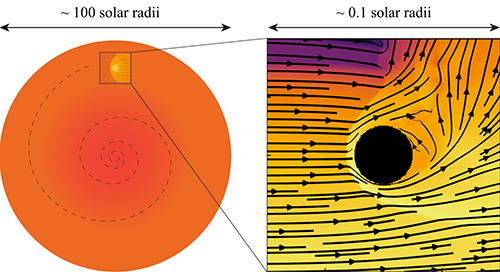
Simulations reveal hydrodynamics of planetary engulfment by expanding star
A new study using hydrodynamical simulations reveals the forces acting on a planet when it is swallowed by an expanding star, as will eventually happen to the inner planets of our solar system when the sun becomes a red giant.