Office of Research
-
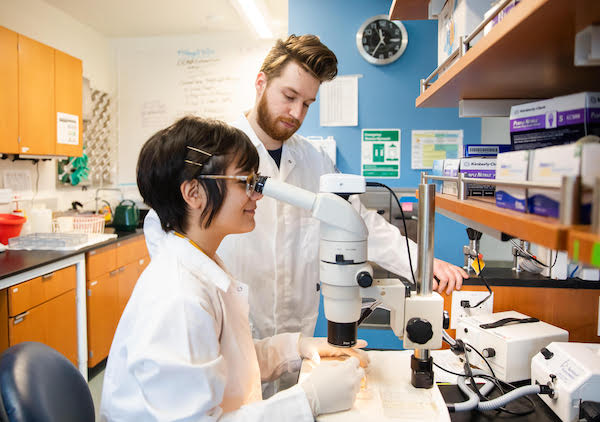
Growing Our Own – From research opportunities to the professoriate
Solidifying its commitment to increasing the diversity of its faculty, both underrepresented minorities and female faculty, last year, the University of California launched the Growing Our Own initiative.
-

Batalha testifies at Congressional hearing on the initial scientific findings of the JWST
The James Webb Space Telescope is the largest and most powerful telescope humans have sent to space and, Batalha asserts, it is ushering in a new era of exoplanet science.
-

Webb telescope draws back the curtain on universe’s early galaxies
Initial findings from JWST Early Release Science programs include the discovery of two exceptionally bright galaxies in the early universe.
-
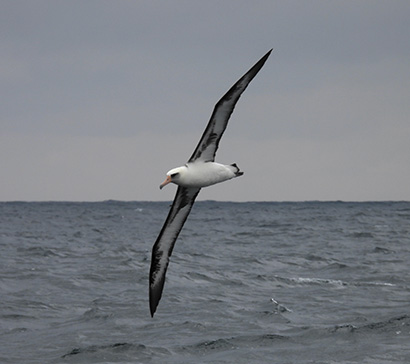
Offshore wind farms may harm seabirds, but scientists see potential for net positive impact
A new study presents a framework for assessing and mitigating the impacts of offshore wind energy development on marine birds.
-
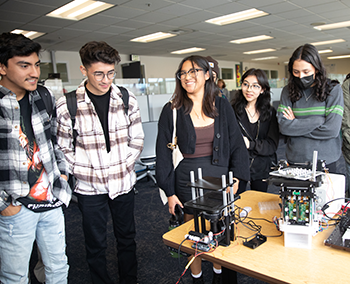
Remote-controlled microscopes bring complex biology education to students worldwide
As detailed in new research, UC Santa Cruz researchers have developed a method for using remote-controlled, internet-connected microscopes to enable students anywhere in the world to participate in designing and carrying out biology experiments.
-
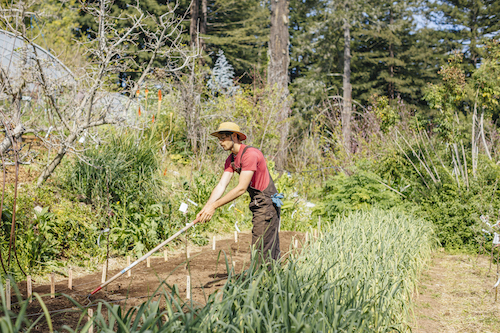
UC Santa Cruz earns Agricultural Experiment Station designation
The designation marks more than 50 years of industry-leading research in organic agriculture and sustainable farming practices at the campus and opens doors to expand community impact.
-
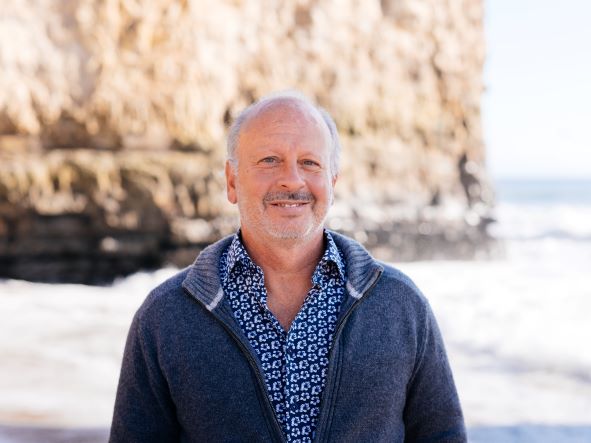
UCSC marine sciences professor to lead new Center for Coastal Climate Resilience
Longtime UC Santa Cruz marine sciences professor Michael W. Beck is adding a new role to his resume: director of the campus’ recently announced Center for Coastal Climate Resilience.
-

Engineer deploys research on ‘mud batteries’ for powering sustainable agriculture
UC Santa Cruz Assistant Professor of Electrical and Computer Engineering Colleen Josephson published new research on the current state and future potential of microbial fuel cells for powering sustainable agriculture systems.
-
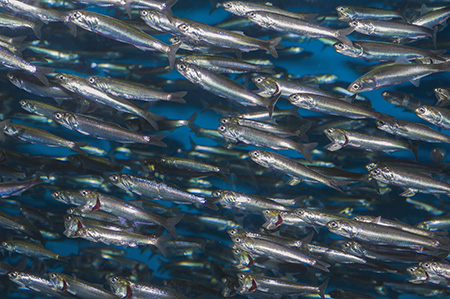
UCSC scientists find microplastics in Monterey Bay water, anchovies, and seabirds
Microparticles recovered from some seabirds exhibited estrogenic activity with potential to disrupt hormone functions.
-

Death of a star reveals midsize black hole lurking in a dwarf galaxy
By studying intermediate-mass black holes, scientists hope to improve their understanding of the growth of supermassive black holes in massive galaxies.
-
UCSC researchers win NOAA grants to study climate change patterns in California’s marine sanctuaries
Two UC Santa Cruz researchers will be delving deeper into coastal and climate resiliency efforts within California’s marine sanctuaries as part of two recent grants from the National Oceanic and Atmospheric Administration (NOAA).
-

Report outlines plans for major research effort on subduction zone geologic hazards
An ambitious interdisciplinary initiative aims to advance understanding of the processes that trigger earthquakes, tsunamis, landslides, and volcanic eruptions where tectonic plates converge.