Office of Research
-

Study finds active galactic nuclei are even more powerful than thought
A new study indicates that scientists have substantially underestimated the energy output of active galactic nuclei powered by supermassive black holes because their light is dimmed by dust.
-
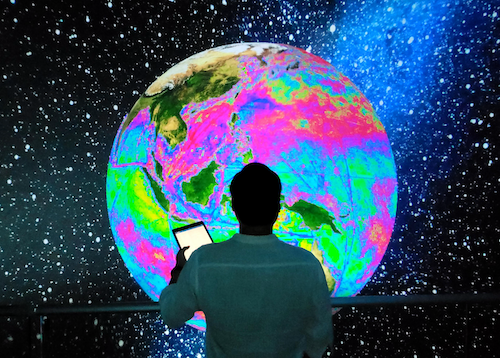
Sensorium, a new project of UC Santa Cruz’s Center for the Study of the Force Majeure, to be an unprecedented experience of the world ocean
A new project in development by UC Santa Cruz’s Center for the Study of the Force Majeure will give the public a transformative opportunity to interact with the world’s ocean ecosystem in a fully immersive work of environmental art entitled Sensorium.
-
Earth scientist James Zachos honored for climate change research
The BBVA Foundation Frontiers of Knowledge Award in the Climate Change category recognizes Zachos and fellow paleoclimatologist Ellen Thomas of Yale University.
-
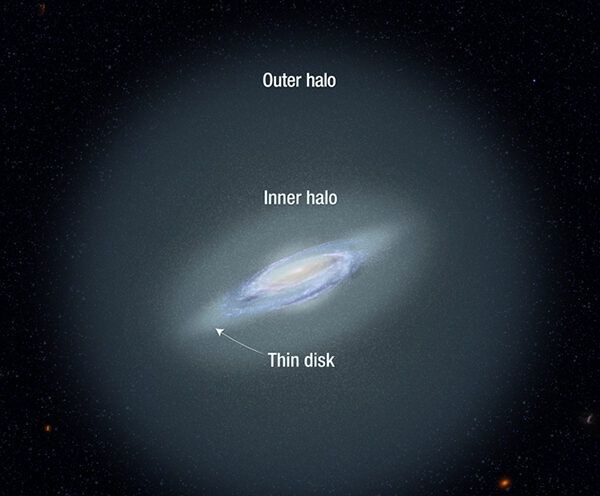
Astronomers find the most distant stars in our galaxy halfway to Andromeda
A search for variable stars called RR Lyrae has found some of the most distant stars in the Milky Way’s halo a million light years away.
-
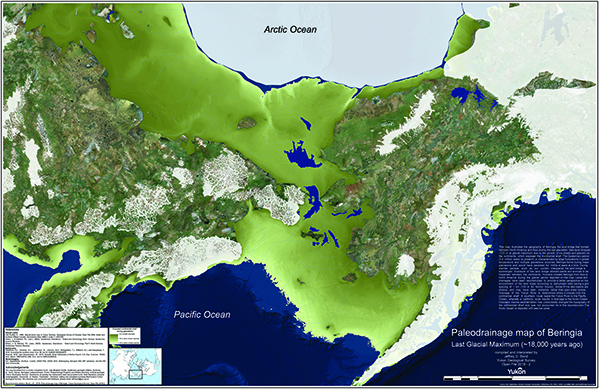
Bering Land Bridge formed surprisingly late during last ice age, study finds
By reconstructing the sea level history of the Bering Strait, scientists found that the strait remained flooded until around 35,700 years ago, not long before humans began migrating into the Americas.
-
UCSC researcher explores drug use, harm reduction in San Francisco’s Latino/x community
It’s no secret that the opioid epidemic has devastated our country, especially within communities of color. Latino/xs have seen some of the highest drug addiction rates, which have only increased due to the rise of synthetic opioids like fentanyl and the COVID-19 pandemic. In 2019, San Francisco was the county with the third-highest opioid-related death…
-
Study presents vision of machine learning leveraged for precision medicine
In a new perspective published in the journal Cell Reports Physical Science, Associate Professor of Applied Mathematics Marcella Gomez details a vision for how the field can move beyond static data to create systems that measure and monitor the real-time responses of the body to a variety of factors and use a machine learning algorithm…
-

Biochemist Laura Sanchez receives Allen Distinguished Investigator award
Sanchez is among 16 new Allen Distinguished Investigators awarded a total of $10 million in research funding to support cutting-edge projects in protein lifespan and nutrient sensing.
-
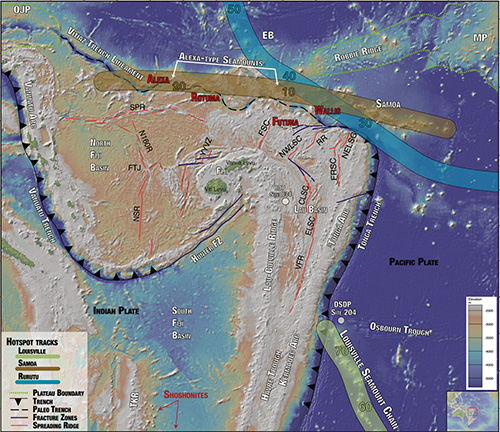
Breaking up is hard to do: Separation of Fiji and Vanuatu tied to Samoan seamounts
New analyses of volcanic rock samples collected in the 1980s link the geologic histories of these South Pacific islands to explain their current locations and character.
-

UC Santa Cruz scholar receives major new grant to support inclusive community development throughout California
As state and federal agencies are investing increasing funding in pandemic recovery, infrastructure development and initiatives to address climate change, a collaboration of renowned scholars led by UC Santa Cruz are working with community groups to ensure equity and inclusion are at the heart of these efforts.
-
Social Sciences dean wins prestigious research award, visiting fellowship in Germany
Social Sciences dean Katharyne Mitchell will be busy packing her bags for the holidays, but not for the reason you may think. She’s heading to Göttingen, Germany, as a visiting scholar for the next six months at the Max Planck Institute for the Study of Religious and Economic Diversity.
-
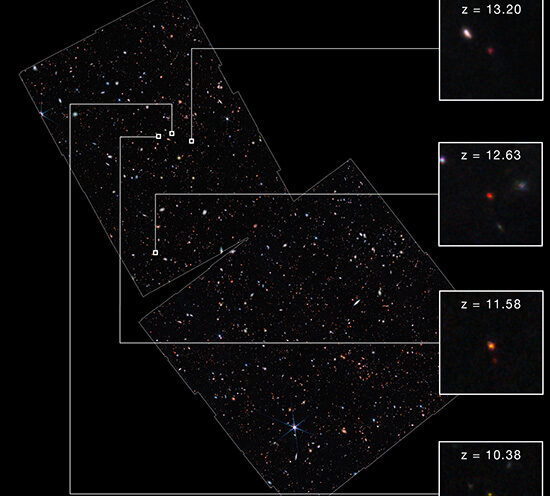
Astronomers report most distant known galaxies, detected and confirmed by Webb telescope
Spectroscopic observations with the James Webb Space Telescope confirm four early galaxies dating back to less than 400 million years after the Big Bang, three of which are the most distant confirmed to date.